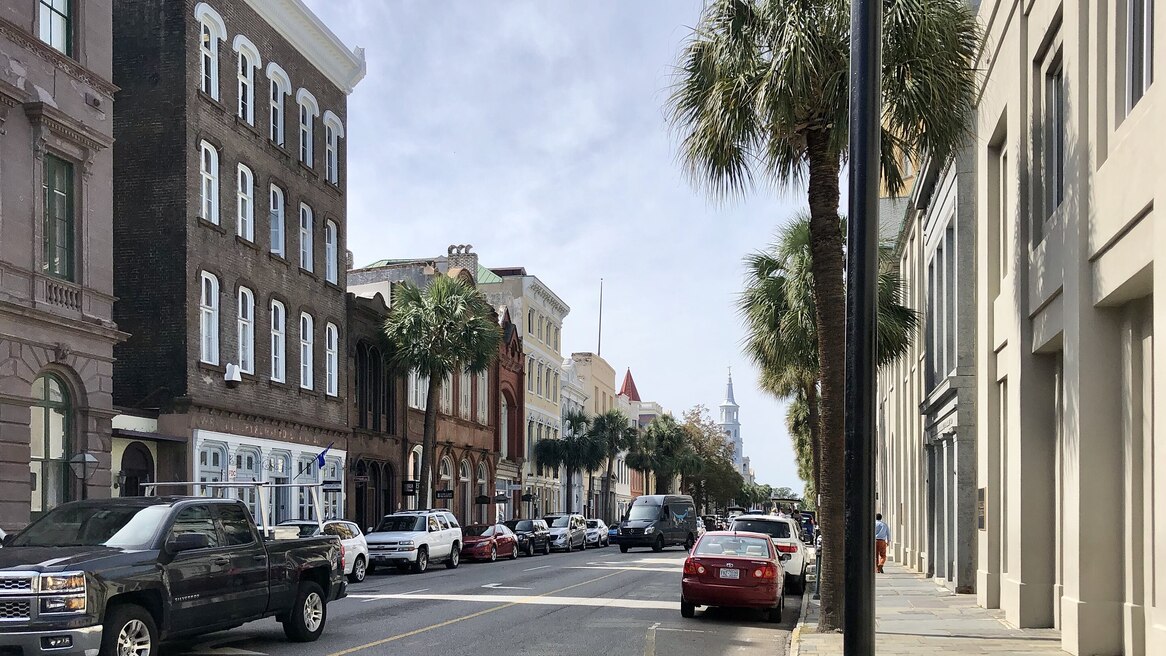

Old Charleston still has it! This historic city is one of the south’s most graceful, with its gorgeous architecture, waterside setting, and rich and lively culture. Charleston isn’t like other cities; it feels as if it’s from another time, where graciousness and care went into things. So food often comes beautifully presented, museums and galleries are imbued with southern hospitality — as well as being fonts of knowledge — and even quite basic hotels offer service with an element of charm. Because Charleston feels “that bit different” it’s a very popular destination for short trips, as well as longer stays, and it has a lot of holiday accommodation. Some of the most unique will be found in converted mansions and grand houses, but there are all sorts, from B&Bs and guesthouses to hotels, grand and simple. There’s plenty to do here if you have time to spare, and plenty of amazing food to sample too. The city’s unique blend of European, Caribbean and West African influences permeates everything, but is especially easy to appreciate in Charleston’s cuisine. Come to taste, see and learn.
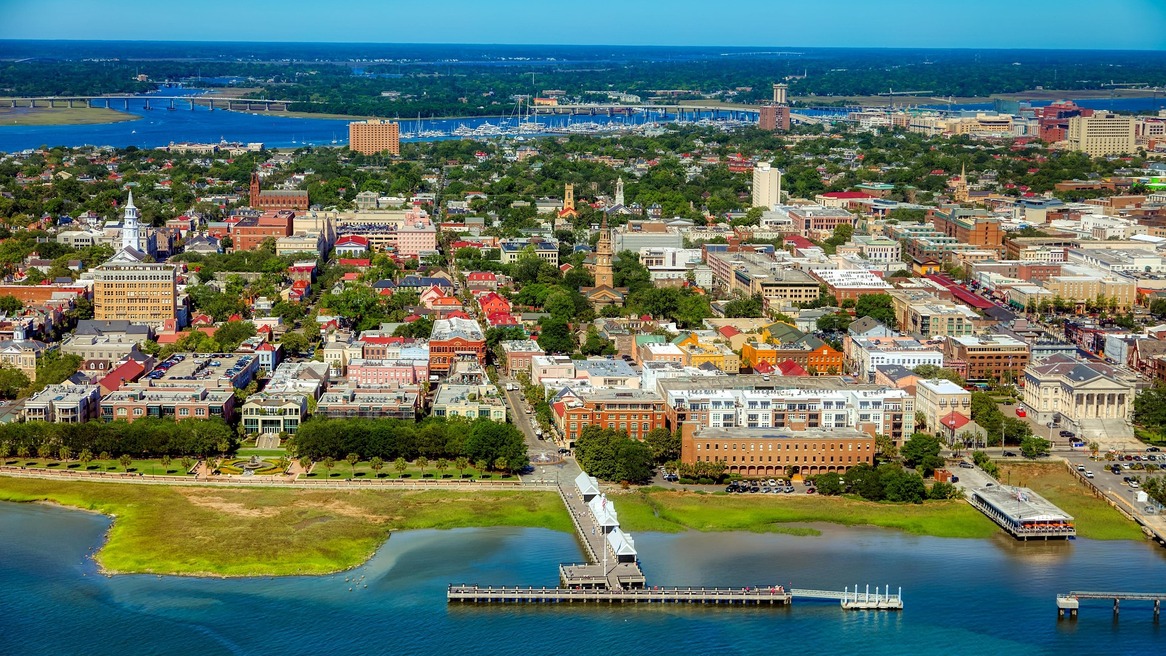
Downtown Charleston is perfect for visitors who want to get to know this city’s historic side, because what better way is there than to walk the cobbled streets, or take a horse-drawn carriage past the heritage mansions and grand Antebellum houses, or into the city centre with its graceful old architecture? It’s here you’ll find many of Charleston’s museums, including museums that tell the story of the city’s part in the slave trade, and several sharing the story of Charleston’s tumultuous history, and the part it played in the Civil War — Fort Sumter is where the very first shots of the conflict were fired. Downtown Charleston has a huge range of accommodation, with variety in style and price bracket. Do you prefer a historic conversion, a bijou boutique hotel, a large and lively aparthotel, or something in between? This is also a fantastic neighbourhood for foodies to explore, and for nightlife.
Ideal for: City breaks, families, sightseeing, foodies, romantics, night owls
Discover our recommended hotels near Downtown
Explore more >
View all hotels in Downtown
Explore more >
 Image by Mark Hemmings from Pixabay
South of Broad is the part of Downtown Charleston at the tip of the peninsula, so it has all the riches of Downtown, but with water views. There are numerous historic properties in the South of Broad neighbourhood, nestled alongside townhouses in an array of cheerful candy colours. Arguably the most famous street in the South of Broad neighbourhood is Rainbow Row, which is where you'll find many of these charming houses. The Battery is the chic and waterside edge of the neighbourhood; it is lined with palm trees, mature oak trees and Civil War cannons on the land side, and boasts lots of great restaurants and cafes. King Street is where you'll find the best shops. South of Broad is known for its accommodation options in converted period properties — hotels and guesthouses have been created from some of the most beautiful mansions and townhouses. As well as admiring local architecture, those with an interest in history will want to visit the Heyward-Washington House Museum, the Nathanial Russell House, and Saint Michael’s Episcopal Church.
Ideal for: Romantics, foodies, luxury lovers, culture buffs
Discover our recommended hotels near South of Broad
Explore more >
View all hotels in South of Broad
Explore more >
Charleston’s French Quarter is the historic heart of Downtown, the bit within the original walls of the first settlement. Sitting between the Cooper River, Broad Street, Meeting Street and Market Street, the French Quarter is where you’ll find the old slave market, the beautifully Gothic French Huguenot Church, the Pink House Tavern established in 1712, and the Confederate Museum. It’s also known for its art galleries. The French Quarter also encompasses Waterfront Park, known by many for its pineapple fountain, and fantastic views. You can take a carriage tour of the French Quarter for optimum charm, but it’s easily explored on foot. Accommodation here tends to be converted from historic properties, but there are plenty of more contemporary builds around the edges, with a good range of guesthouses, B&Bs, hotels, and apartment hotels. This is a great place for food and drink too, a central gathering spot, in a community where cuisine really matters!
Ideal for: History buffs, sightseeing, city breaks, luxury lovers, foodies, night owls
Discover our recommended hotels near The French Quarter
Explore more >
View all hotels in The French Quarter
Explore more >
 https://www.flickr.com/photos/hunky_punk/
Ansonborough is a lesser-known historic district. Here you’ll find the same graceful architecture, some of it dating back to the 18th century, palmettos and oaks, and proximity to Charleston’s museums and galleries, shops, theatres and restaurants. It’s on the Cooper River side of the peninsula, close to the market and King Street. Some of Ansonborough’s main sights include the William Rhett House and the South Carolina Aquarium.
Ideal for: Families, shopping, sightseeing, relaxed stays
Discover our recommended hotels near Ansonborough
Explore more >
View all hotels in Ansonborough
Explore more >
Harleston Village is on the north side of Broad Street, but carries on from where South of Broad leaves off, with historic Italianate mansions and Georgian townhouses. While Harleston Village doesn’t have the same waterfront views, it does have its own body of water: Colonial Lake, a large and landscaped tidal pool, lined with trees and parkland. The most desirable properties in Harleston Village, both residential and hotels, are positioned around Colonial Lake. The College of Charleston is one of the neighbourhood's main sights, another is its golf club, which was America’s first. Harleston Village gets a fresh lease of life as the sun goes down; there are some fantastic places to eat and drink here, and a lively after-dark atmosphere. This is also a great place for boutique and independent shopping.
Ideal for: Romantics, foodies, city breaks, shopping, night owls
Discover our recommended hotels near Harleston Village
Explore more >
View all hotels in Harleston Village
Explore more >
 By w_lemay - https://www.flickr.com/photos/59081381@N03/50684026253/, CC BY-SA 2.0
Radcliffeborough is a neighbourhood crossing into Downtown Charleston via Upper King Street. It’s the buzzy, restaurant and nightlife hub of Charleston, while also being home to the Cathedral of St. Luke and St. Paul, and a candy-coloured array of colonial-era summer holiday homes built by local plantation owners. From the 19th century Radcliffeborough’s residences scaled back somewhat, and the more modest cottages of working-class families sprang up; walk down Morris or Coming Street and you’ll get a sense of Charleston’s rich past. Radcliffeborough also has more than its fair share of green spaces and parks. Close to the College of Charleston and the Medical University of South Carolina, this is a popular neighbourhood for students and professors, who spend time in this picturesque district, even if they don’t live here!
Ideal for: Night owls, sightseeing, living like a local
Discover our recommended hotels near Radcliffeborough
Explore more >
View all hotels in Radcliffeborough
Explore more >
Cannonborough is a great neighbourhood for foodies. There’s your classic southern fare, but also international flavours, from tapas bars and cocktail bars to Vietnamese cafes. Look out for great bakeries too. It is also a great spot for shoppers: King Street, famous for its antique shops and independent local boutiques, runs right through it, as do Spring Street and Cannon Street, which are also great spots for some retail therapy. Accommodation options cover most bases here. You'll find some big-name properties as well as apartments, B&Bs and guesthouses.
Ideal for: Foodies, romantics, families, living like a local, night owls
Discover our recommended hotels near Cannonborough
Explore more >
View all hotels in Cannonborough
Explore more >
Elliotborough is the neighbouring neighbourhood to Cannonborough, a trendy spot known for its historic 19th and 20th century architecture, huge range of restaurants and lively nightlife. Close to Downtown Charleston, Elliotborough is an easy journey to many of the city’s major sights, and it’s a popular spot for local residents for the same reason. You can walk to the market, the Battery, and Waterfront Park, and you’re only a hop, skip and a jump from Marion Square. Like Cannonborough, Elliotborough is a cool shopping destination too. Because many of the homes here are small freeman cottages, there are fewer hotel conversions here, but more aparthotels and purpose-built properties
Ideal for: Hipsters, living like a local, foodies
Discover our recommended hotels near Elliotborough
Explore more >
View all hotels in Elliotborough
Explore more >
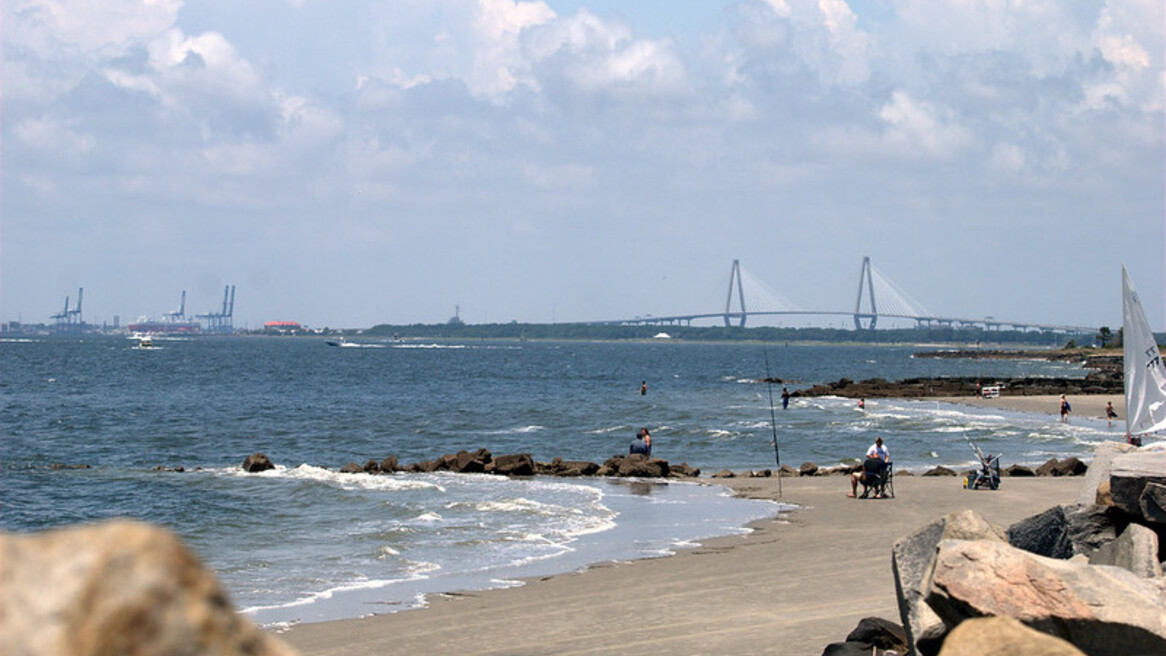
Old Village is a harbour-side neighbourhood across the river from Downtown Charleston. It played a key role in the colonial era, and is still happy to tell you about it now. It’s part of the Mount Pleasant area, which was once a separate town, but has now well and truly become part of Charleston proper. This is a great neighbourhood for dining out (the views are fantastic), and for shopping (there are lots of independent shops and interesting boutiques). There’s quite a cool vibe amongst the fantastic historic homes that drip with Spanish moss and old-fashioned charm. One of the major local sights is the Alhambra Hall, which used to be the Ferry Port, and you’re also a very pleasant ferry ride from Fort Sumter.For those looking to relax on the sand, you’re on the same side of the peninsula as the Atlantic beaches. Old Village’s village atmosphere appeals to many travellers: it’s friendly, charming, close to the beach, and close to the main sights of Charleston.
Ideal for: Families, beach lovers, romantics, history buffs