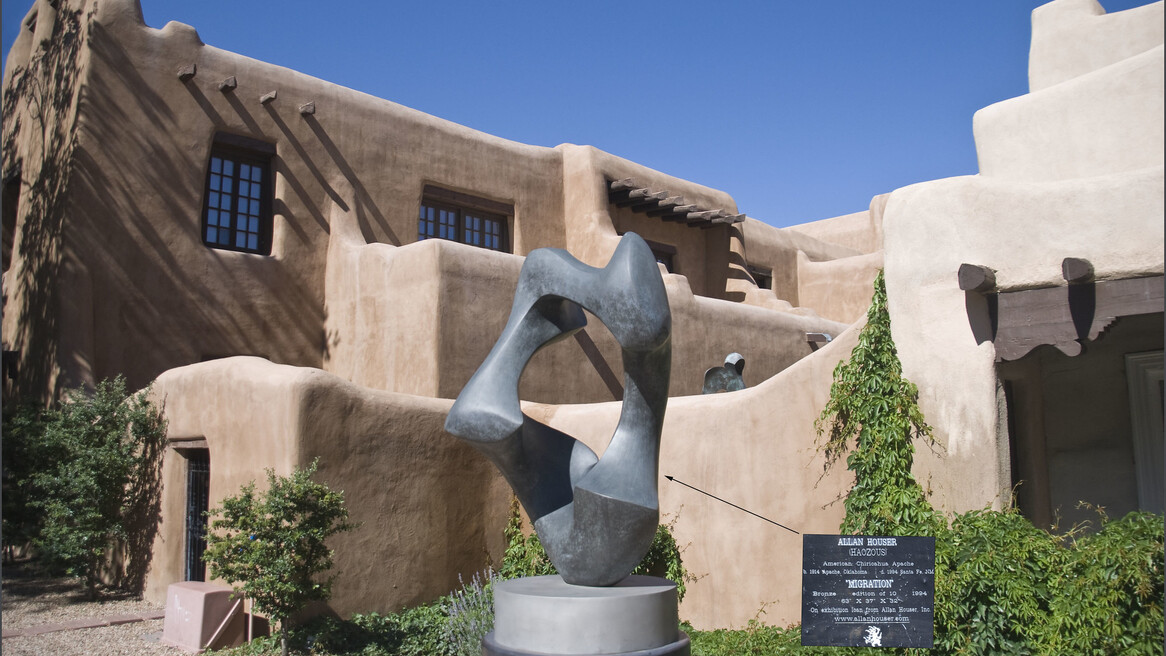

Santa Fe is a strikingly beautiful city in the foothills of Sangre de Cristo, New Mexico. Its surroundings are strikingly beautiful, but so is the city’s architecture, much of it Pueblo-style, with adobe buildings, colourful facades, and crooked streets. In Santa Fe, artists have long flourished, and there are more galleries here, per capita, than anywhere else in the US, as well as independent, and traditional, makers of crafts, from pottery and textiles to silver and turquoise jewellery, and hand-carved furniture. Santa Fe is also famous for its food.
Santa Fe is one of those cities with real neighbourhood variation, so it’s worth considering what kind of atmosphere you like when you’re travelling. The Downtown and Plaza neighbourhoods are convenient for sightseeing and offer an easy balance of historic charm, visitor facilities, contemporary comforts, and choice when it comes to accommodation and eating out. Canyon Road and Eastside are where you’ll find more of Santa Fe’s galleries — the gallery scene is huge here, with maybe 50-odd along the half-mile stretch of Canyon Road. These are also good neighbourhoods for families, with plenty of green space and quirky museums. The Railway District is arty too, but with a more contemporary edge, which incorporates a farmers' market and a great food and entertainment scene.
Ideal for: city breaks, sightseeing, families, history lovers, photographers
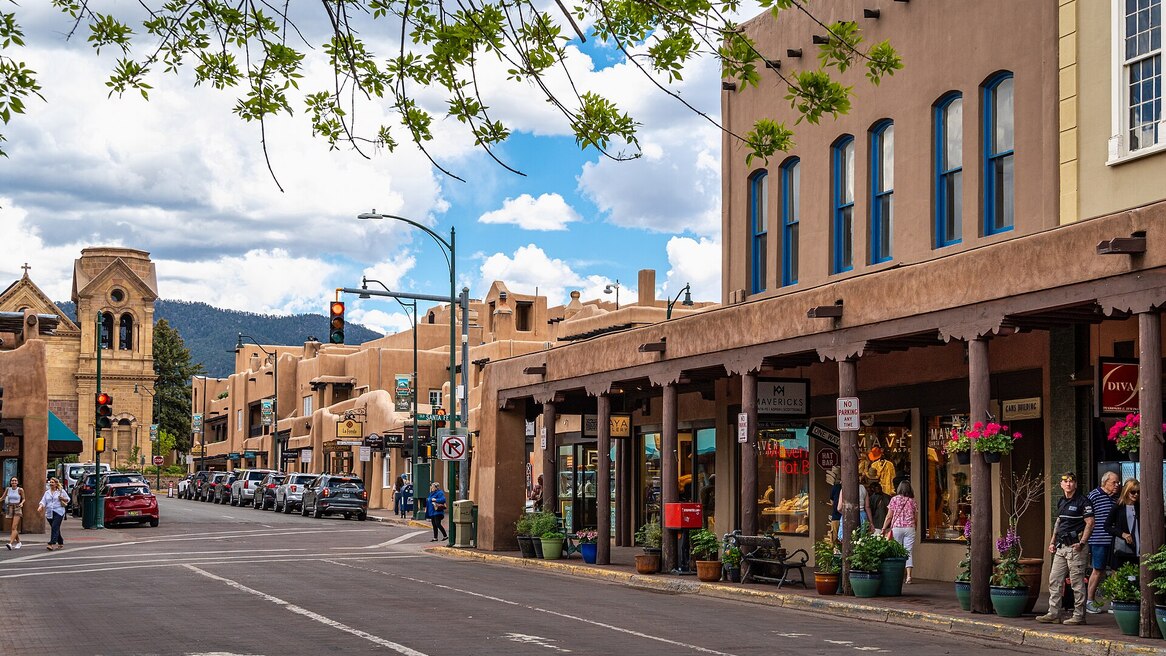 By dconvertini - https://www.flickr.com/photos/42477684@N08/54289493503/, CC BY-SA 2.0
The Santa Fe Plaza is the original centre of town, and where you’ll find the Cathedral Basilica of St. Francis of Assisi, which is surrounded by a park with its own market place, and the Palace of the Governors, which is an adobe building now housing traditional jewellery boutiques. Radiating outwards from the Plaza are streets of more low-rise adobe buildings. The majority of these have been somewhat rebuilt over the last 400 years or so, and most of them repurposed too, but it’s still a beautiful place to explore. Sights worth seeing include the San Miguel Chapel (the oldest church in the US); the New Mexico State Capitol and its art collection; the New Mexico Museum of Art; the Georgia O’Keeffe Museum and Burro Alley, which is a pedestrianised street of galleries, boutiques, and places to eat and drink.
Did you know? The Santa Fe Plaza is the end of both the Santa Fe Trail, and the Camino Real de Tierra Adentro.
Discover our recommended hotels near the Santa Fe Plaza
Explore more >
View all hotels in the Santa Fe Plaza
Explore more >
Ideal for: art lovers, couples, relaxed visits, unique travel experiences, families, photographers
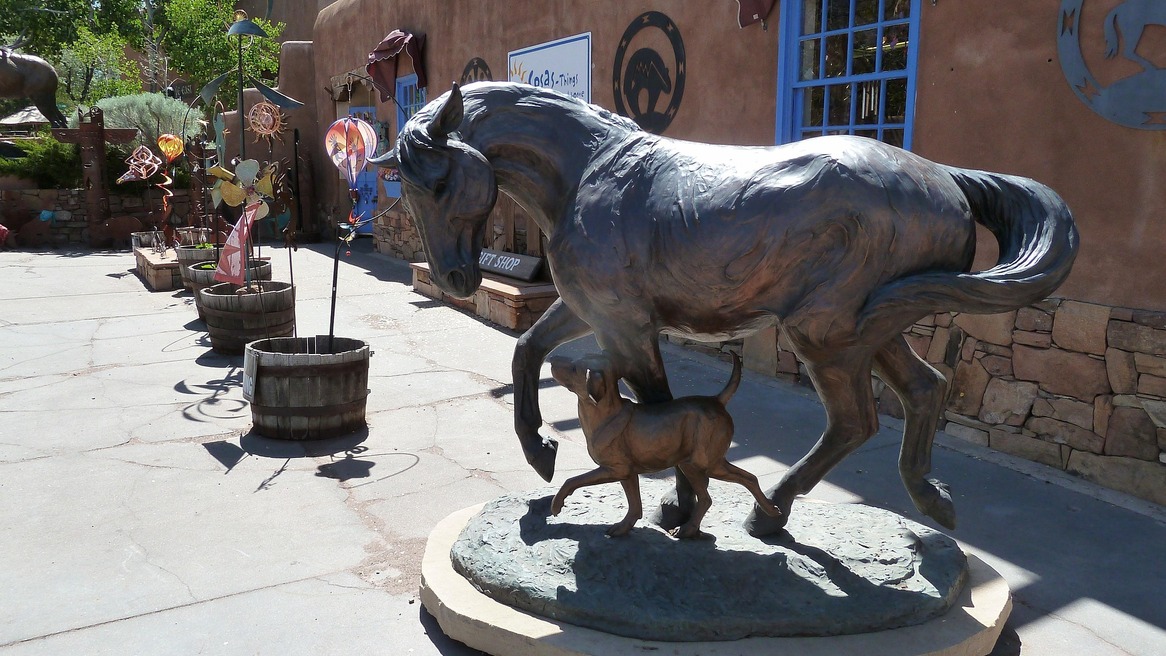 Image by Brigitte Werner from Pixabay
Santa Fe has about 250 art galleries, and around 100 of these are set along a half-mile stretch of Canyon Road. There’s an eclectic collection of art available to view and buy, including Native American art, work by well-established artists and even dead ones. This used to be a residential neighbourhood of adobe homes, and the galleries have been converted from artists’ homes. Some of the more famous are the Turner Carroll Gallery, the Matthews Gallery and the Ventana Fine Art Gallery. To allow visitors to visit as many galleries and studios as they have an appetite for, some of Canyon Road has been pedestrianised, and you can walk along this tree-lined route, stopping off at restaurants, bars and cafes too. And jewellery shops. If you’re interested in architecture, as well as art, visit the Historic Santa Fe Foundation, which helps to preserve the city’s historic properties. Even if you don’t stay in the neighbourhood, this is a wonderful place to explore.
Did you know? Canyon Road has been an important thoroughfare for people since the 13th century, when it was used by the Puebloan peoples as a route between the mountains and the river.
Discover our recommended hotels near Canyon Road
Explore more >
View all hotels in Canyon Road
Explore more >
Ideal for: photographers, history lovers, art lovers, longer stays, romantics
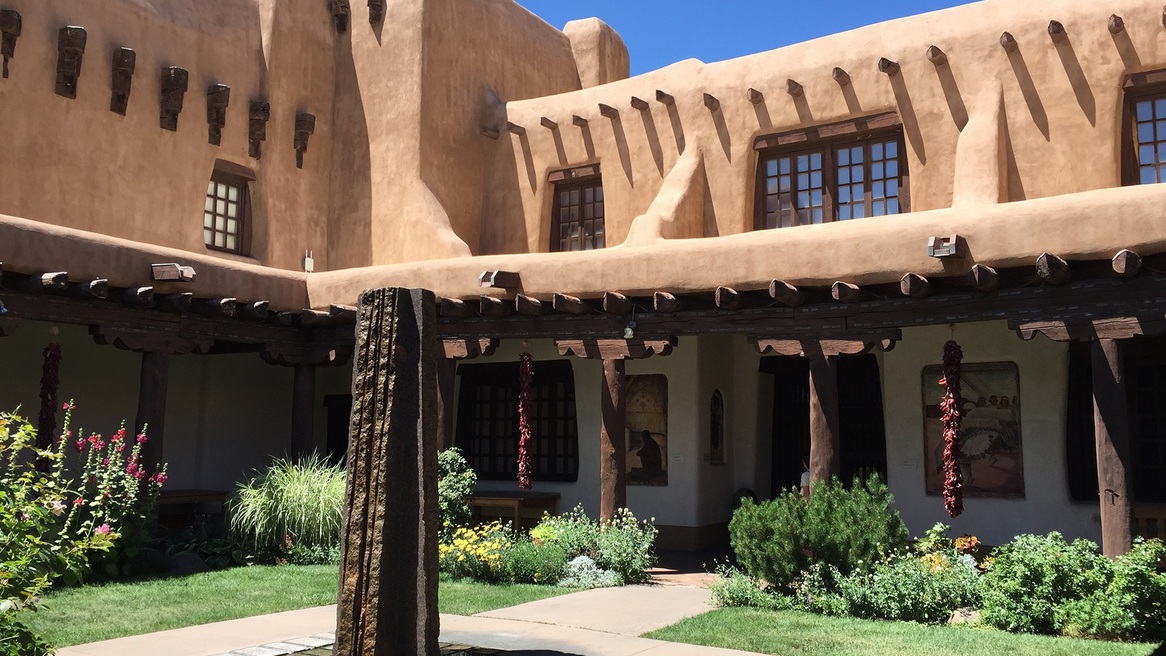 Image by Cassie Lozuk from Pixabay
Santa Fe’s Eastside neighbourhood is united by its architecture, a fusion of the New Mexico adobe style and building techniques from the East Coast circa 1912, which is when New Mexico became a state. The Historic Eastside is the oldest part of the neighbourhood, some of the buildings are hundreds of years old. This is probably the most photographed neighbourhood in Santa Fe: people love it for the gardens and high adobe walls as well as the traditional architecture. Staying here keeps you close to Downtown Santa Fe, but also close(r), to some really excellent restaurants and bars, galleries, the river, and the Dale Ball Walking trails.
Did you know? Turn to the east and you'll see the Sangre de Cristo Mountains, beautifully framing the architecture of Historic Eastside.
Discover our recommended hotels near Historic Eastside
Explore more >
View all hotels in the Historic Eastside
Explore more >
Ideal for: art lovers, relaxed stays, families, foodies, photographers, train lovers
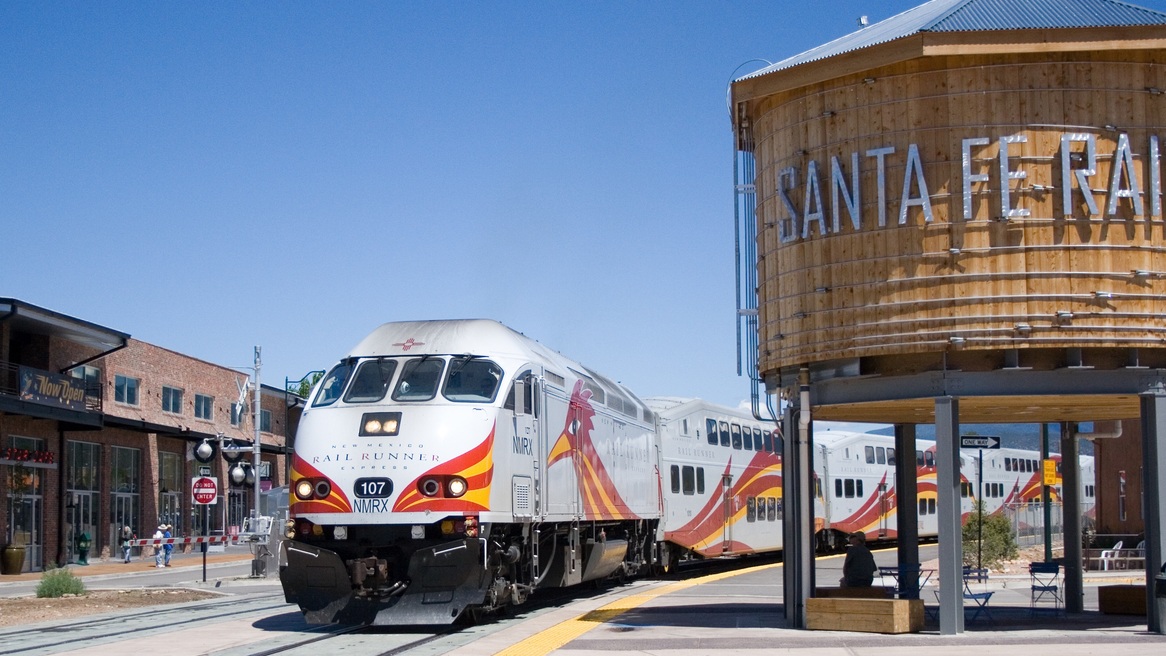 Image by orenstein2 from Pixabay
Santa Fe’s Railyard was at the end of the Atchison, Topeka and Santa Fe Railway Line, which gave access to the city via a scenic route across the deserts and mountains of New Mexico. Many people come to visit the Railcard district to see the trains, but this neighbourhood also hosts the Santa Fe Farmers Market, the Railcard Artisan Market, the Santa Fe Artists Market, and El Museu Mercado, plus lots of independent shops and boutiques. And, of course, there are galleries too, plus great restaurants and bars.
Did you know? The Railyard District is a stop on the New Mexico Road Runner Express.
Discover our recommended hotels near Railyard District
Explore more >
View all hotels in Railyard District
Explore more >
Ideal for: history lovers, relaxed breaks, unique bases, couples, artists and craftspeople, photographers
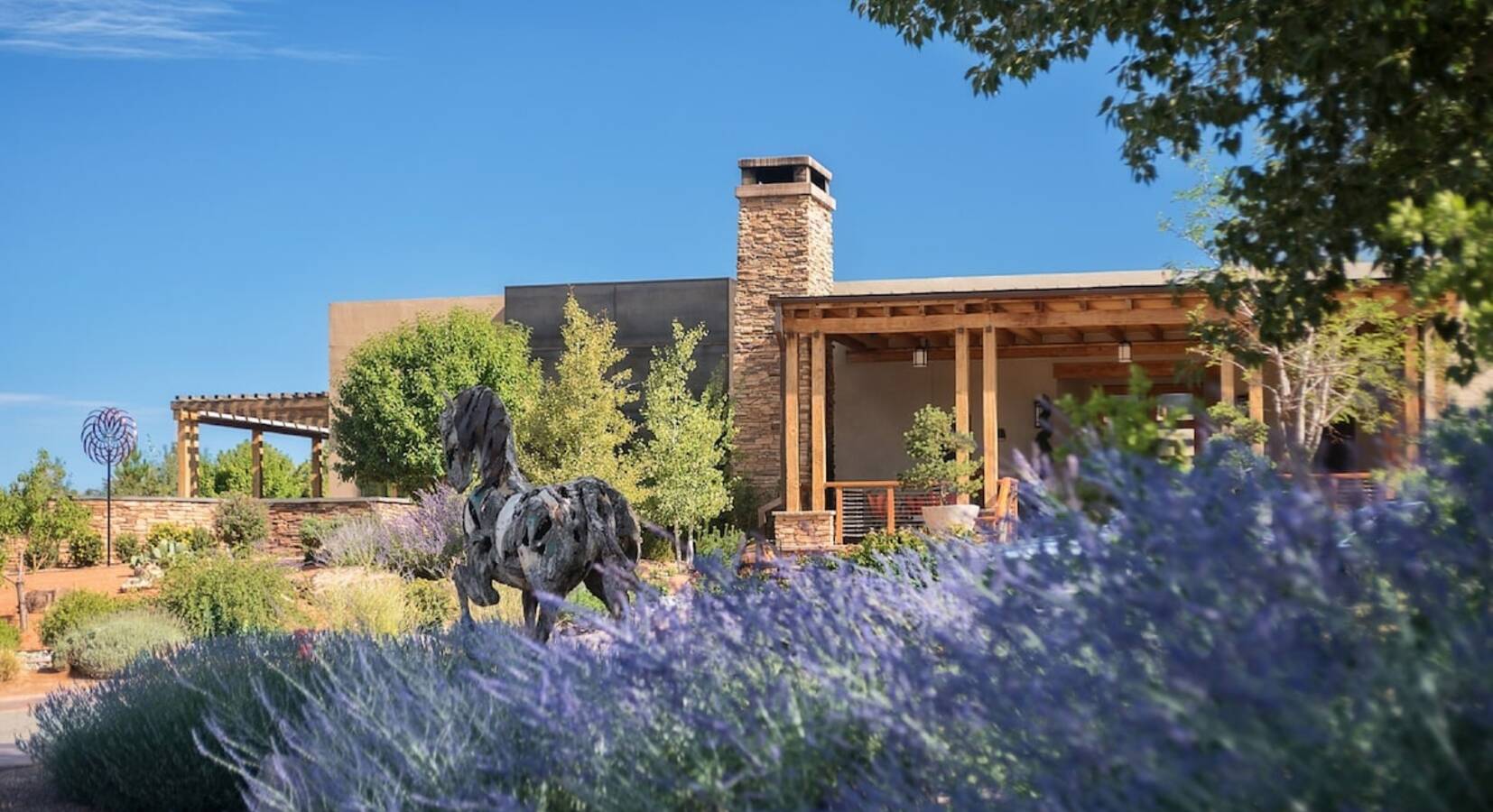
Ten miles to the north of Downtown Santa Fe, on the edge of the Sangre de Cristo Mountains, is Tesuque, a historic Pueblo with a small population. It's surrounded by land that features some incredible rock formations. Back in the pueblo you’ll find plenty of artists and craftsmen, creating poetry, sculpture, silverwork, and traditional textiles and clothing. You can pick up some of what you see being created at the Tesuque Village Market, which is well worth a visit, even if you’re not staying here.
Did you know? The name Tesuque means village of the narrow place of the cottonwood trees.