
The charms of Bruges are far from secret: the medieval architecture, cobbled streets, canals and prevalence of chocolate shops are well-documented, yet they don’t appear spoiled by the attention. Some destinations feel like a theme park of their former selves, but Bruges somehow survives its popularity and still feels charming. The churches are busy but still peaceful, and the warehouses and townhouses have been thoughtfully converted into accommodation or restaurant space, yet still fit the scene.
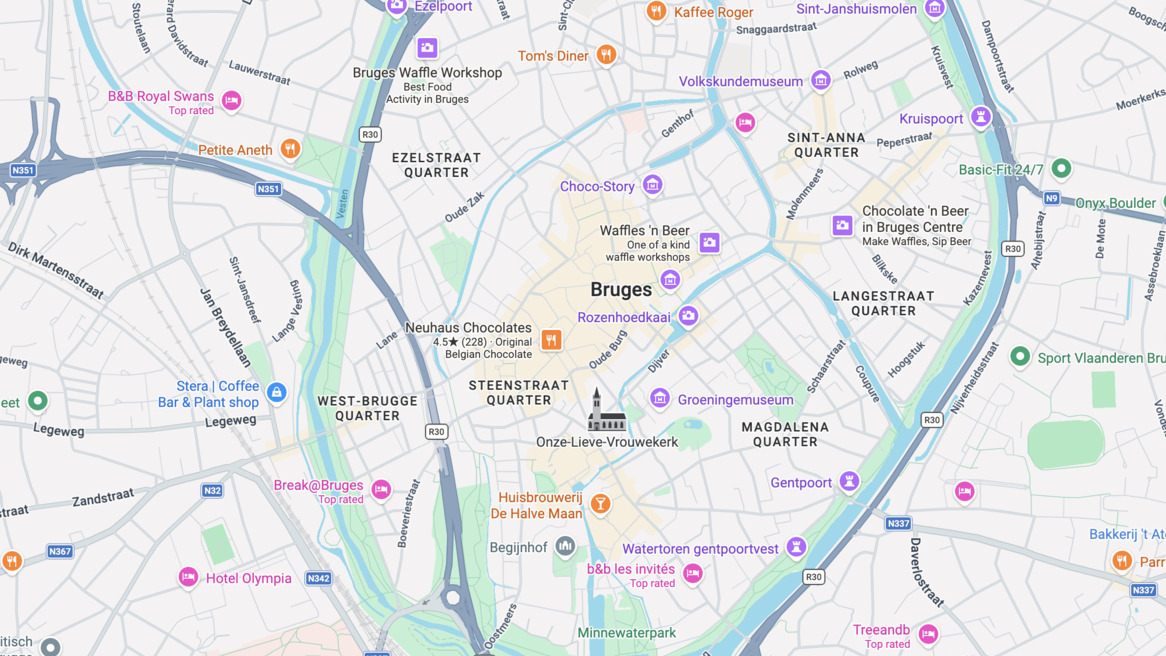
There is plenty of accommodation in Bruges, which is a testament to its popularity. The Historic Centre is an obvious place to start looking for options: this is the neighbourhood within the main canal’s loop, with the Markt, Burg and Belfort. Sint Gillis neighbours the Historic Centre, but is a bit quieter, with a few green spaces; the Onze-Lieve-Vrouw Quarter is good for the museums. Ezelstraat is still central, but just outside the 13th century ramparts, and livelier, with cool boutiques and places to eat and drink. Sint Anna is on the opposite side of the Historic Centre to Ezelstraat: people actually live in this part of Bruges, and as well as working windmills Sint Anna has bars and restaurants aplenty. Some people prefer to stay by the station in the Stationsbuurt, which is less picturesque but great value; if you’re travelling as a family you might want to consider t'Zand.
Ideal for: city breaks, first-time visitors, sightseeing, families, short stays, romance
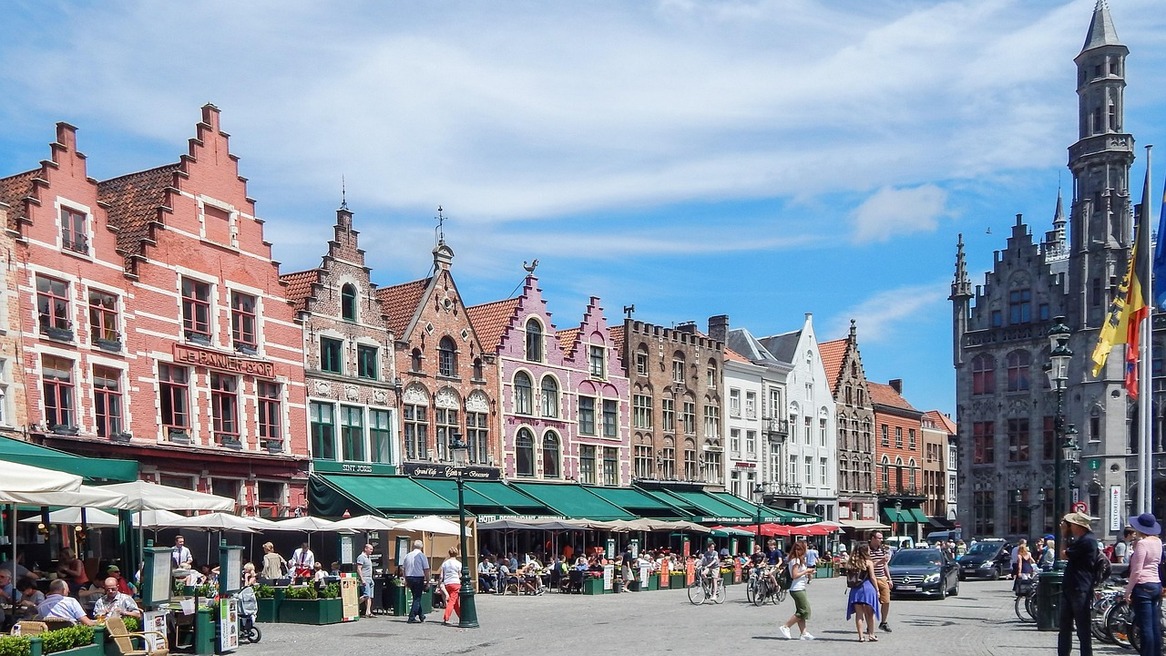
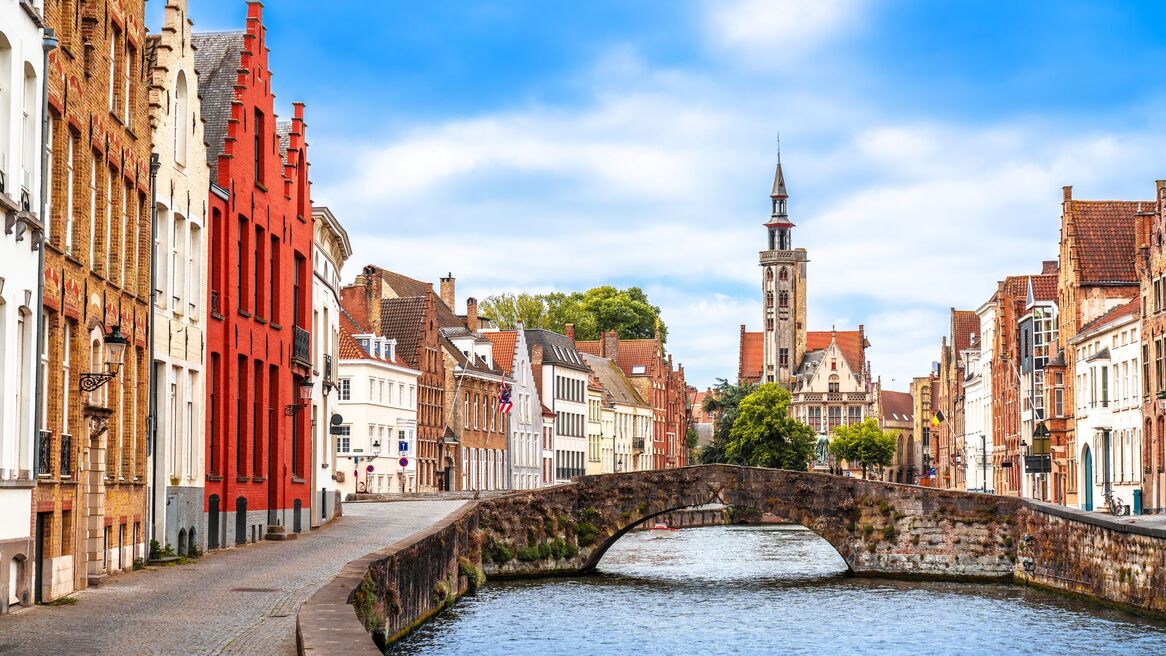
All of central Bruges is UNESCO Heritage Listed, not least because of its beauty (it also boasts a unique grid pattern to its streets and canals, and the architecture is a fine example of a medieval trading city). The medieval market square, called the Markt, feels like the real centre, around which are stepped buildings, plus the Belfort (the belfry), the Burg, the stadhuis, the Basilica of the Holy Blood, and the library. Beyond the huge square are narrow, cobbled streets with boutiques, galleries, cafes, restaurants and lots of chocolate shops. This is a neighbourhood to stroll around: spot the bridges and the churches, or possibly take a canal ride for a different point of view. It is beautifully lit at night, so you can continue to explore on foot after dark. Expect boutique hotels aplenty, and canal-side charmers.
Did you know? The reason Bruges is so well preserved isn't because it was so beautiful no one wanted to alter it; it's because the city was so poor that there was no money to rebuild on a more contemporary layout or style; they could only repair what they had!
Discover our recommended hotels near the Historic Centre
Explore more >
View all hotels in the Historic Centre
Explore more >
Ideal for: families, romantics, longer stays, travellers on a budget
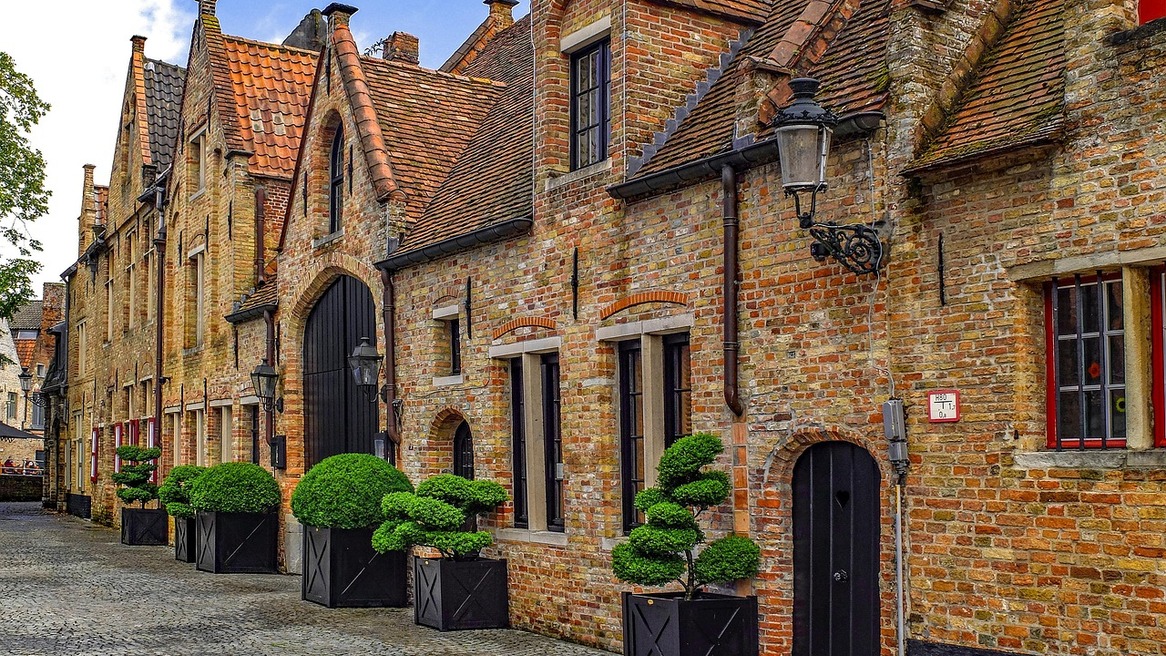
Sint Anna borders Bruges’ Historic Centre, and has the same cobbled streets and canals, but the buildings are more residential; even the churches feel designed for quiet contemplation (though there are still some really fantastic interiors, and the Jeruzalemkerk is modelled after the Church of the Holy Sepulchre in Jerusalem). Some of Sint Anna’s other main attractions are the Lace Centre (or Kantcentrum) and the windmills. The only shopping street is Langestraat; this is where you’ll find the restaurants, cafes and bars too, including a cafe called Café Vlissinghe, which claims to be the oldest cafe in Bruges. The pay-off is that this is a peaceful place to stay, with some great aparthotels, guesthouses and B&Bs, and you're only about ten minutes walk from the Markt and the heart of the historic centre.
Did you know? The charmingly named Our Lady of the Pottery, which now houses art and religious relics, actually started out as a hospital.
Discover our recommended hotels near Sint Anna
Explore more >
View all hotels in Sint Anna
Explore more >
Ideal for: relaxed breaks, romantics, on-foot-explorers, families, living like a local, longer stays
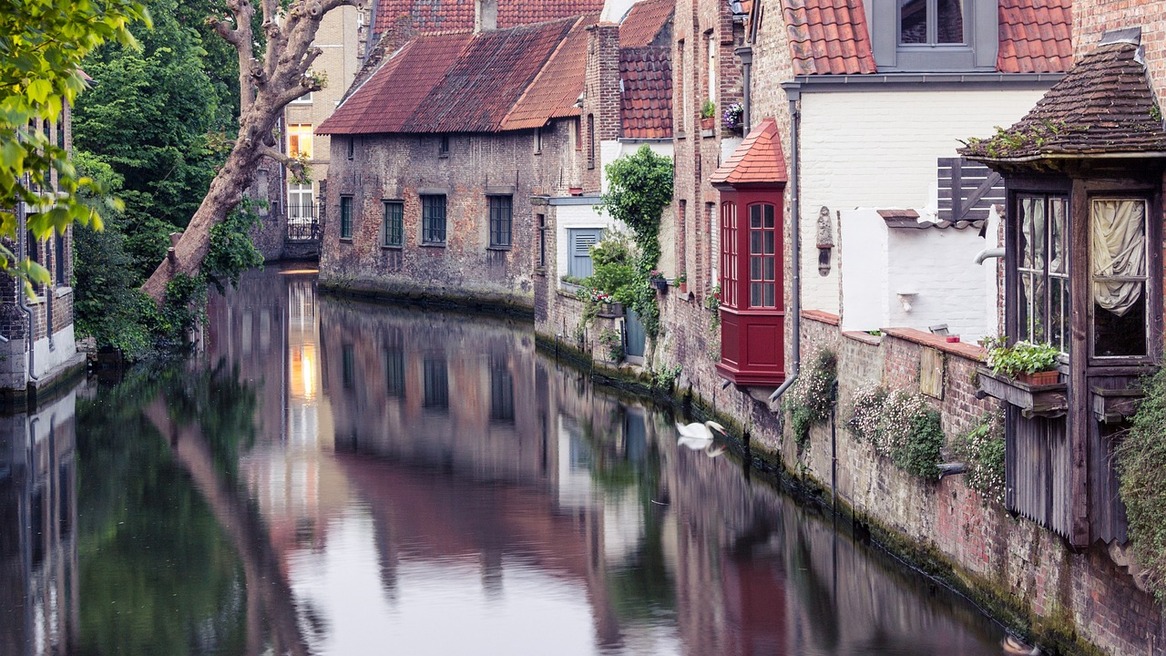 Image by meineresterampe from Pixabay
Sint Gillis is on the northern border of the Historic Quarter, opposite Sint Anna, and is another historic, yet quieter option to stay in. Book a hotel here, and you’re still only 15 minutes or so stroll from the Markt, you still have the charm of the Langerei canal to stroll alongside, and there are plenty of restaurants, cafes and bars, but fewer coach parties and tourist groups. Sint Gillis was outside the walls of the city until 1300, so it has a villagey feel. The architecture is less grand: this was a neighbourhood for painters, weavers, craftsmen and fishermen, so the houses aren’t so big. The main local sight is Sint Gilliskerk, the parish church, which is a surprisingly simple, 13th century Gothic design on Baliestraat. Don’t expect lively nightlife; there’s no local appetite for it, but there are some really charming traditional pubs, bars and cafes.
Did you know? A number of significant local artists are interred beneath Sint Gilliskerk, but many of them lack a formal memorial or tombstone. This explains why so many artists and art students pilgrimage to this neighbourhood.
Discover our recommended hotels near Sint Gillis
Explore more >
View all hotels in Sint Gillis
Explore more >
Ideal for: travellers on a budget, families, shopping, city breaks, sightseeing
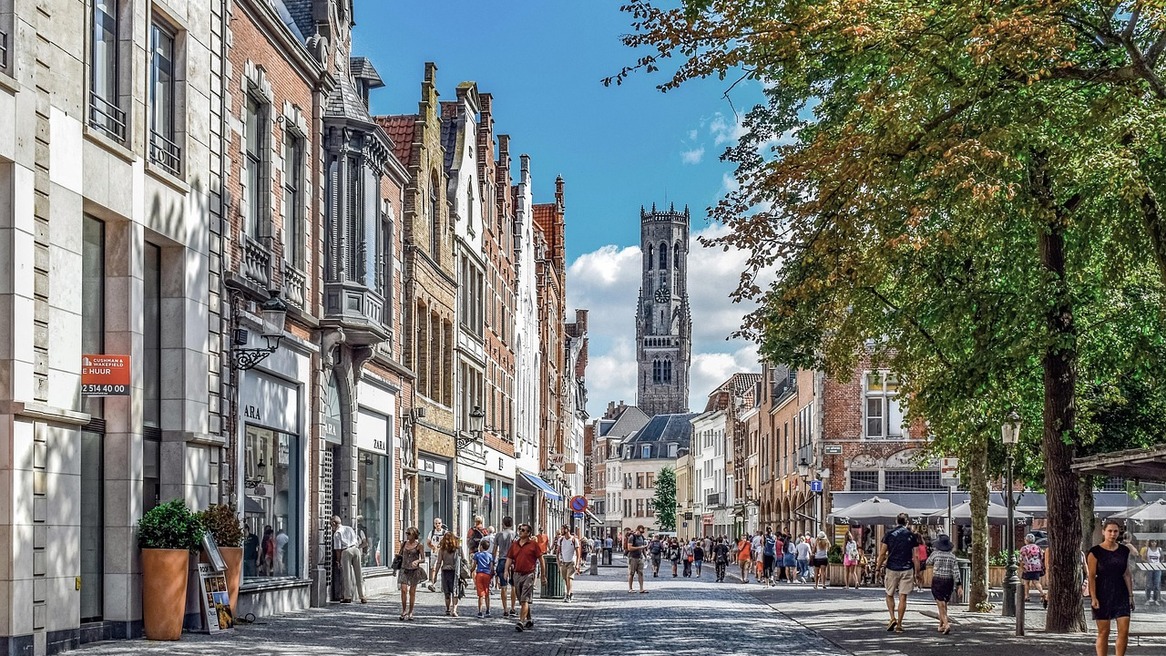 Image by Dimitris Vetsikas from Pixabay
The Streenstraat Quarter is the neighbourhood around Streenstraat, the long shopping street that runs between t’Zand and the Markt. While the central area is historic with lots of traditional stepped buildings, the outer stretch has the big brands in more contemporary buildings, including the Zilverpad, which is a shopping courtyard. One end of Streenstraat is marked by Sint Salvatorskathedraal, inside which you can expect tombs, tapestries and religious art. Ezelstraat is another neighbourhood surrounding a street: Ezelstraat, an 800-year-old street in northwest Bruges. It's a residential area, with bohemian flair due to being once loved by artists, and more recently popular with students. This is a great place for finding great value accommodation, along with vintage shopping, art galleries, and friendly places to eat and drink.
Did you know? Streenstraat translates to “Stone Street”, reflecting the fact that this was the one paved street in Bruges, surrounded by smaller local roads, which were surfaced in sand or just earth.
Discover our recommended hotels near Streenstraat Quarter & Ezelstraat
Explore more >
View all hotels in Streenstraat Quarter & Ezelstraat
Explore more >
Ideal for: travellers on a budget, seeing more of Belgium, families
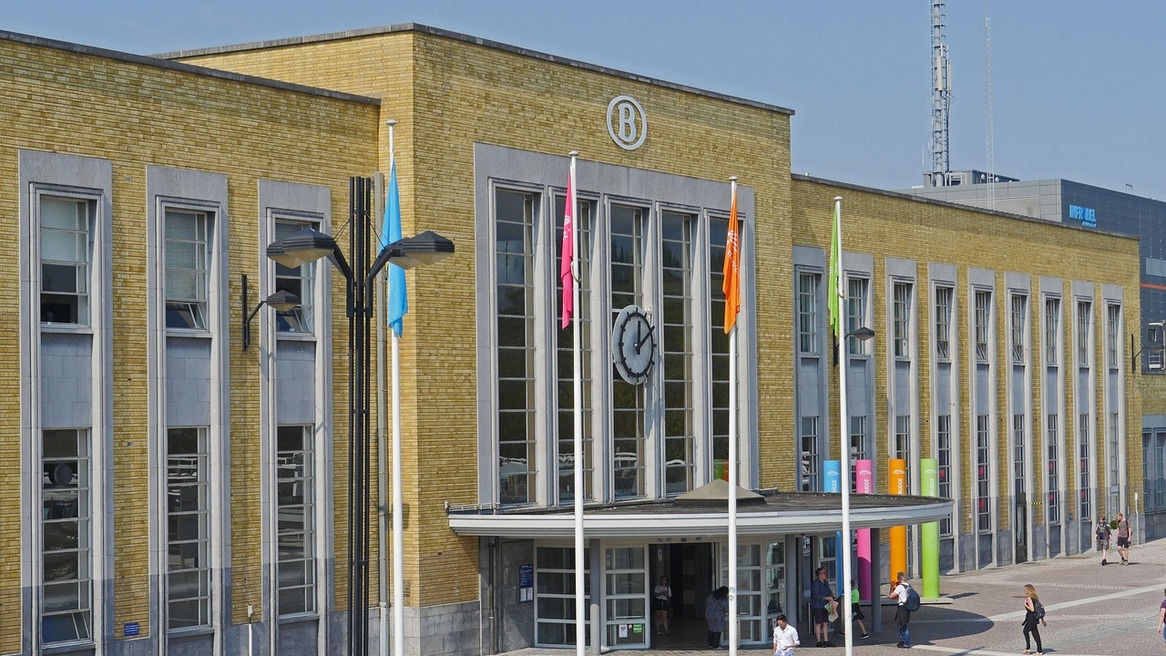
Stationsbuurt, or the Station Quarter, is, not surprisingly, the neighbourhood around the station. This isn’t historic, medieval Bruges; it’s a functional travel hub, with the sort of facilities and accommodation you’d expect to find around a busy railway terminus. That means contemporary, big-name hotels, offering rates that are 30-40% under what you’d pay in the Historic Centre. As well as being a transport hub, making this neighbourhood an easy option for short stays or people wanting to explore more of Belgium, Stationsbuurt is also only around 20 minutes' walk from the Markt, and there is often a free shuttle bus running (check this detail regarding the timing of your stay). The other advantage of staying in Stationsbuurt is that it’s close to Beguinage and Minnewater Park, which many visitors skip because they’re ‘further out’, but which are very much worth seeing.
Did you know? The free shuttle service makes this one of the most convenient places to stay!
Discover our recommended hotels near Stationsbuurt
Explore more >
View all hotels in Stationsbuurt
Explore more >
Ideal for: travellers on a budget, families, driving holidays
t'Zand is a huge square on the western edge of the Historic Centre, around ten minutes' walk from the Markt. When we say huge, t'Zand is around a hectare and a half of public space, lined with about 150 linden trees, then ringed by cafes, bars and restaurants. The Concertgebouw is at one end; there are some great contemporary hotels in this neighbourhood ready for concert-goers, as well as visitors to historic Bruges. On Saturdays, t'Zand hosts a produce market.
Did you know? t'Zand hosts around 200 shows and events each year!
Ideal for: city breaks, sightseeing
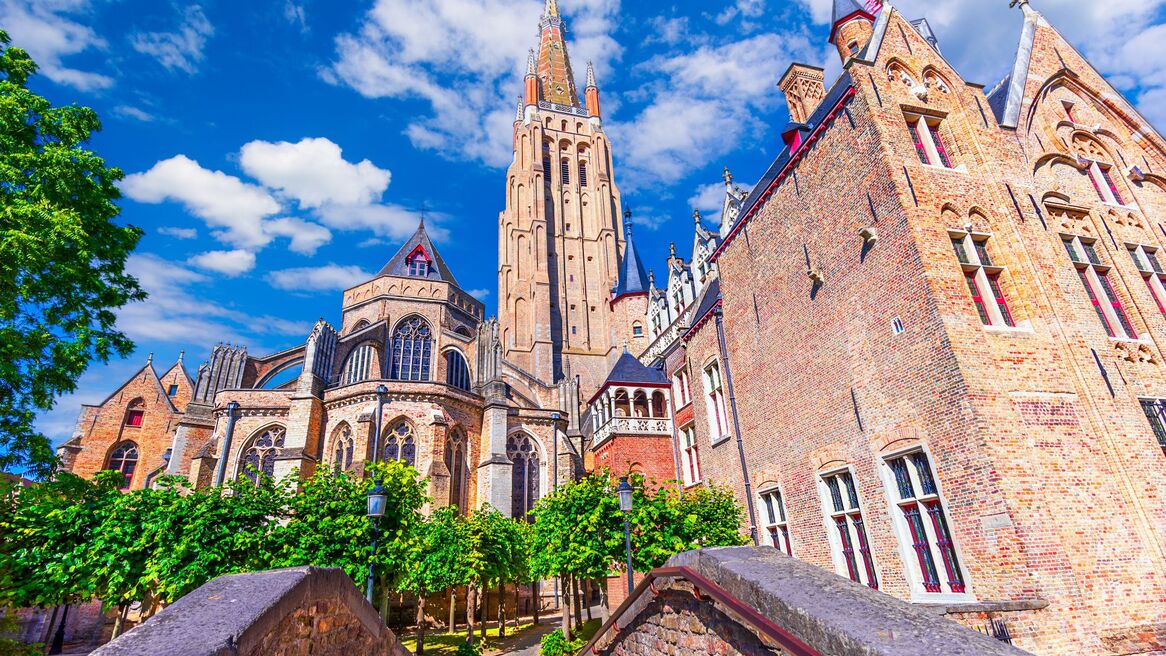
The Onze-Lieve-Vrouw Quarter is a central Bruges neighbourhood, centred around the Church of Our Lady, which is where you can see the tallest tower in Bruges, and Michelangelo’s Madonna and Child. It has been here since 1514, and is known for being the only Michelangelo sculpture to leave Italy during his lifetime. If you’re staying in the neighbourhood, you’re also close to the Boniface Bridge, one of Bruges’ most charming, and to the Groeningemuseum, which has one of the most impressive collections of Flemish art in Bruges. The Groeningemuseum, Gruuthusemuseum and Sint-Janshospitaal are all within just a few minutes' walk of each other, so you get a lot of bang for your museum buck. The Onze-Lieve-Vrouw Quarter is within a short stroll of many other major landmarks beyond, but its other main appeal is probably the Dijver canal, one of the most photographed stretches of water in Bruges. There is also a range of great places to stay, and places to eat and drink. Plus some great chocolatiers!
Did you know? The tower is 115.6 metres high...