
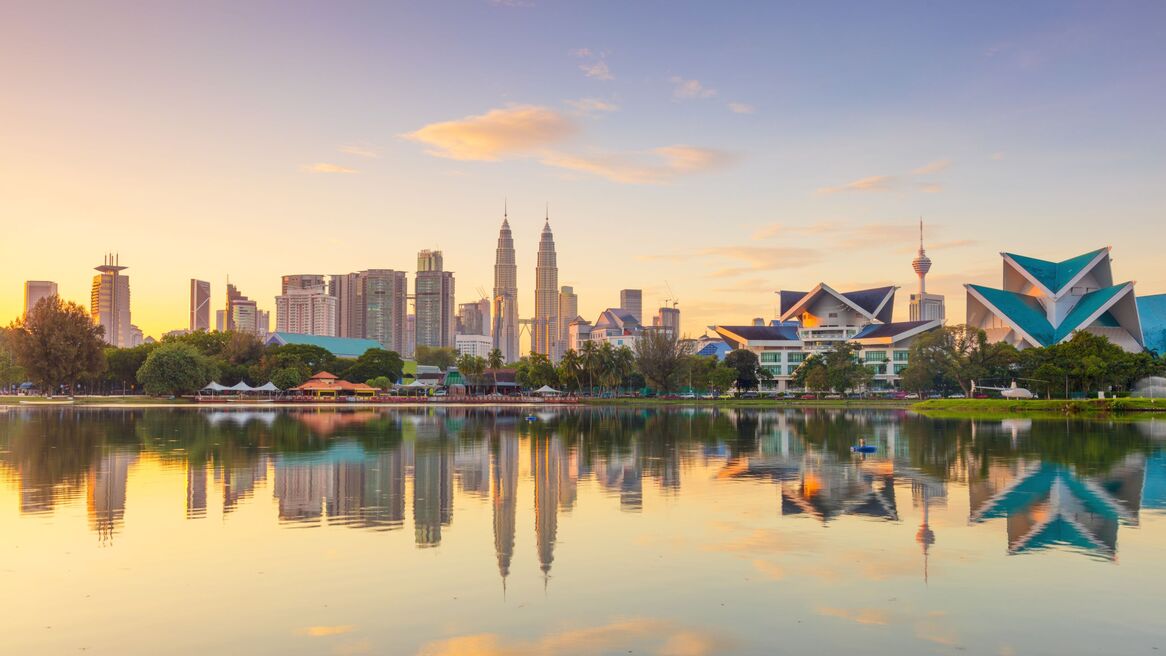
It sounds like a cliché to say it, but Kuala Lumpur really is a wonderfully friendly meeting of old and new. You can see it on the skyline, which has some of the world’s tallest skyscrapers, but also minarets, domes and temples adorned with guardian dragons. And you can well and truly taste it, in the street markets and night markets, the comfortable cafes and bistros, and the Michelin-starred hotel restaurants. The shopping ranges from traditional markets to the world’s finest luxury brands, and the accommodation stretches just as far. This city has some incredible green spaces, as well as wonderful museums and architecture too.
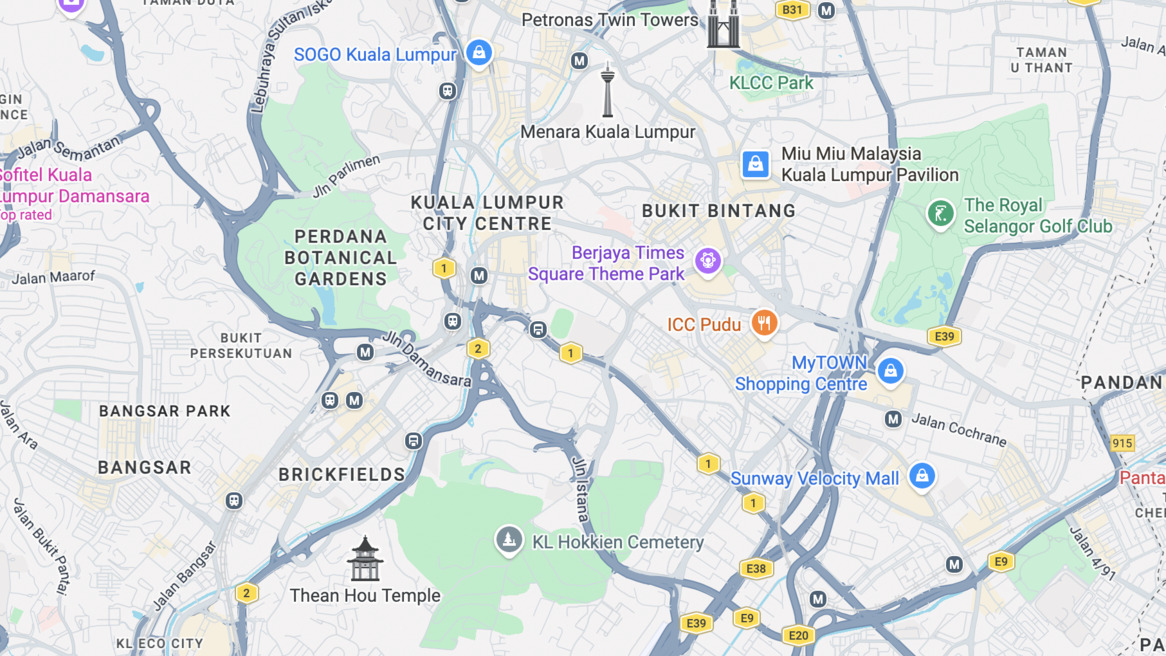
Some of Kuala Lumpur’s neighbourhoods are more one thing than another. KLCC is more luxury hotels, rooftop bars, and high-end food and shopping, whereas Bukit Bintang is more huge malls, night markets and nightlife. Chinatown is a good neighbourhood for street food, temples and a maze of historic alleyways, and haggling. Brickfields and Central are great areas for exploring the whole city, because they’re transport hubs, with Brickfields also being a colourful “Little India”. Bangsar is the place to stay if you want to see the city from a local point of view. It’s great for foodies; central, but outside the centre; has boutiques and galleries; and is home to many expats. Mont Kiara is our other more residential recommendation: an affluent neighbourhood known for being peaceful and family-friendly too.
Ideal for: city breaks, luxury lovers, shopping, short stays
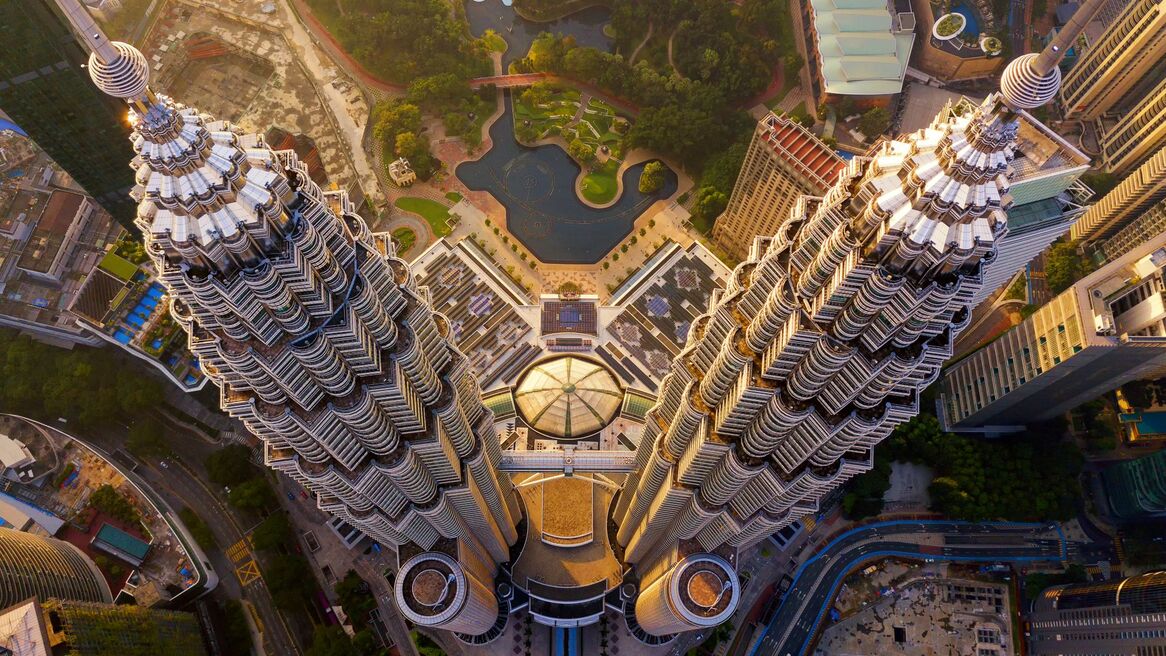
KLCC stands for Kuala Lumpur City Centre, and is the high-tech, pedestrianised city centre of Kuala Lumpur, home to the Petronas Towers, multiple shopping malls, the aquarium, the convention centre, multiple luxury hotels, and the KLCC Park, a fantastically tropical green space, complete with fountains, paddling pools, and play equipment. As well as the park, KLCC has some of the tallest buildings on the planet, and not just the Petronas Towers. This is a good neighbourhood for luxury hotels, late-night strolling, chain restaurants with air conditioning, and views of the skyline. KLCC is a good place to stay if you want to be protected from the tropical heat and humidity, because KLCC has some of the city’s best covered walkways, which are air-conditioned and connected to other landmarks, including shopping malls. And if you can’t find the landmark, restaurant, shop or attraction you want to see on the route of the air-conditioned walkways, you can easily find it by public transport connection, because KLCC is connected to the rest of Kuala Lumpur by the LRT and MRT lines.
Did you know? Before KLCC became a kingdom of concrete, this area was a race course, the Selangor Turf Club to be precise. The very last horse race that took place here was in 1992.
Ideal for: city breaks, shopping, night owls, party people, sightseeing
Bukit Bintang has long been Kuala Lumpur's shopping and entertainment district, with landmark malls and night markets, including Berjaya Times Square, Fahrenheit 88, Starhill Gallery, and Pavilion Kuala Lumpur. Expect international luxury brands as well as local boutiques, and tech sellers a-plenty. This is an incredible place to eat, as well as shop, with a stretch specialising in Malaysian fare, and one in Arabian fare, and one in Western fine dining, as well as Alor Street, which is a street food haven for lovers of Malaysian, Chinese and Indian cuisine. Once the sun dips below the horizon, Bukit Bintang becomes a great place to go out: live music venues seem to appear from nowhere, and you’ll also come upon DJs of all genres, plus comedy clubs and plenty of karaoke.
Did you know? "Bukit Bintang" translates to Star Hill.
Discover our recommended hotels near Bukit Bintang
Explore more >
View all hotels in Bukit Bintang
Explore more >
Ideal for: city breaks, market lovers, hustle and bustle, foodies, sightseeing, night owls, party people
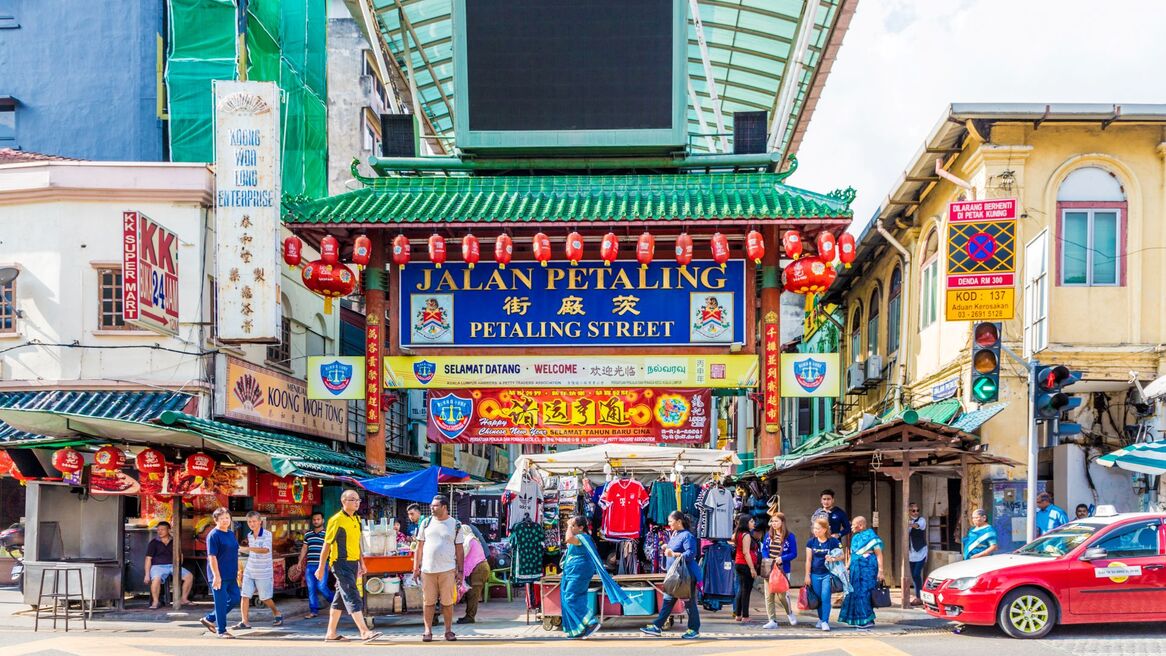
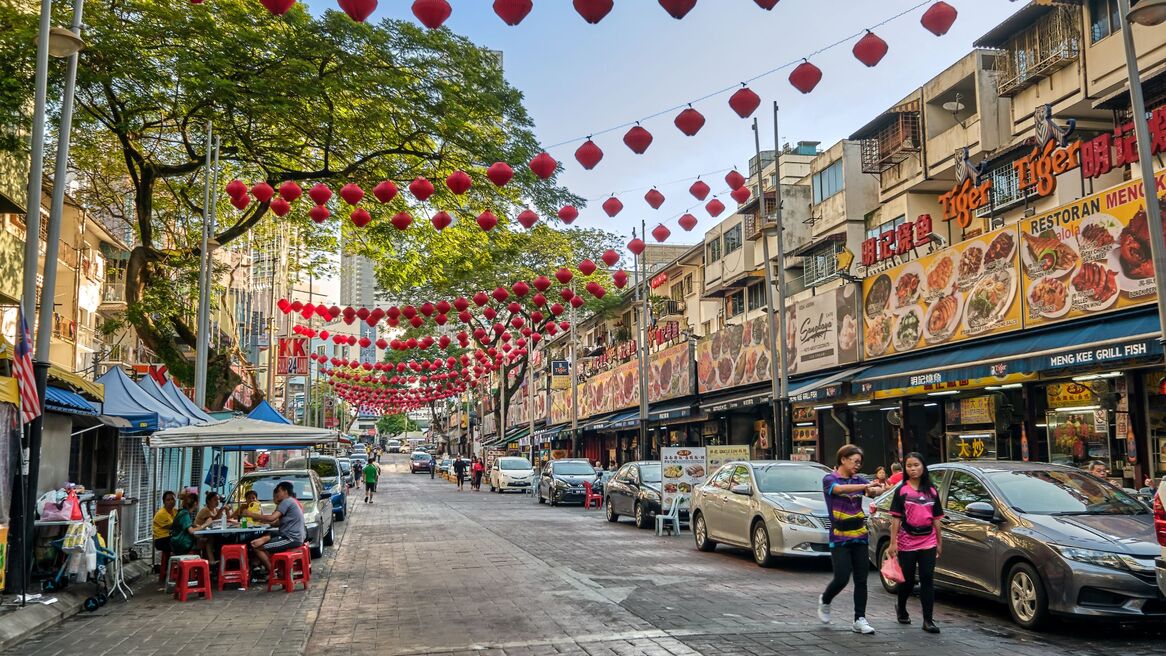
Kuala Lumpur has a rich Chinese heritage, alongside its Malaysian culture and connections to India too. Chinatown is one of the places where this is most evident: expect the usual red lanterns, dragon motifs, gates and Chinese food, but with Kuala Lumpur flair and fun. Petaling Street is probably Chinatown’s best-known street. This is where you’ll find the classic market range of souvenirs, collectables, accessories and clothing, both traditional and fashionable. Plus street food classics like barbecue fish skewers, curried noodles, Hokkien mee, and local laksas. For a more historic look and feel, visit Kwai Chai Hong, which is a carefully and colourfully reconstructed historic market alley, with some fantastic street murals that represent life here in the 1960s. Kuala Lumpur’s Central Market is a good choice for traditional arts and crafts, plus antiques, and food. Sin Sze Si Ya Temple is another local landmark worth seeking out; it’s the oldest Taoist temple in Kuala Lumpur, and also deeply atmospheric. Interestingly, one of the city’s oldest Hindu temples is in this area too. Chinatown is a central neighbourhood to stay in with good transport links, lots of great places to eat and drink, and a buzzing nightlife.
Did you know? In English, "Kwai Chai Hong" translates to Little Ghost Lane, or Little Demon Lane.
Discover our recommended hotels near Chinatown
Explore more >
View all hotels in Chinatown
Explore more >
Ideal for: families, living like a local, longer stays
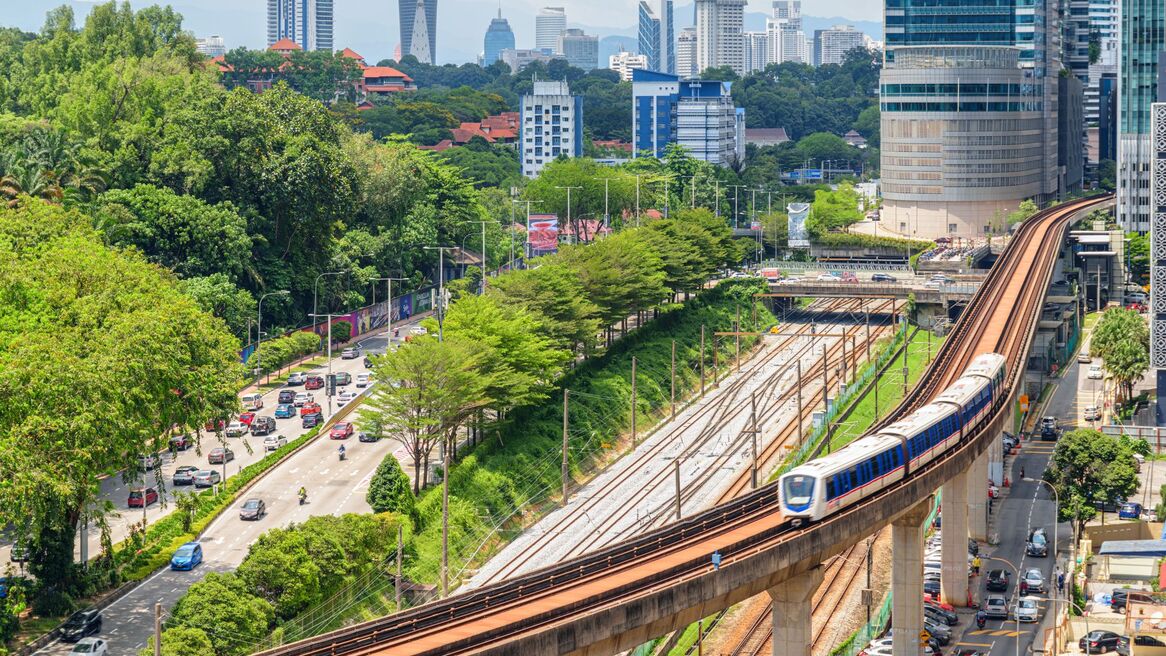
Bangsar is a residential neighbourhood around four kilometres from the centre of Kuala Lumpur, known for its boutiques, galleries and trendy cafes, as well as its many expats. Bangsar has quite a Western flavour to its shopping and dining offering, and some exciting fusion options. As well as the shopping mall, Bangsar has a market, called the Old Bangsar Village. Bangsar is a popular nightspot, and there are lots of bars and clubs, as well as restaurants. But it’s a good place for families too, with plenty of green space and mature parks, a less ‘business’ feel than central Kuala Lumpur, and great transport links.
Did you know? Kuala Lumpur isn't the most walkable of cities, but Bangsar bucks that trend and is a walkable neighbourhood.
Discover our recommended hotels near Bangsar
Explore more >
View all hotels in Bangsar
Explore more >
Ideal for: longer stays, families, living like a local, ex-pat living, luxury lovers, relaxed breaks
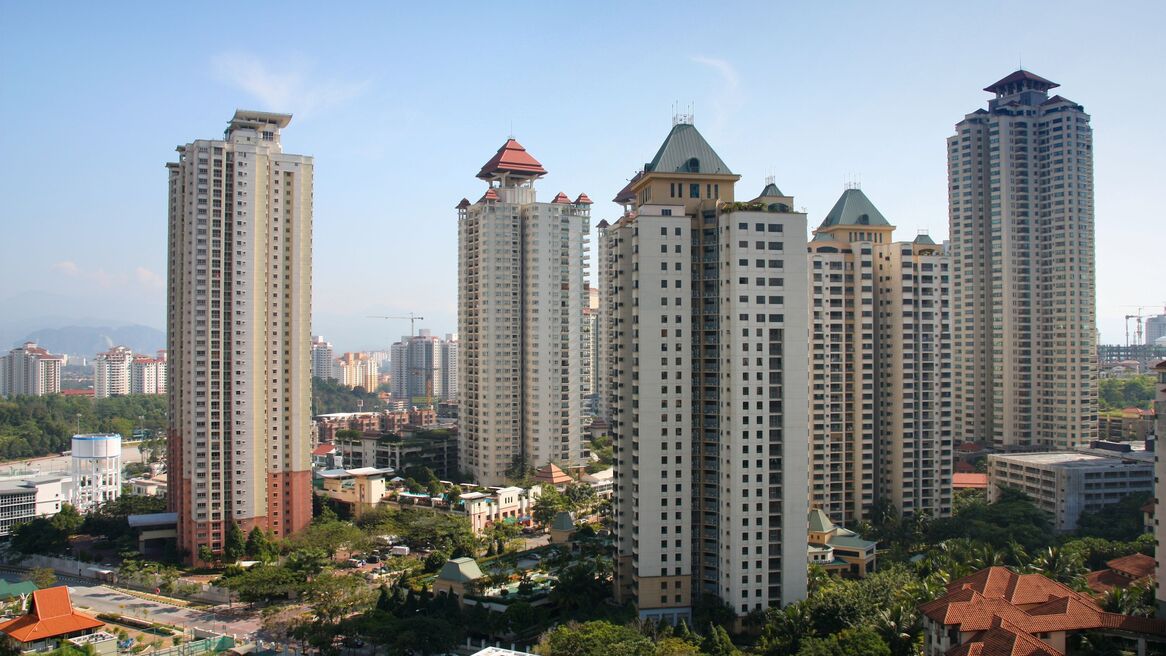
Mont Kiara is another popular residential pick for ex-pats, so has some nice apartment hotels and serviced apartments, as well as regular hotel accommodation. This is famously a ‘vertical neighbourhood’, meaning many residents and visitors stay in apartments in very high-rise buildings. In fact, the footprint of the neighbourhood’s heart is only around one square kilometre, but lots of people live here, and there is still plenty of green space. It borders Bukit Kiara, which is a patch of rainforest run through with hiking and biking trails that head towards the mountains. Mont Kiara has tall office buildings as well as residential ones, Plaza Mont Kiara being one of the largest; it’s also got a commercial section with shops, restaurants, cafes, gyms, etc, and a more traditional market in the courtyard. There’s also an occasional night market. The public transport isn’t the best.
Did you know? Mont Kiara has great views of Kuala Lumpur from its rooftop bars.
Discover our recommended hotels near Mont Kiara
Explore more >
View all hotels in Mont Kiara
Explore more >
Ideal for: travellers on a budget, sightseeing
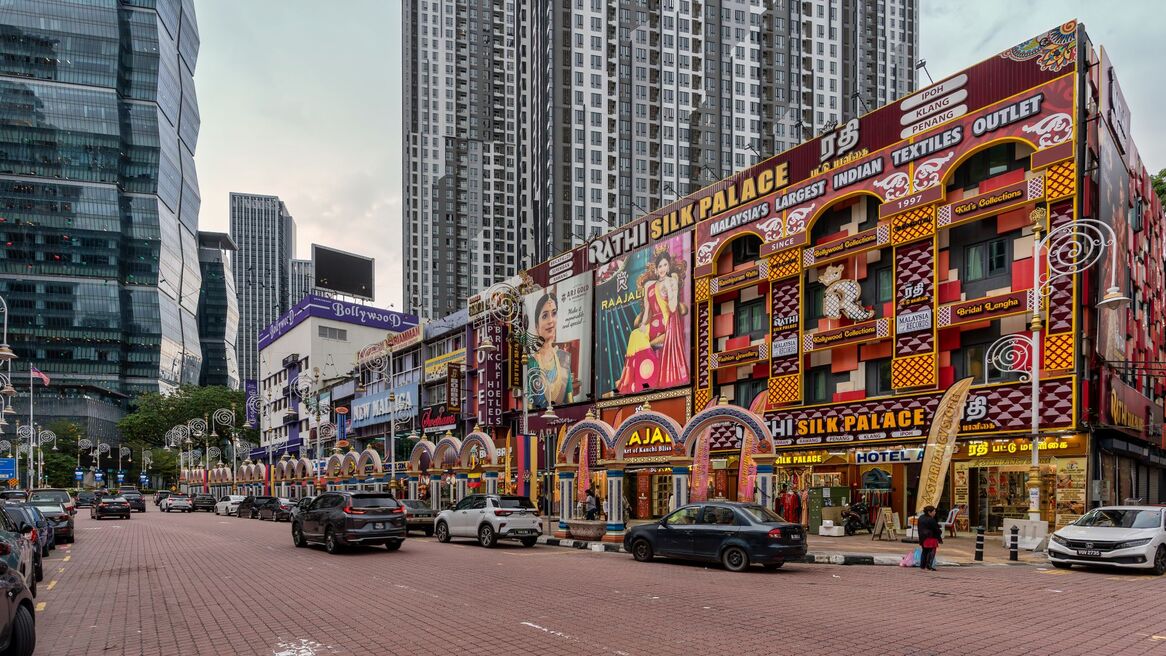
Brickfields is Kuala Lumpur’s historic Indian district, known for its many Hindu temples, Indian food, and its textile and jewellery markets. It’s sometimes referred to as “Little India”. As well as Hindu temples, Brickfields has an impressive Taoist temple, and a Methodist and Lutheran church. This is a super central neighbourhood, close to KL Sentral, a major transport hub, so there’s plenty of affordable accommodation.
Did you know? The name comes from around 1880, when this whole area was damaged by fires and floods. It was all rebuilt using brick, rather than the previous wood, and many brick kilns were set up locally to facilitate this.