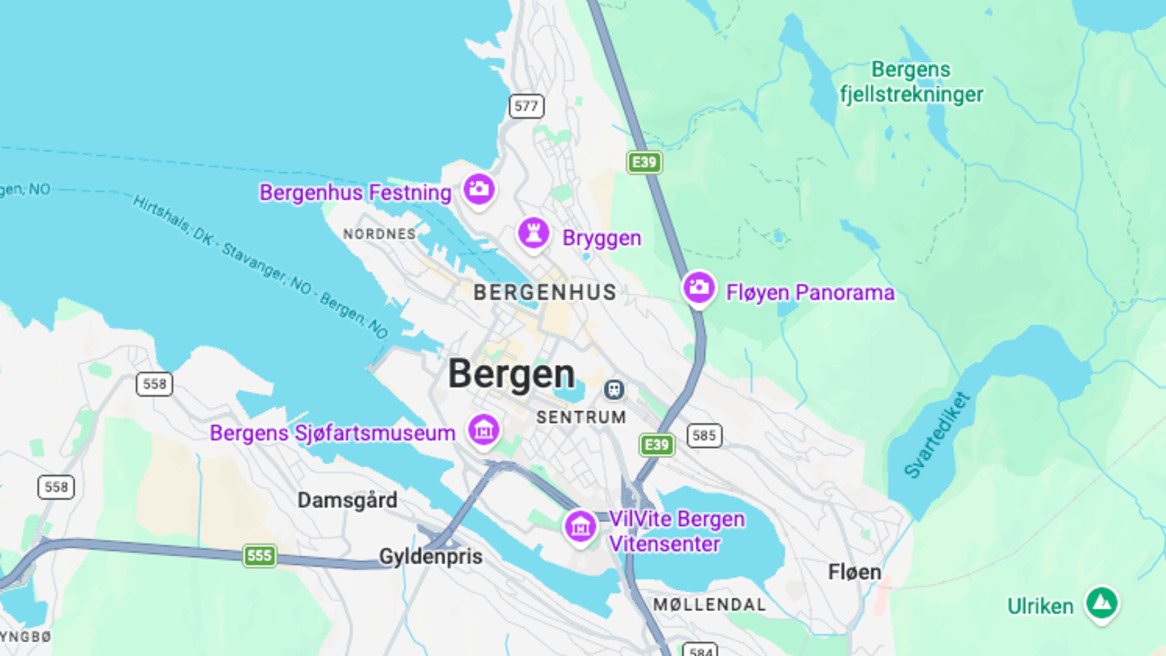

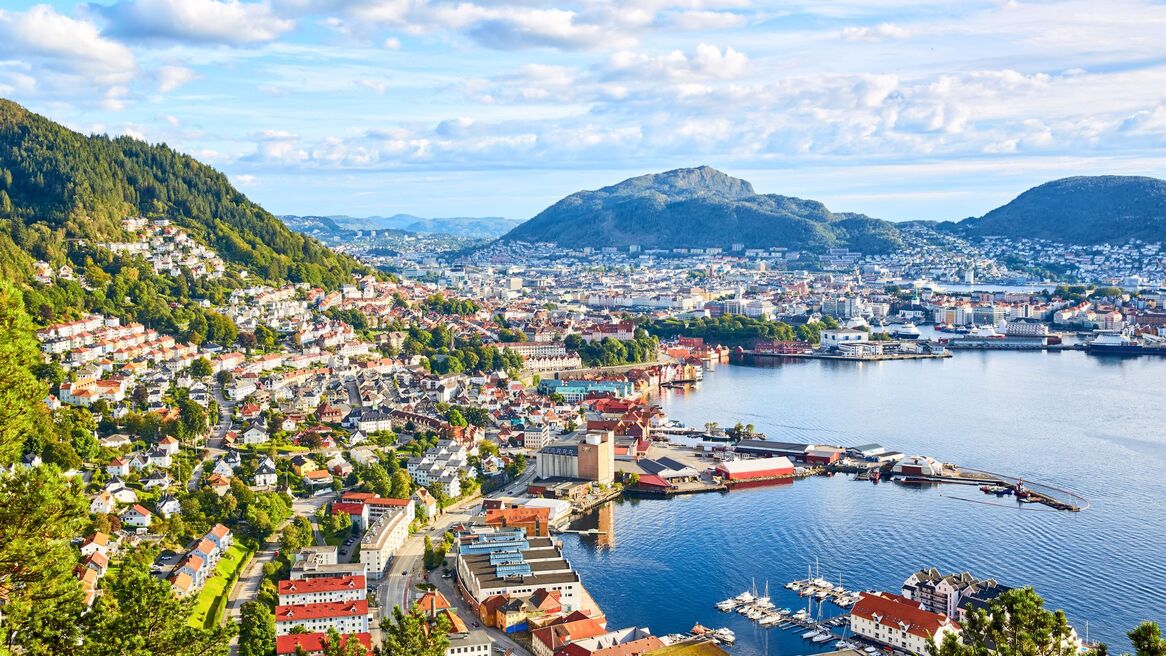
Bergen is a colourful, historic city on Norway’s west coast, surrounded by mountains and fjords. Its compact centre is easy to explore on foot, with the colourful Bryggen waterfront, fish market and plenty of cafes, bars and restaurants to discover. Take the funicular up Mount Fløyen for views over the city, or use Bergen as a base for exploring the famous fjords. It’s also known as one of Europe’s rainiest cities, so make sure to bring your waterproofs!
Bryggen is the go-to area for first-time visitors, with its colourful wooden wharf, historic lanes, museums and harbour right outside your door. Sentrum is best for convenience, with the fish market, Fløibanen funicular, shops, restaurants and bars all within easy walking distance, and the widest range of hotels, from budget-friendly stays to smart design and luxury options. For something quieter, Nordnes has charming wooden houses, small parks, the aquarium and waterfront walks. Sandviken, north of Bryggen, is more residential and atmospheric, known for its old wooden houses, St Mary's Church and easy access to Mount Sandviken and hiking trails. Møhlenpris has a younger, more local feel, centred around Nygårdsparken and the waterfront, with cafes, restaurants and the VilVite science centre nearby. Then there's Skostredet, a small, lively street and surrounding area in the heart of town, known for its cobbled lanes, independent shops, restaurants, bars and nightlife. It's a fun choice if you'd rather be close to Bergen's evening scene than the big tourist sights.
Ideal for: Historic sights, harbour views, architecture, city breaks, foodies
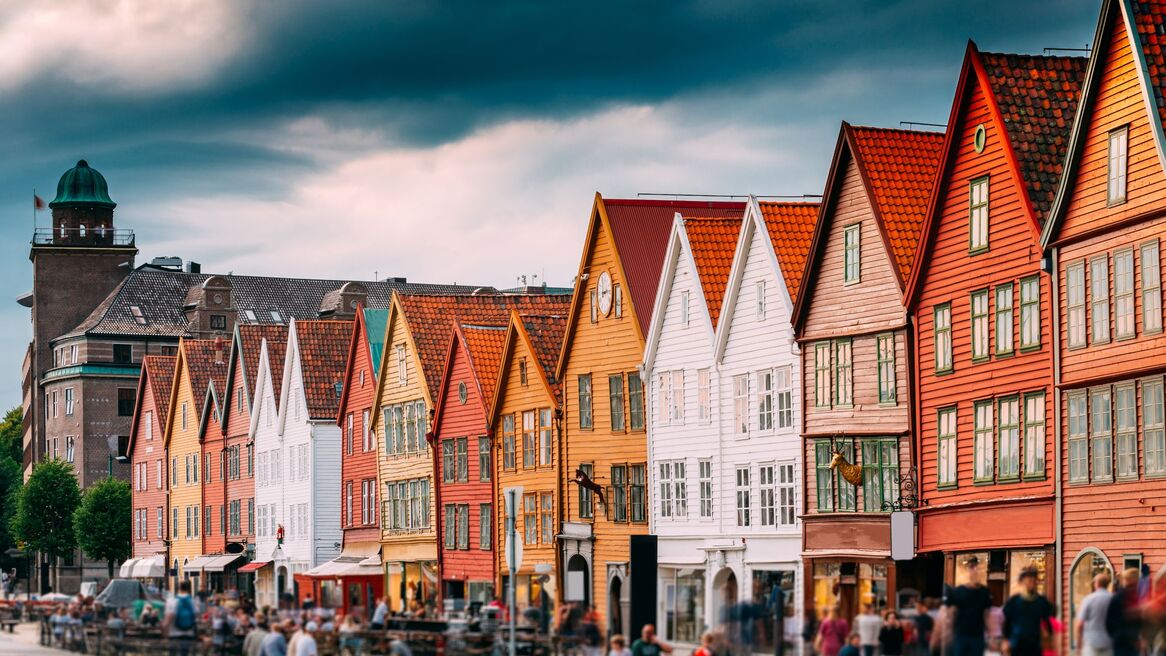
Staying in Bryggen puts you right amongst Bergen's most recognisable sights. The colourful wooden wharf is the star of the show, with narrow lanes, historic merchants’ houses, small museums, shops and galleries to wander between. You’re also right beside the harbour and fish market, with various cafes and restaurants nearby. Hotels here tend to be stylish, historic and boutique, making it a great spot for photographers, history buffs and anyone who wants to step straight out of their hotel into Bergen’s historic heart.
Did you know? Some of Bryggen’s buildings still have their original medieval foundations; archaeologists have uncovered thousands of objects beneath the wooden buildings, including shoes, combs and pieces of pottery.
Discover our recommended hotels near Bryggen
Explore more >
View all hotels in Bryggen
Explore more >
Ideal for: Shopping, nightlife, foodies, first-time visitors, sightseeing
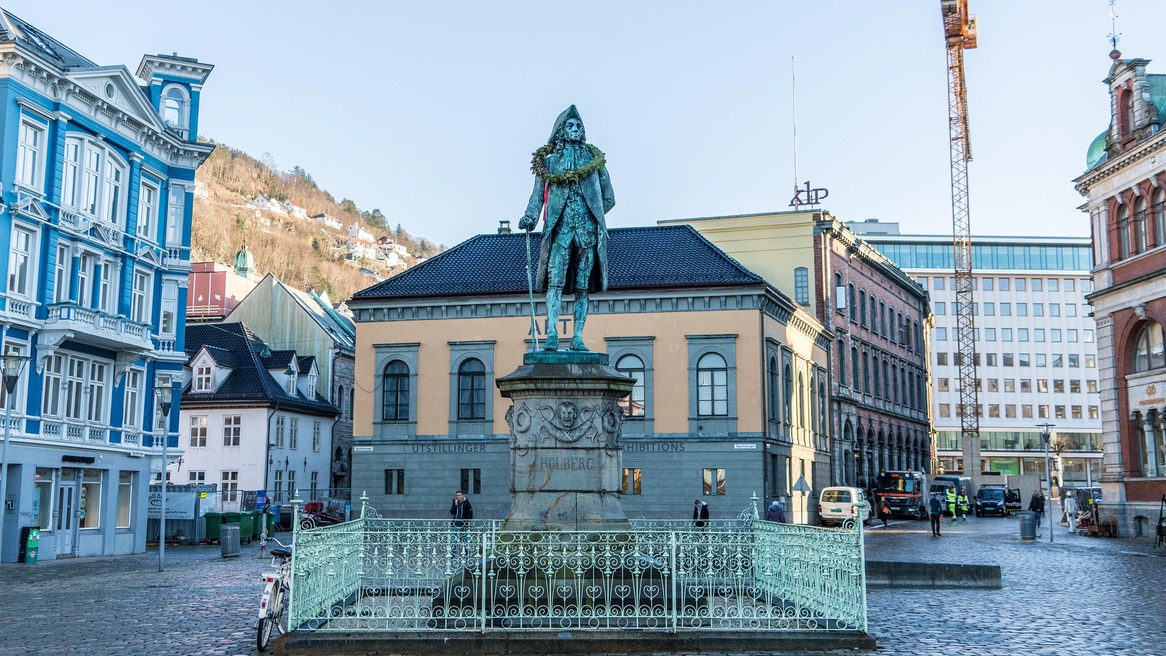
Sentrum is a great choice for first-time visitors, putting you right in the middle of Bergen’s shops, restaurants, bars and major sights. The small centre is easy to explore on foot, with the fish market, Bergen Cathedral and the Fløibanen funicular all close by, plus the harbour and Bryggen just a short stroll away. There’s also a good mix of museums and galleries, making it a handy base for culture lovers. With the widest choice of hotels in Bergen, from affordable city stays to stylish design hotels and smart luxury options, Sentrum is ideal if you want everything on your doorstep.
Did you know? Bergen’s famous fish market has been trading since the 1200s, making it one of Norway’s oldest outdoor markets. Today, you can still browse stalls selling fresh seafood right in the heart of Sentrum.
Discover our recommended hotels near Sentrum
Explore more >
View all hotels in Sentrum
Explore more >
Ideal for: Families, swimming, old-world charm, local atmosphere, seaside walks
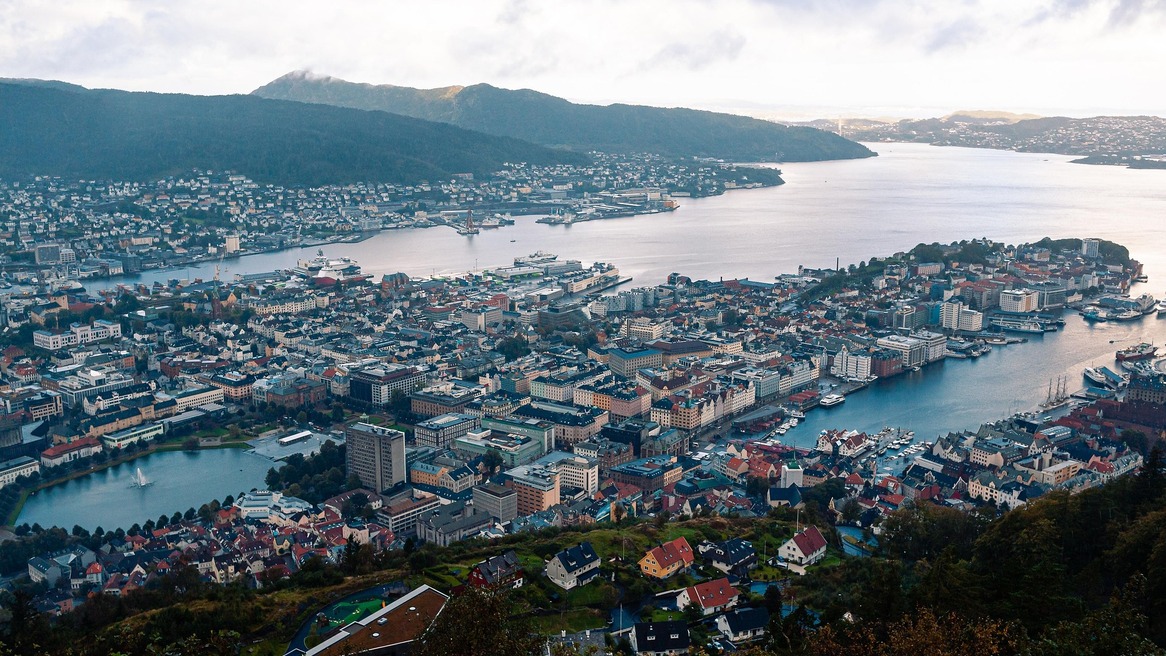
Nordnes is an excellent base for families, couples and anyone looking for a quieter, more local side of Bergen. This historic peninsula is known for its colourful wooden houses, leafy streets and waterfront paths, with Nordnesparken offering sea views and a popular swimming spot in summer. The Bergen Aquarium is another draw, while the narrow streets are great for a wander. You’re still within walking distance of Sentrum and Bryggen, but the atmosphere is much more relaxed. Hotels here tend to be smaller, with boutique and mid-range stays rather than big luxury properties.
Did you know? Nordnes has one of Bergen’s most unusual swimming spots: Nordnes Sjøbad is a heated outdoor seawater pool, so you can take a dip with views across the fjord.
Discover our recommended hotels near Nordnes
Explore more >
View all hotels in Nordnes
Explore more >
Ideal for: Hiking, museum visits, historic houses, family days
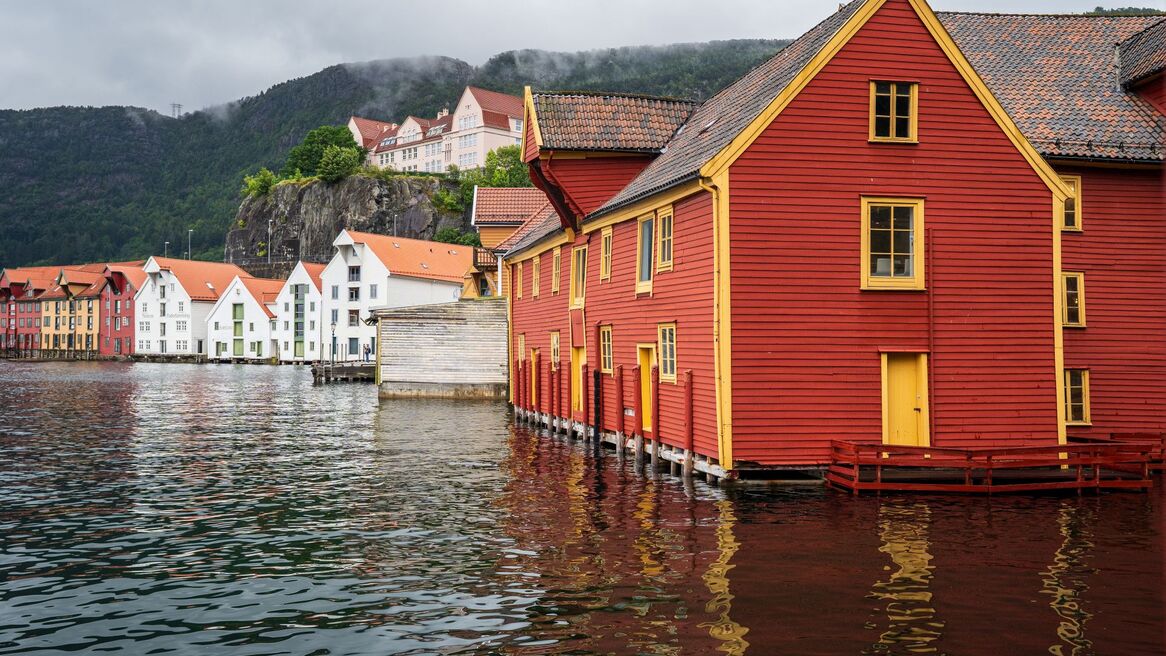
Sandviken is best known for its rows of traditional wooden houses, narrow streets and waterfront setting. Culture lovers can visit the Norwegian Fisheries Museum, while walkers can head towards Mount Fløyen for trails and views. It’s also handy for families, with the city centre an easy walk away. Accommodation is mainly smaller, characterful stays and mid-range options.
Did you know? Sandviken is home to the Norwegian Fisheries Museum, housed in historic warehouses that were once used for storing and processing herring and other fish.
Discover our recommended hotels near Sandviken
Explore more >
View all hotels in Sandviken
Explore more >
Ideal for: Family days, science museums, student life, local cafes
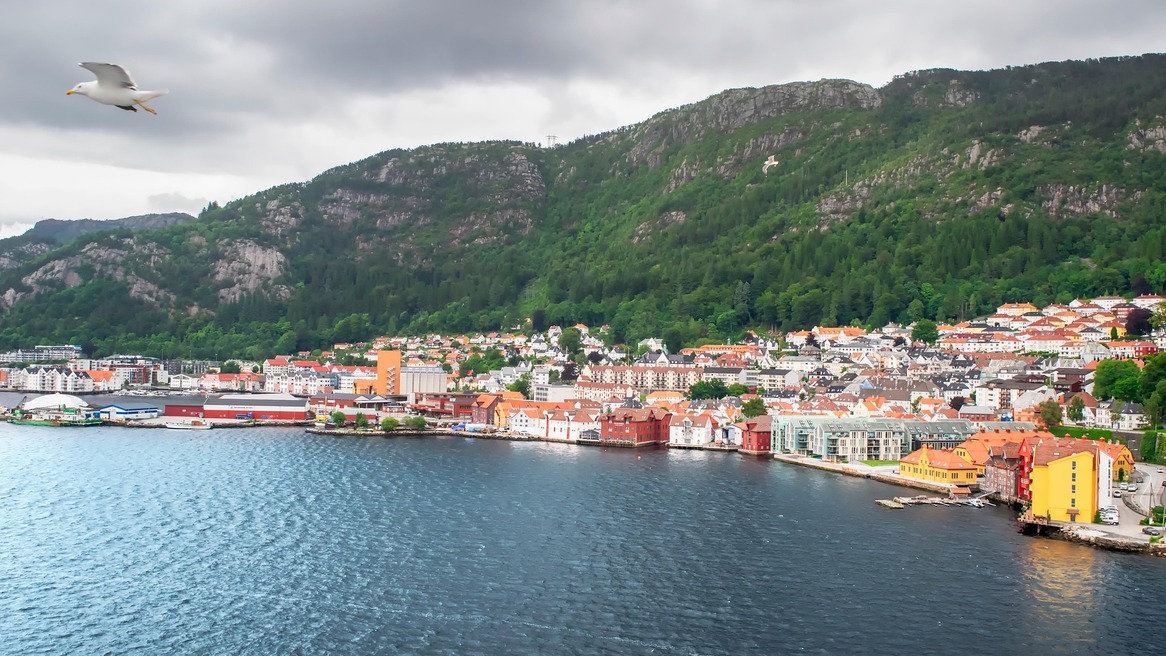
Families, younger travellers and anyone who enjoys a neighbourhood feel should stay in Møhlenpris. The area is known for its colourful streets, Nygårdsparken and waterfront setting. Its VilVite science centre is a particular hit with families. You’ll also find lots of cafes, casual restaurants and bars around the neighbourhood, while the city centre is only a short walk away. Hotels here are mostly modern, relaxed and mid-range, with fewer traditional luxury options than you’ll find in Sentrum or Bryggen.
Did you know? Møhlenpris was once an industrial district, and its old factory buildings have since been converted into homes, cafes and creative spaces, giving the neighbourhood its distinctive mix of old and new.
Discover our recommended hotels near Møhlenpris
Explore more >
View all hotels in Møhlenpris
Explore more >
Ideal for: Boutique stays, cafe culture, nightlife, foodies, historic charm
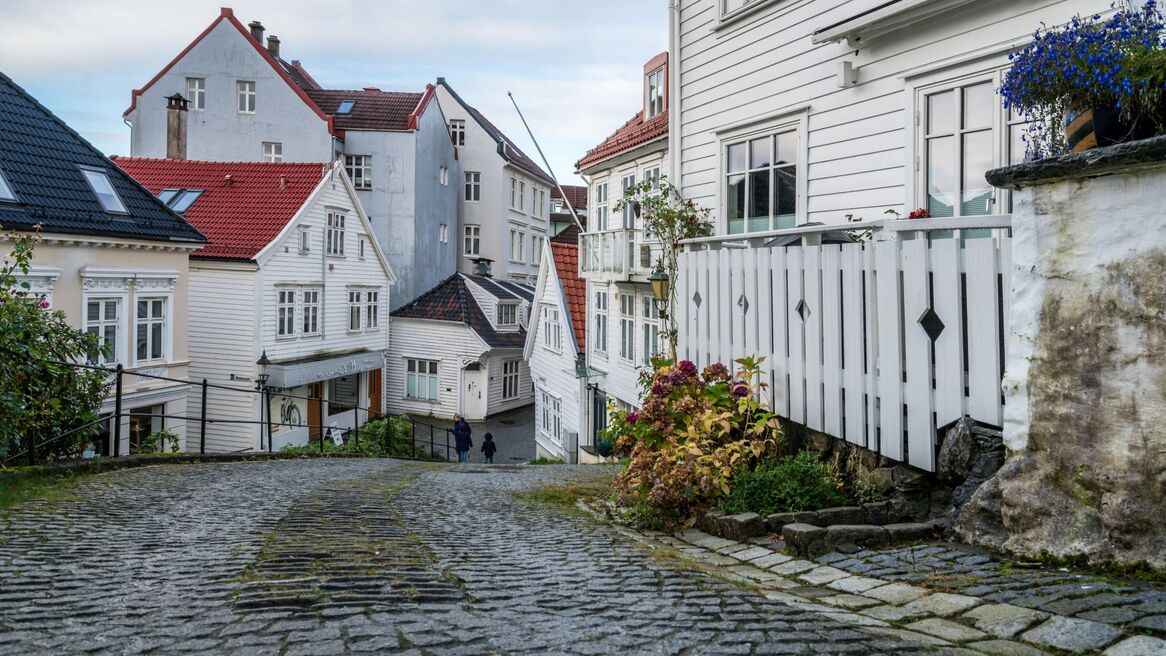
Skostredet is a great base for anyone who likes to be close to Bergen’s evening action. This small, historic quarter is known for its cobbled streets, old wooden buildings, independent shops, cafes, restaurants and lively bars, with plenty happening after dark. You’re also within easy walking distance of Bryggen, the fish market and Sentrum’s main sights. Hotels here are generally stylish boutique stays, making it a good fit if you want to stay somewhere with a bit more character.
Did you know? Skostredet’s name literally means “shoe street” in Norwegian, a nod to the shoemakers and leather workers who once had their workshops along this historic street.