
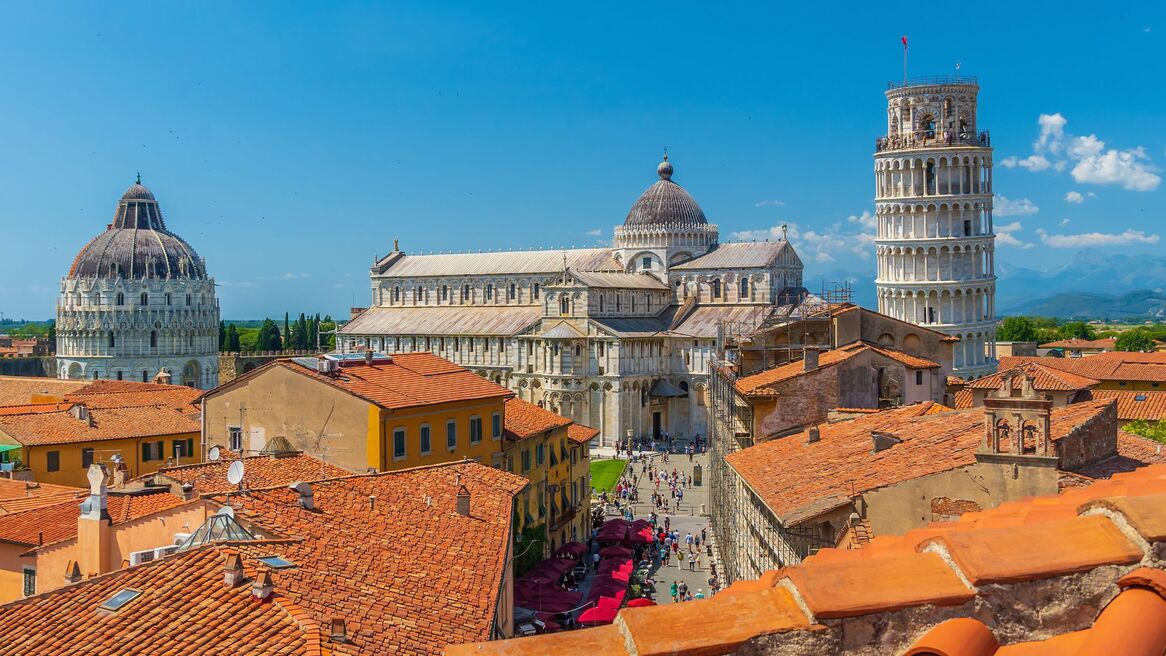
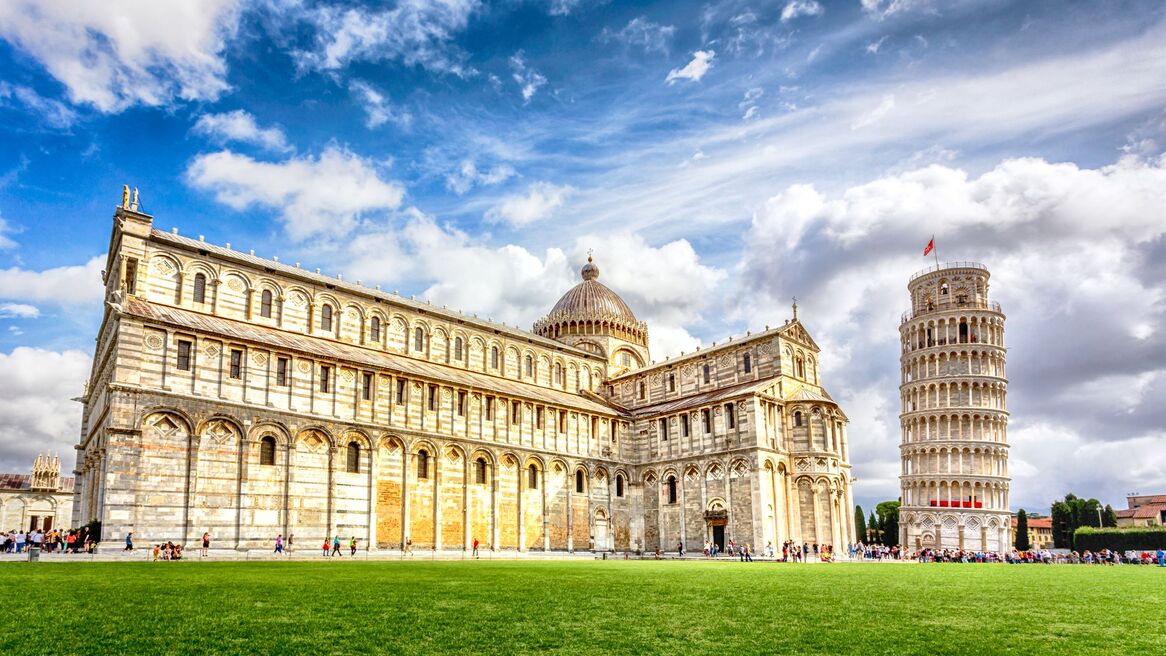
It’s hard not to be charmed by Pisa’s leaning tower or bell tower: all that work on the delicate marble pillars, and not enough work on the foundations. It leans alongside its cathedral and baptistry, in Pisa’s Cathedral Square; at the moment it’s around four degrees off, but in the 1990s it was around five and a half degrees off centre! It’s been leaning since before it was finished, in the 12th century, and now, whenever there’s talk of correcting it once and for all, the people of Pisa are outraged! It’s a key draw for visitors. It might sound like a cliché, but there really is a lot more to Pisa than its tower. The city dates from the 5th century BC, when it was located right on the coast, so there’s a lot more history and architecture than what you see on Cathedral Square: expect Gothic churches, Renaissance piazzas and palazzi, and a real wealth of museums packed with treasures. Pisa has been a university town since the 13th century, so anticipate nightlife and great places to eat and drink too.
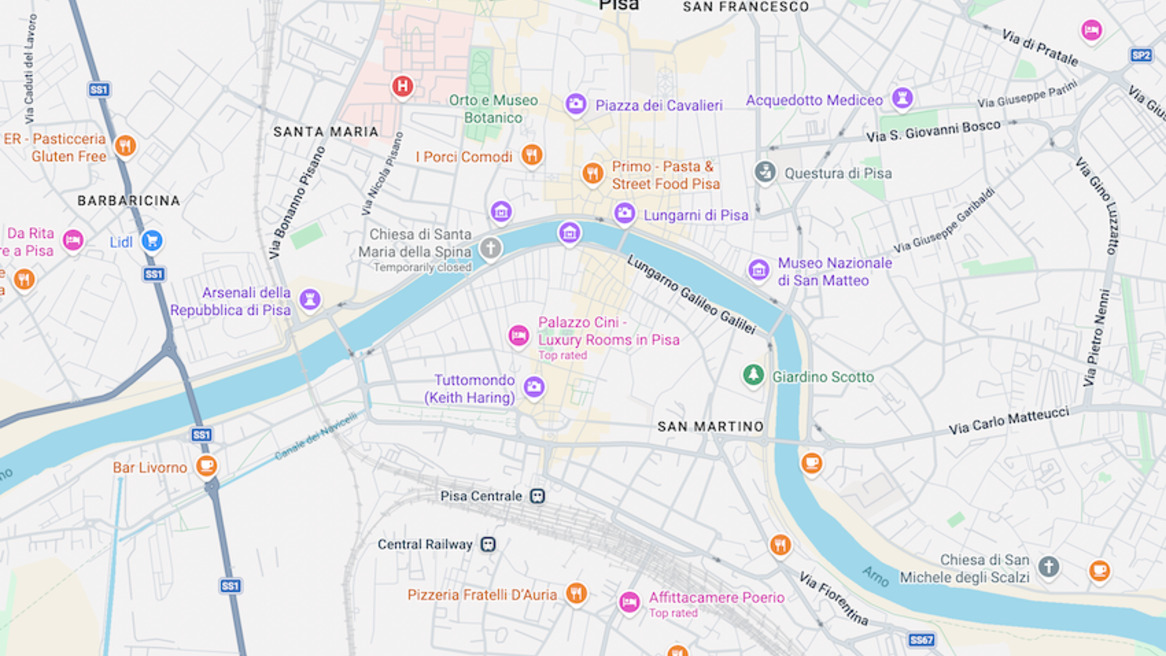
Many travellers only leave time for a day trip to Pisa, which is just enough time to clock the highlights. If you do factor the city into your travel plans, but only have one or two nights to spare, Santa Maria is probably the best neighbourhood to stay in. Via Santa Maria is one of Pisa’s central streets, putting you close to the Piazza dei Miracoli and the leaning tower and cathedral. The Luggarni neighbourhood is another central option, it’s the area around the Arno, on both sides: around the Lungarno Mediceo on the north bank, and the Lungarno Galilei on the south bank. It’s known for being romantic and convenient, and here you can have river views, and stroll conveniently back to your hotel after a riverside meal. If you have a bit more time, and appreciate historic charm, you might consider San Martino, which probably has more palazzi, and pretty piazzas, for its footprint than any other neighbourhood. San Martino also has more aparthotels and converted palazzi, and some wonderful local restaurants. San Francseso is the university neighbourhood, great for nightlife, more local restaurants and more affordable accommodation options, and Sant’ Antonio is the other neighbourhood with great value options, being close to the station. Sant’ Antoino is also great for families, and for using Pisa as a base to explore the wider Tuscany region.
Ideal for: city breaks, short stays, sightseeing, families
Santa Maria is the part of Pisa you’ll recognise most from photos; this is the bit between the Piazza dei Miracoli (which is where you’ll find the Leaning Tower and the cathedral) and the north bank of the Arno River. Despite the number of visitors, there are actually quiet pockets of Santa Maria: duck down small alleyways, and you'll come to less well-known palazzi, churches and museums. There are plenty of touristy places to eat and drink, but in those same small alleyways you'll find local bars and restaurants, and because this isn't too far from the university, the prices probably won't make your eyes water. Via Santa Maria is the main street, known for having the highest concentration of medieval buildings in Pisa. There are a number of hotels along it, including both flash options and more wallet-friendly choices, and you couldn't be more central.
Did you know? The cathedral and baptistry lean too... just not as far over as the tower.
Discover our recommended hotels near Santa Maria
Explore more >
View all hotels in Santa Maria
Explore more >
Ideal for: city breaks, younger travellers, foodies, night owls, party people, history lovers, longer stays
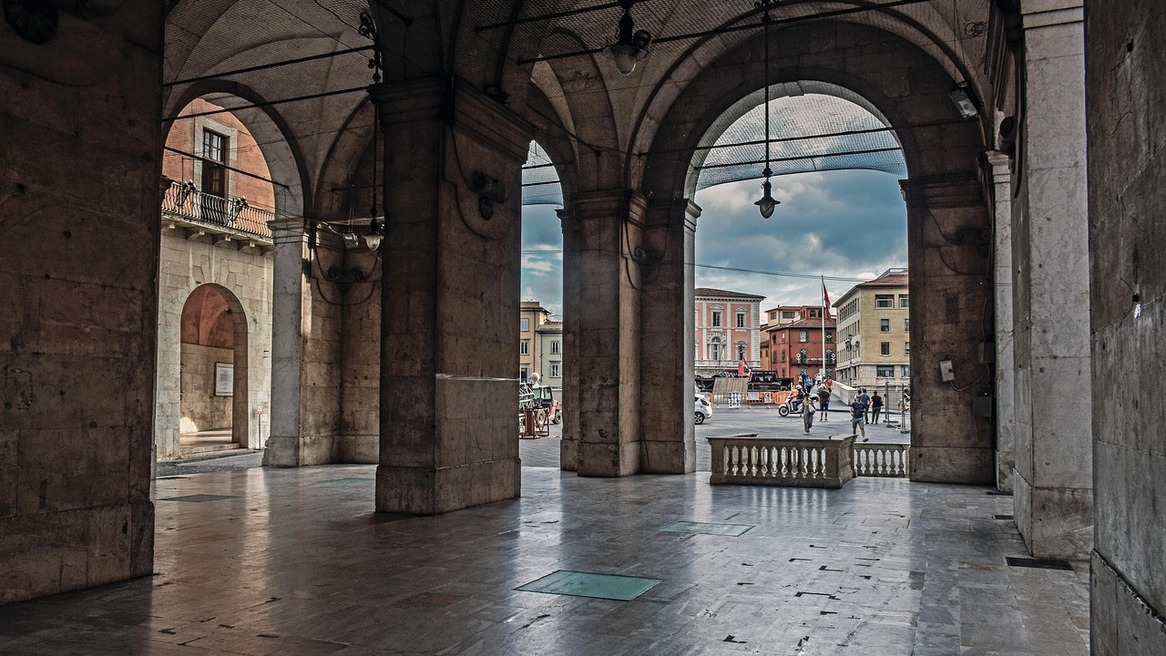 Image by Dimitris Vetsikas from Pixabay
San Francesco is known for its cobbled streets, medieval history, artistic heritage, and for its lively student population. Until the 1860s, it was outside of the city walls, and packed with artisans’ workshops, which would once have produced textiles and clothing, glass, medicine, shoes and leather goods, and actual art. Today the shopping streets are still there, but they’re now quite close to the heart of Pisa. The main street is Via San Francesco, and it still has a more independent flavour than the shopping in Santa Maria, with antique and vintage stores, stationery shops, bakeries and patisseries, book shops, and much more. It also has plenty of places to eat and drink dotted along it, and if you have a bit of an explore in the streets off it, you’ll find plenty of local trattorias, many of them catering to San Francesco’s large student population but offering great value “home style” meals and excellently affordable local wines. San Francesco’s main landmark has to be its church and notably straight bell tower, built during the 13th century. It’s been home to many major artworks, and still holds some very notable frescoes.
Did you know? The church of San Francesco was the original home of Cimabue’s Maestà and Giotto’s Stigmata of St. Francis, famous artworks which were "requisitioned" by the French army in 1810 and taken to the Louvre.
Discover our recommended hotels near San Francesco
Explore more >
View all hotels in San Francesco
Explore more >
Ideal for: city breaks, families, young travellers, travellers on a budget, longer stays, exploring further afield
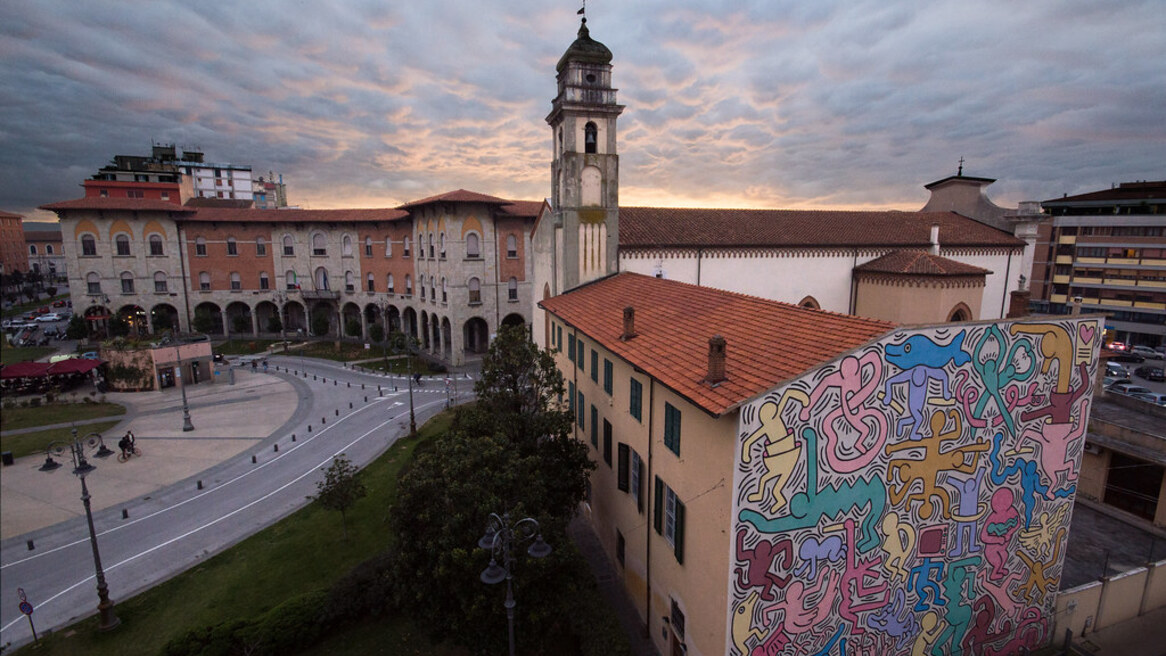
Quieter and less busy with tourists than Santa Maria, San Martino is still a central neighbourhood to base yourself in: it’s on the left bank of the Arno, between the river and the central train station. Architecturally, it offers medieval through to Renaissance styles, in pastel colours, so it’s a pretty neighbourhood. The larger streets are known for hosting big parades and festivals, and the Giardino Scrotto, a public green space and garden, hosts open-air events. The station lends a multicultural vibe, and there’s a diverse range of cuisine available, as well as some great value accommodation options, pizzerias, and plenty of cafes and bars. Dusk in Piazza San Martino is a friendly time, with aperitivo and live music. Called the Chiesa di San Martino, the church is a major local landmark, along with Keith Haring’s Tuttomondo mural, the Palazzo Cevoli and the Giardino Scotto.
Did you know? The statue of a woman on Via San Martino depicts Kinzica de' Sismondi, who was a local heroine said to have saved Pisa from a Saracen raid by letting the city know of their approach.
Discover our recommended hotels near San Martino
Explore more >
View all hotels in San Martino
Explore more >
Ideal for: city break, short stays, families, young travellers, exploring the region, travellers on a budget
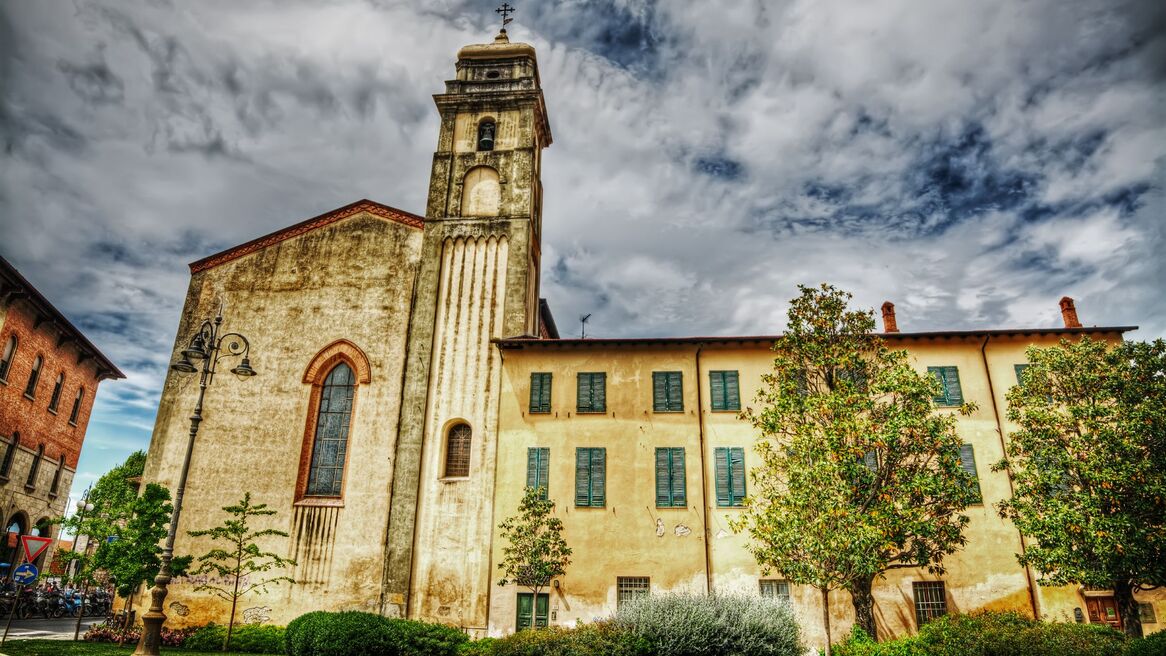
The Sant'Antonio neighbourhood offers similar convenience to San Martino: it’s centrally located, 20 minutes walk from the tower, and runs between the Arno and Pisa station, with great travel connections and a friendly, affordable-feeling, arty atmosphere. To those in the know, Sant’Antonio feels quite Tuscan, with narrow streets lined with cafes, bars and trattorias, and youthful, because the university is so close.
Sant'Antonio’s Mercato delle Pulci is a flea market today, surrounded by a pleasing maze of independent shops and boutiques, including a number of very nice bookstores and antique shops, but centuries ago this was Pisa’s red-light district. Other local sights include Palazzo Blu, which is an art gallery, Chiesa di Sant’Antonio Abate (a 14th century church notably rebuilt, puzzle-style, after being flattened during WW2, and painted all over on one side with Kieth Haring’s Tuttomondo mural), and the Gothic gem: Chiesa di Santa Maria della Spina.
Did you know? One of Sant'Antonio's sights is a small, Gothic church on the banks of the Arno called the Santa Maria della Spina. Spina translates to "thorn", and this church was built to house a very holy relic, one of the thorns from Christ's crown of thorns.
Discover our recommended hotels near Sant'Antonio
Explore more >
View all hotels in Sant'Antonio
Explore more >
Ideal for: city breaks, romantics, couples, relaxed breaks, sightseeing, foodies, photographers
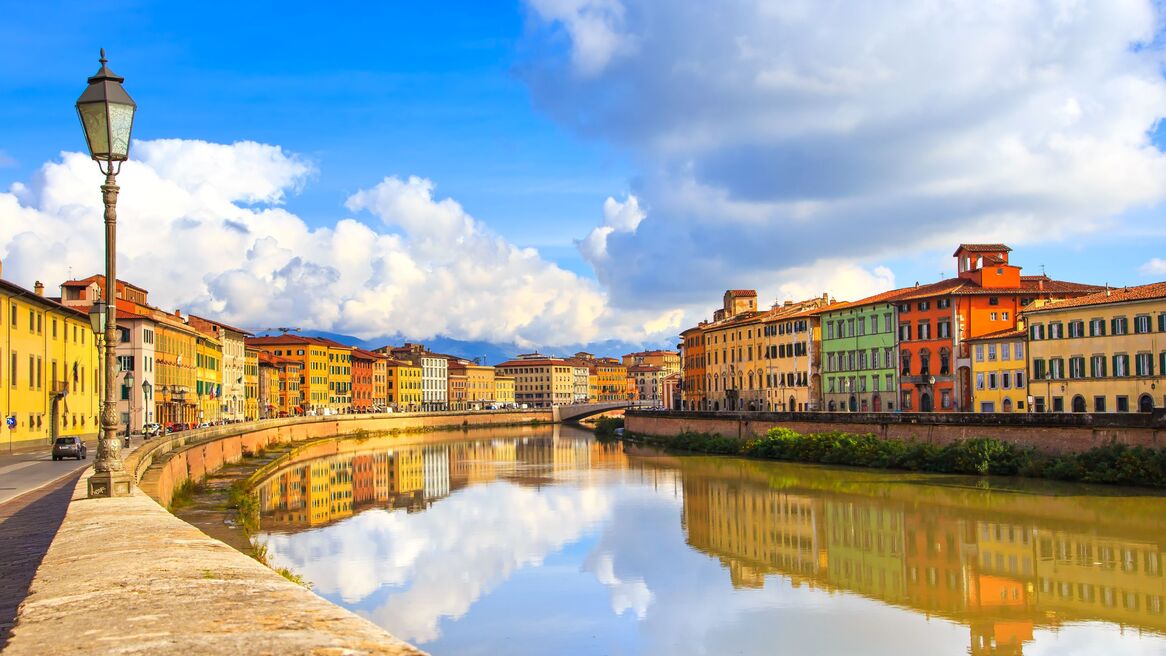
The Lungarni are the riverside streets on either side of the Arno: the Lungarno Mediceo and the Lungarno Pacinotti on the north bank, and the Lungarno Galilei, the Lungarno Gambacorti, and the Lungarno Sonnino on the south bank. These streets, and the streets surrounding them, many of which are also called Lungarno [insert Italian name here], make up The Lungarno neighbourhood, one of the hands-down most romantic places to stay in Pisa. Many of the Lungarni are lined with elegant palazzi, some of which have been converted into beautiful accommodation, bars, cafes, restaurants and little art galleries and boutiques. This is where the university folks passeggiata, and there’s a wonderful relaxed vibe in the afternoons and into the evenings. And you’re still only about 20 minutes stroll from the tower.
Did you know? In the 19th century The Lungarno became a popular haunt for the Romantic poets, with Percy Bysshe Shelley, Mary Shelley and Lord Byron all moving into palazzos along the Arno.