

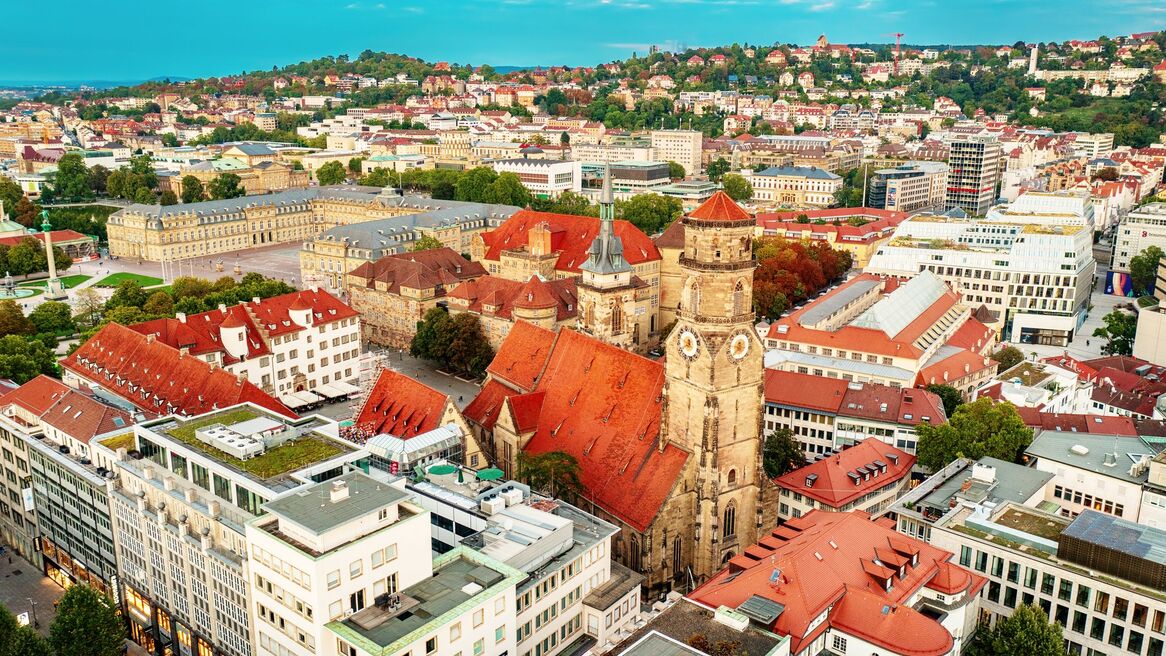
Stuttgart is a large centre that has somehow managed to retain a small town feel, with a picturesque, pedestrianised historic centre, and rolling green hills surrounding the town. There are two castles, the Baroque, 18th century Neues Schloss, and the 10th century Altes Schloss (which is now a museum housing the region’s Stone Age and Roman era treasures and artefacts). Stuttgart’s historic centre also has an art gallery, with an impressive collection of Old Masters, and a contemporary gallery called the City Art Museum, plus several notable churches. Further afield you’ll find parks, a zoo, botanic gardens, and both the Porsche and Mercedes-Benz headquarters and museums.
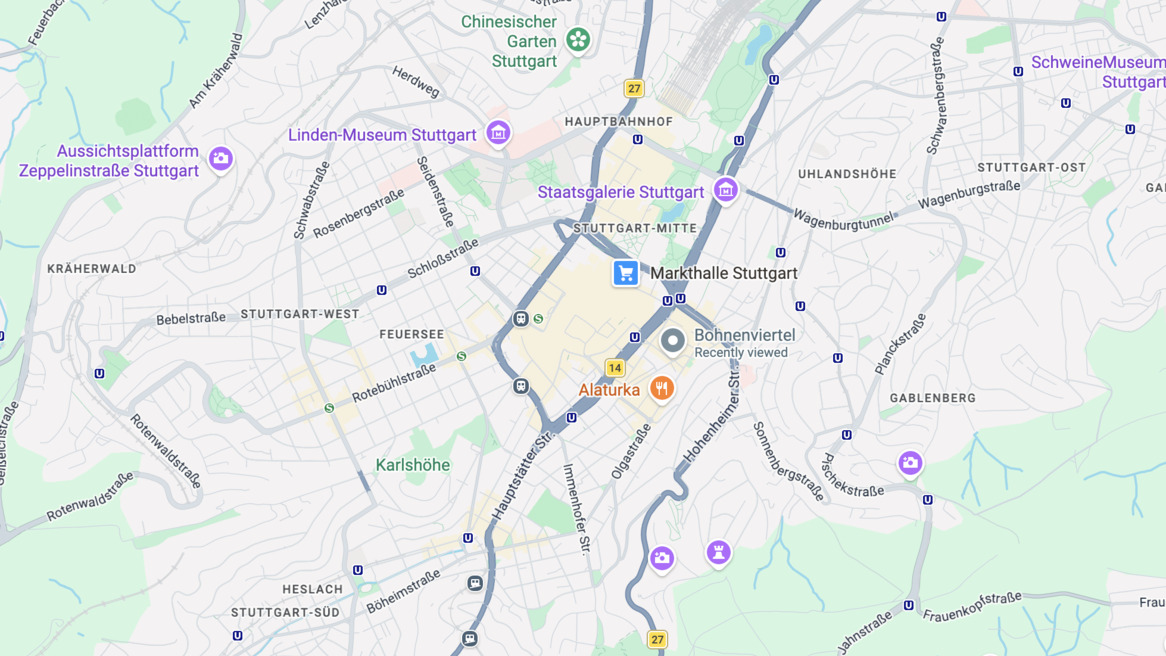
Stuttgart occupies the lowest point locally; it’s often called the pot or cauldron to reflect the topography, which rises quite steeply outside the centre of town. Because of that, Stuttgart has a lot of stairs and is surrounded by lush slopes perfect for growing grapes and viticulture. Mitte is the city's central district. It's historic, but also modern, with castles and galleries, museums and churches. It’s also a great neighbourhood for shopping (head for Königstraße), eating and drinking, and nightlife. Bohnenviertel is a small area within the historic centre, with a wonderful village feel, cobbled streets and traditional wine bars and taverns. Stuttgart-West is another smaller neighbourhood. It's walkable, with a hip atmosphere that permeates not only the Gründerzeit architecture, but also the cool boutiques, bars, cafes and restaurants. Though it's got lots of green space too. Bad Cannstatt has the thermal baths, the zoo, and the Mercedes-Benz Museum, while Stuttgart-Nord is the other family-friendly choice: close to the centre, but not in it, it’s got parks and vineyards, plus city views. It’s quite residential, but still has a great range of accommodation.
Ideal for: city breaks, sightseeing, history buffs, families, first-time visitors, shopping, short stays
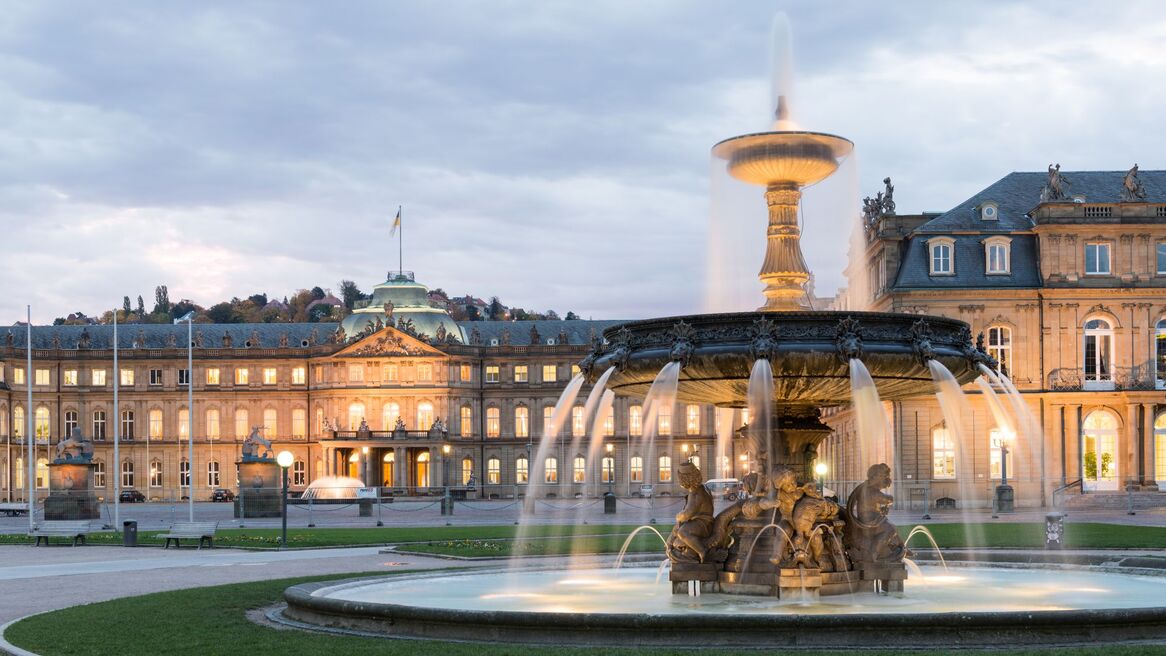
Mitte is the name of Stuttgart’s historic centre. It’s made up of several neighbourhoods, and as well as historic sights and the business and shopping centre, it also still has residents, so its neighbourhoods are very varied. If you’re interested in the neighbourhoods within the Mitte district: Bohnenviertel is quaint, charming and cosy, with antique shops and traditional places to eat and drink — this part of Stuttgart wasn’t destroyed by bombing; Leonhardsviertel’s foodie offering is more international, and it’s known for its nightlife; Kernerviertel is grander, with elegant, 19th century architecture; and Gerberviertel is trendy, with cool shops and cafes. The parts of Mitte most interesting to visitors are: the central square, Schlossplatz, which is which has the Neues Schloss on one side and the Altes Schloss on the other; the Cultural Mile, which is where you’ll find the majority of the theatres, museums and galleries, including the Old State Gallery and the New State Gallery; the Königstraße, which is a pedestrianised shopping street known for its length (1.2kms), and the breadth of its offering; and the Markthall, a gorgeous Art Nouveau era food market. The majority of central Mitte was bombed in WW2, so most of the central architecture dates from the 1950s and 60s, and there is lots of green space.
Did you know? Stuttgart's airport is sometimes used for open-air concerts, with events held right next to the runways!
Ideal for: sightseeing, city breaks, history buffs, foodies, antique lovers, romantics
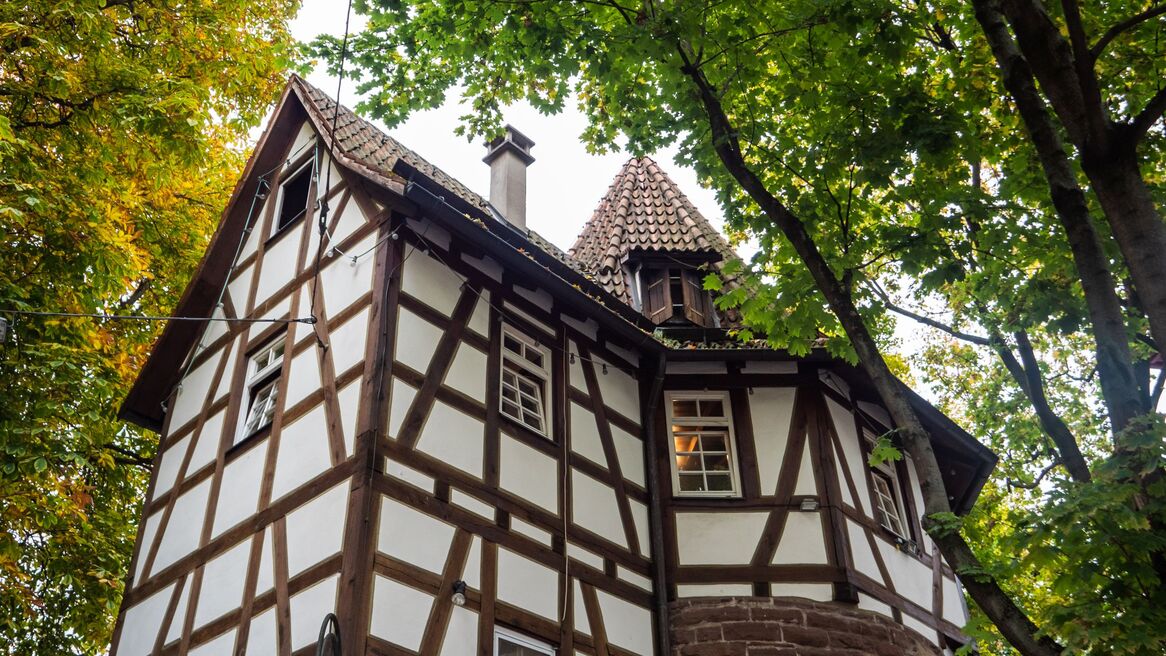
Bohnenviertel is one of Stuttgart’s central neighbourhoods, within Mitte, but not so central that is was destroyed by bombing, so there’s a charm and authenticity here; its wine bars are the same as the wine bars that have been fed by the vineyards just up the hill for centuries. As well as authentic taverns and wine bars, serving authentic local Swabian cuisine, Bohnenviertel is also known for its antique shops, including second-hand bookshops and galleries. The area has a villagey feel, and accommodation here is predominantly small hotels and aparthotels.
Did you know? Bohnenviertel was one of the first expansions to Stuttgart, as it was growing into a city, and its first inhabitants were tanners, butchers, dyers, brickmakers, potters and smiths — industries that needed running water nearby. These weren’t the most well-off citizens, and they supplemented their diets with garden beans, which grow beautifully in this neighbourhood. Bohnenviertel translates to ‘Bean Quarter’ reflecting the significance the humble garden bean had on the culture and life of this neighbourhood.
Discover our recommended hotels near Bohnenviertel
Explore more >
View all hotels in Bohnenviertel
Explore more >
Ideal for: city breaks, sightseeing, hipsters, families, foodies, shopping, longer stays, living like a local, outdoorsy types
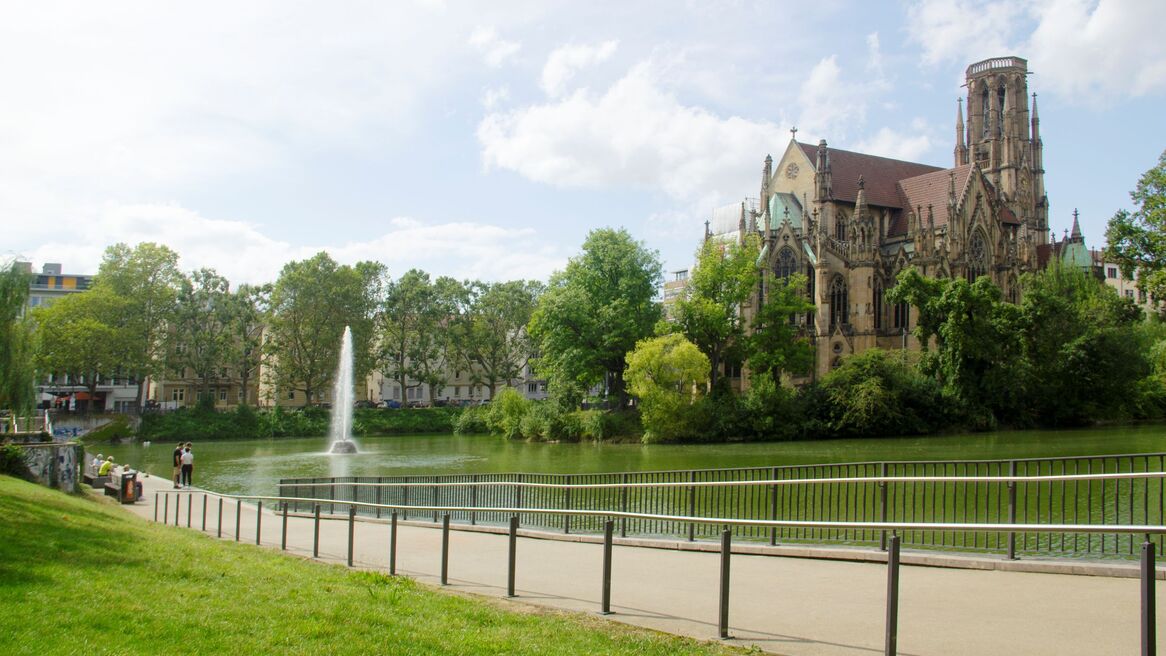
Stuttgart-West is a hip part of town, but leafy too, with elegant, 19th century architecture and a very desirable mix of green space, cafe and foodie culture, theatres and art spaces, and local boutiques. One of the neighbourhood foodie centres is Bismarckplatz, which is a good place to sample local baked goods, especially. There are a couple of nice hotels around the platz too, converted from apartment buildings. The neo-Gothic Johanneskirche is one of the district’s most photographed spots, positioned overlooking the Feuersee, which is a lake surrounded by forest. Stuttgart-West is also known for its green spaces, and the lake is a good start, with leafy walking and biking trails. There’s also the old royal hunting park called Red Deer Park — Rot-und Schwarzwildpark.
Did you know? Stuttgart-West is considered one of the most desirable neighbourhoods to live in in Stuttgart.
Discover our recommended hotels near Stuttgart-West
Explore more >
View all hotels in Stuttgart-West
Explore more >
Ideal for: spa lovers, luxury lovers, relaxed breaks, families, festival guests
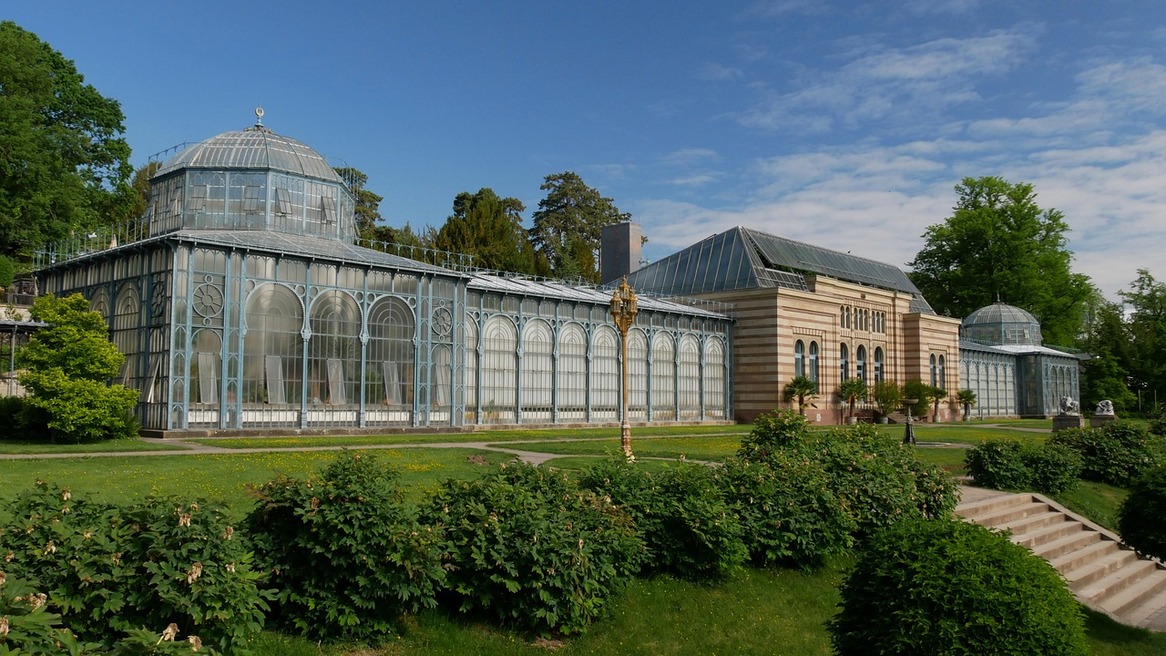 Image by Miriam_die_Taenzerin from Pixabay
Bad Cannstatt is one of the oldest parts of Stuttgart, a long-popular spa town and health resort, with charming historic, half-timbered architecture. It might not surprise you to hear that it was the Romans who first popularised the centre for its waters ( in AD 98), and one of Bad Cannstatt’s main sights is the ruins of a Roman fort. The Romans brought grape vines, as well as their taste for mineral baths; they were the first to plant vines on the hills surrounding Stuttgart. Bad Cannstatt is also now known for Stuttgart’s zoo, the Wilhelma Zoo and Botanic Gardens (the second largest in Germany after Berlin Zoo), and for the Mercedes-Benz Museum. Bad Cannstatt hosts a lot of festivals, including a Spring Festival and a Folk Festival.
Did you know? Bad Cannstatt is where the inventor of the first car, Gottlieb Daimler, lived and tested out his wheels.
Discover our recommended hotels near Bad Canstatt
Explore more >
View all hotels in Bad Canstatt
Explore more >
Ideal for: families, peaceful breaks, mid-century design lovers, sightseeing, foodies, longer stays, living like a local
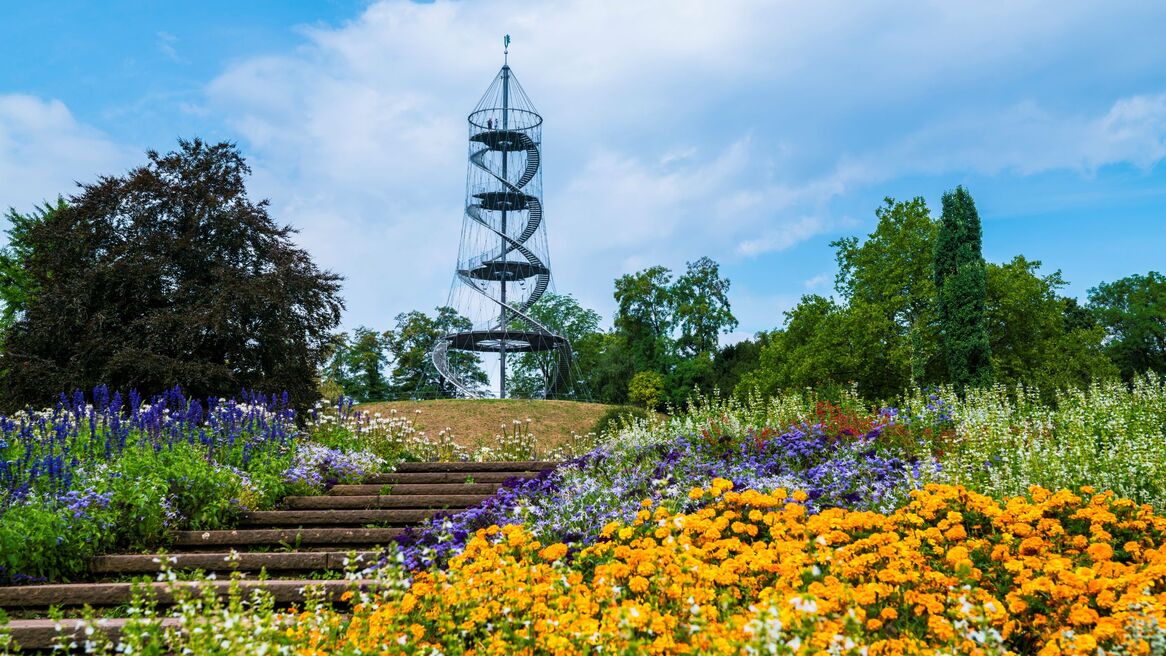
Stuttgart-Nord is a hillside neighbourhood, rising just out of the city centre. Stuttgart-Nord’s main sights include Weissenhofsiedlung, which is a 1920s housing complex that includes buildings by Le Corbusier, and a museum about the modernist design and its designers; Killesberg Tower, which sits inside Höhenpark Killesberg, a landscaped park and gardens with fantastic views, a petting zoo and a miniature railway; the Naturkundemuseum (Natural History Museum), and impressive Bismarck Tower. This is a residential neighbourhood, as well as one for visitors, known for being desirable, but often pricey.
Did you know? Stuttgart's many stairways are called stäffele, and there are estimated to be around 400 of them. They were built to access the vineyards on the slopes, but are now used to access different neighbourhoods.