
Verona has a historic heart that’s both picturesque and very walkable. Opera lovers know it for the wonderful summer schedule of events held in the ruins of the 1st century Roman amphitheatre, a significant landmark in the centre of town, which is open during the day for sightseeing. Lovers of Shakespeare will know it from Romeo and Juliet; there’s even a balcony here said to have inspired Shakespeare’s immortal play. The city also has a number of churches with extraordinary frescoes; several historically significant bridges and buildings, including a 1st century Roman theatre, in addition to the huge amphitheatre; fantastic regional cuisine; and it’s a very easy train journey from Venice and Lake Garda and the other Italian lakes.
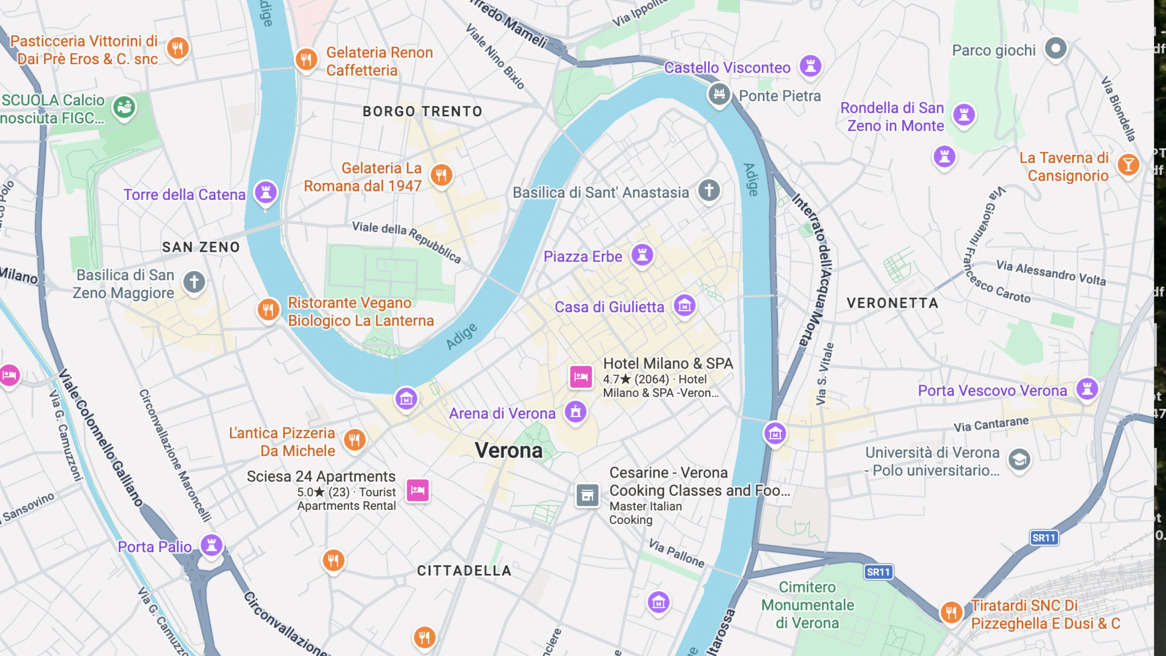
The majority of visitors to Verona stay in the Città Antica: it’s within walking distance of the station, largely pedestrianised, picturesque and there are lots of places to eat, drink and stay. Piazza Brà is the very centre of the district: the huge piazza surrounding the Roman amphitheatre. This is where the serious opera fans stay, so close that you can hear even if you’re not attending! This piazza is laid out with tables and chairs come evening, and connects to some charming shopping streets. The majority of Verona’s main sights are within a very easy walk of the amphitheatre. If you’re staying a little bit longer, or looking for great value accommodation, it’s worth considering Veronetta, which is just across the River Adige, and offers wonderful views of the city centre, plus a youthful vibe, due to the local university crowd. Cittadella is a useful neighbourhood to consider if you’re using Verona as a base to see the Italian lakes or other towns and cities in the region, because it’s between the Città Antica and the railway station. If you prefer things green and peaceful, we recommend Borgo Trento, which is a more residential neighbourhood, on the hill close to Veronetta. Verona is busier in the summer, when it hosts the opera season, plus there's a Shakespeare festival and several food festivals; but it's charming and atmospheric in the cooler seasons too.
Ideal for: first-time visitors, city breaks, sightseeing, history lovers, music lovers, families, romantics, literature lovers, photographers
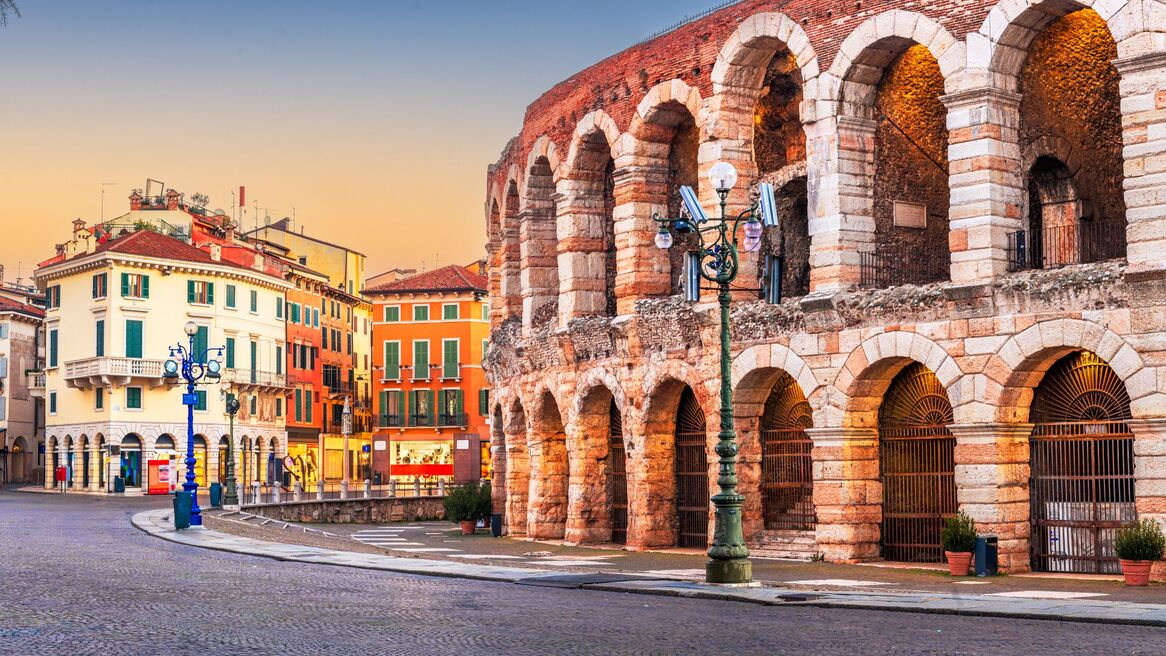
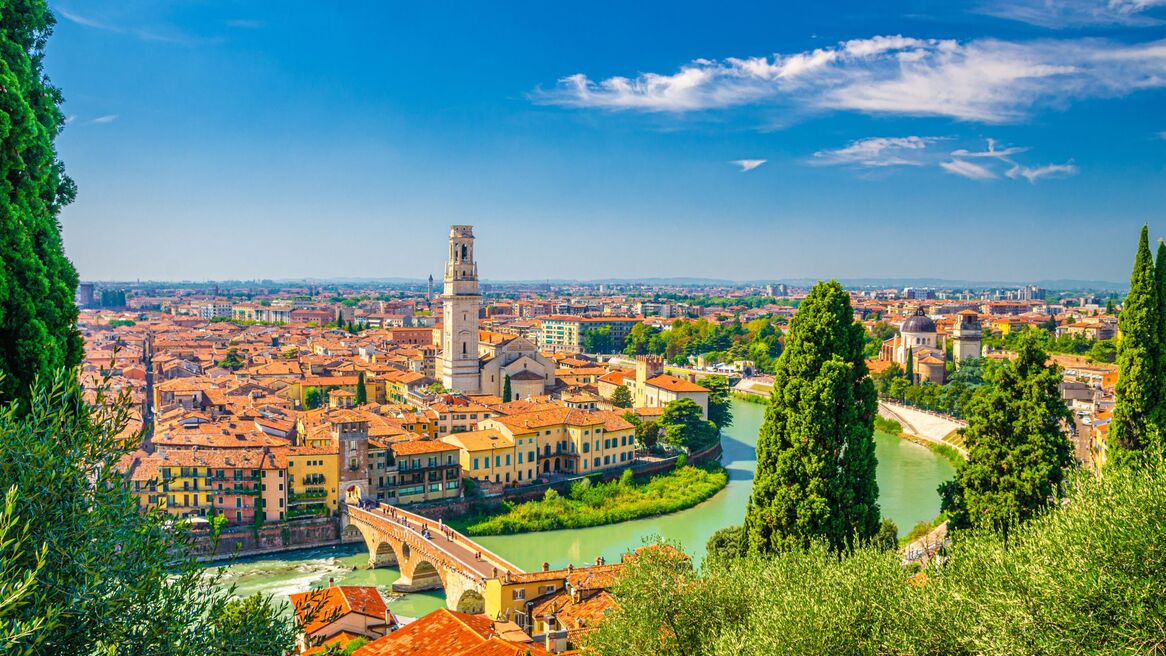
Verona’s historic centre is the obvious choice for first-time visitors: it’s compact, picturesque, and there are some beautiful squares in which to sit out and appreciate the arena as the sun sets…If you’re here at the right time of year, you can even hear the music carried over the amphitheatre walls! The Città Antica is well set up for visitors, with marked sites, walking routes, pedestrianised streets lined with high-end boutiques and more niche local producers, and some very authentic places to eat and drink. There are numerous beautiful churches and squares that you can just bump into as you explore. And of course the most famous attractions: the 1st century Roman arena; the 12th century tower, the Torre di Lamberti; the Piazza delle Erbe, with its daily market and famous fountain; and the Casa di Giulietta, the house that, supposedly, inspired Shakespeare’s Romeo and Juliet (there’s a balcony, and a statue of Juliet!). The river is worth strolling along; there are some especially photogenic bridges, and lots of nice places to stop for a coffee, or aperitivo; and the Gothic Basilica di Santa Anastasia has some fantastic frescoes.
Did you know? While the story of Romeo and Juliet was entirely fictional, the Montecchi and Capuleti families were real and did live in Verona. However the balcony everyone comes to visit is a fake; it was added to the original 14th century house in the 20th century!
Discover our recommended hotels near Città Antica
Explore more >
View all hotels in Città Antica
Explore more >
Ideal for: sightseeing, travellers on a budget, families, longer stays, history lovers, relaxed breaks
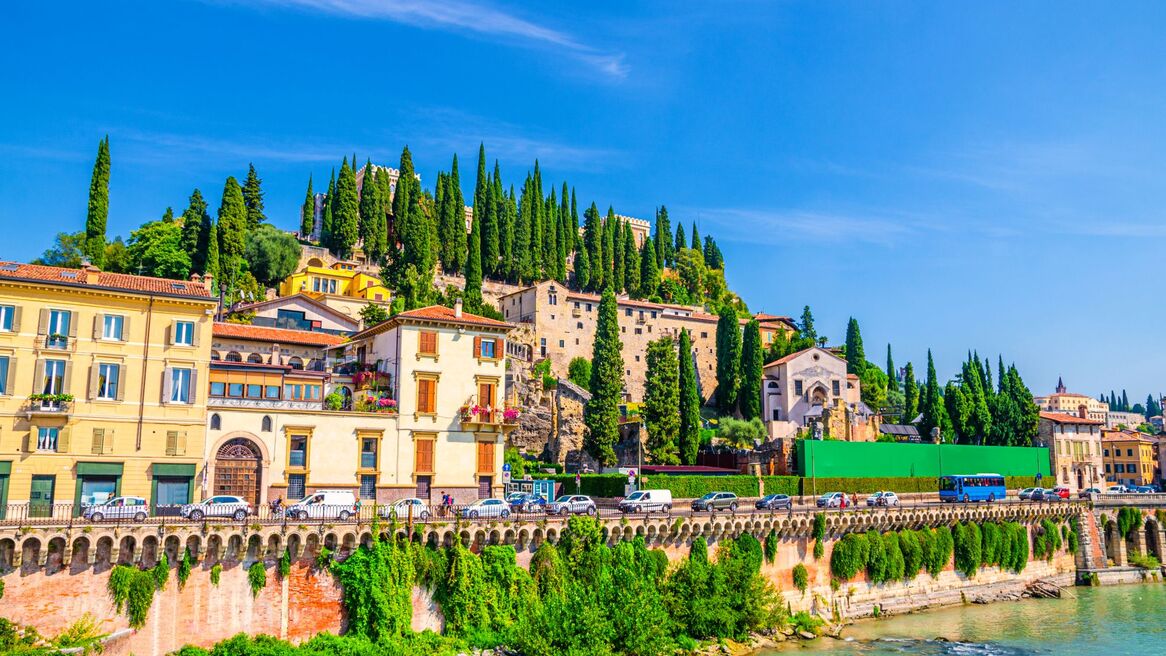
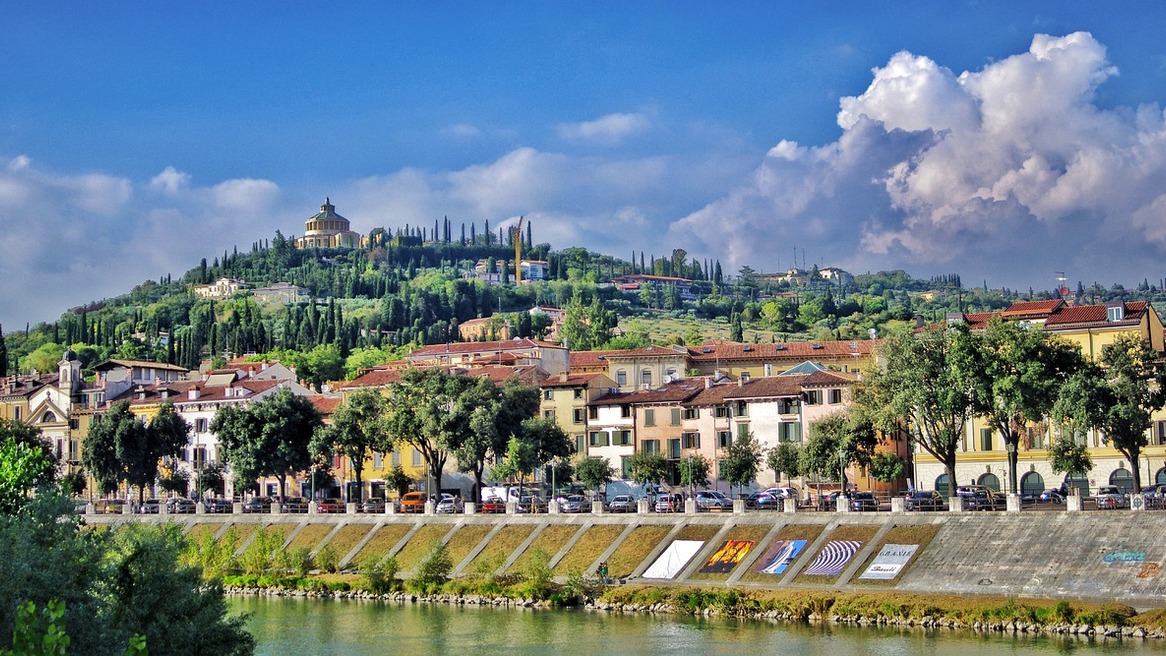
Veronetta means “Little Verona”, and it sits on the opposite side of the River Adige from the Città Antica, close enough to stroll to all the major sights and sites. You might prefer this neighbourhood if you’re planning to stay in Verona for longer than a week, or if you’re looking for great value accommodation. Veronetta is where you’ll find the University of Verona, so there’s a youthful atmosphere, fantastic coffee shops, fun and friendly nightlife and student-priced trattorias and restaurants. When it comes to sights, Veronetta has the ruins of the 1st century Roman Theatre, which is built into the San Pietro Hill, and has an archaeological museum attached. On top of the hill is the Castel San Pietro — there’s a funicular up to the top if you can’t face the stairs. This is a great place to look out over Verona, and there’s a nice, shady park and a cafe. Veronetta also has Verona’s National History Museum.
Did you know? Napoleon named Veronetta. His troops occupied the opposite side of the river, and nicknamed the Austrian side Veronetta: "little Verona".
Discover our recommended hotels near Veronetta
Explore more >
View all hotels in Veronetta
Explore more >
Ideal for: city breaks, sightseeing, families, opera lovers, short stays, romantics
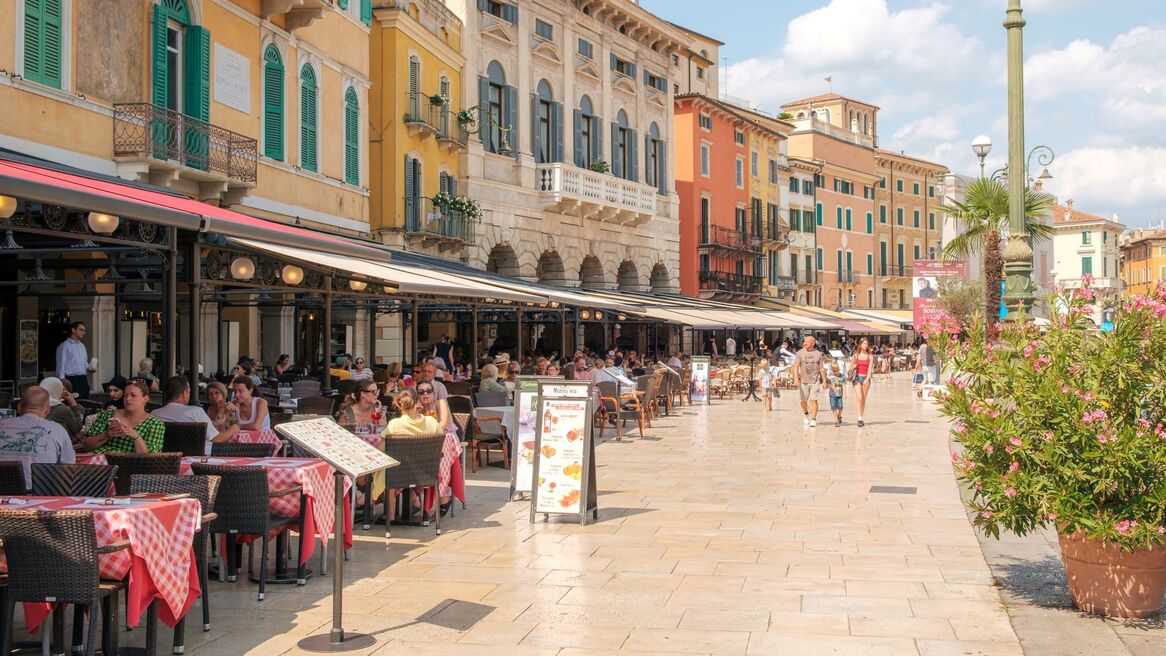
The Piazza Brà is more of a neighbourhood within a neighbourhood, because it’s just the square around the Roman amphitheatre. It's the city's largest piazza and boasts a little garden, with a fountain and a statue of King Vittorio Emanuele II (the first ruler of a united Italy), and many restaurants which spill out onto the cobbled square in the evening. Sitting out at one of these many tables allows you to hear quite a lot of what is going on in the amphitheatre, so it’s a very atmospheric place to base yourself. Some of the restaurants are quite high-end, and some are quite touristy, but there are some good affordable options too. Just off the Piazza Brà are some of the fanciest, pedestrianised shopping streets in Verona. It's great for luxury shopping, but there are also some local boutiques and brands, and several excellent gelato options! On the northern side of the piazza is a medieval archway called the Porton del Bra, which is part of the medieval city walls, and below that is the Palazzo Gran Guardia and the Museo Lapidario Maffeiano archaeology museum.
Did you know? The Verona Arena is actually older than Rome's Colosseum, and can fit up to 15,000 people.
Discover our recommended hotels near Piazza Brà
Explore more >
View all hotels in Piazza Brà
Explore more >
Ideal for: longer stays, families, travellers on a budget, living like a local
Borgo Trento is a more residential neighbourhood, to the north of the Città Antica, and on the opposite side of the river. You’re on higher, greener ground, so there are some lovely views, but still just separated from the major sights of Verona by a bridge (the beautiful Garibaldi Bridge, which is close to Verona’s duomo). So this area is ideal for families, or anyone wanting to stay longer in Verona. It was established and built around the turn of the 20th century, when the fashion for architecture was the Art Nouveau or Liberty style, and there are some very elegant villas in Borgo Trento, especially on Viale Nino Bixio. Expect elegant patterns in wrought iron, large windows and floral motifs. There are fewer sights here, but the Sanctuary of Our Lady of Lourdes at the top of the hill is definitely worth walking up to. Because this is a more residential neighbourhood, visitors can expect to find more traditional restaurants, and some fantastic short-term rental apartments and aparthotels.
Did you know? Without the Ponte Garibaldi, this neighbourhood might still just be countryside...
Discover our recommended hotels near Borgo Trento
Explore more >
View all hotels in Borgo Trento
Explore more >
Ideal for: city breaks, sightseeing, families, flying visits, travellers on a budget, exploring the region, night owls
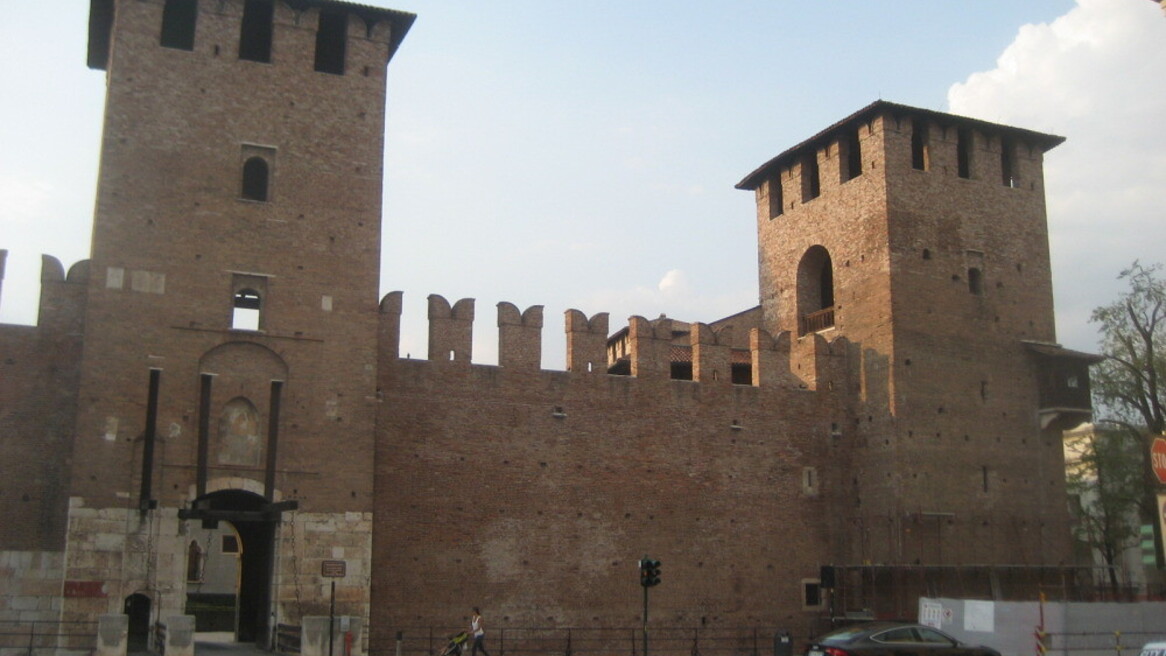
The Cittadella neighbourhood is between the historic heart of Verona and the train station, Porto Nuova, so it’s an excellent place to stay if you're planning to explore the Italian lakes, or other towns in the region, by train. Milan and Venice are around an hour and a half away. The neighbourhood name comes from the 14th century citadel and gatehouse, which is the marker that lets you know you’re entering the Città Antica. Ramparts remain around the gate, and you can follow the old city walls. Other local sights include the church where Romeo and Juliet were supposed to have been married, and the Capuchin monastery, which is where Juliet was supposedly entombed. Cittadella is a great place to go out for a meal, with a good choice of trattorias specialising in local dishes, and more international offerings.
Did you know? Some locals call this neighbourhood Porta Nuova, after the station.