
 Image by Lajos Móricz from Pixabay
For some travellers the fact that Naples is where pizza comes from is enough reason to visit. If you’re looking for a bit more you’ve got fabulous collections of art and architecture all jumbled together in an atmospheric, photogenic mish-mash, a gorgeous shoreline and access to the islands of the Bay of Naples (including Capri), views across to Mount Vesuvius, Roman ruins and catacombs and of course the world renowned food and drink culture that spawned pizza. The thing about Naples is that it’s not a tourist town. This is a work-a-day city, so while some of it is as graceful as the most elegant parts of Paris or Vienna, some of it is gritty and lived-in. So choosing where to stay in Naples is choosing what sort of area you’d like to stay in, as well as what sort of accommodation. The Centro Storico has the gorgeous architecture and top sightseeing spots, Chiaia offers bay views and fantastic shopping, Quartieri Spagnoli’s narrow, winding streets are authentically lived in, Santa Lucia is the old fisherman’s quarter, right by the water, while Vomero's a top spot for the well-to-do traveller: boasting historic architecture, bustling cafes and lovely restaurants.
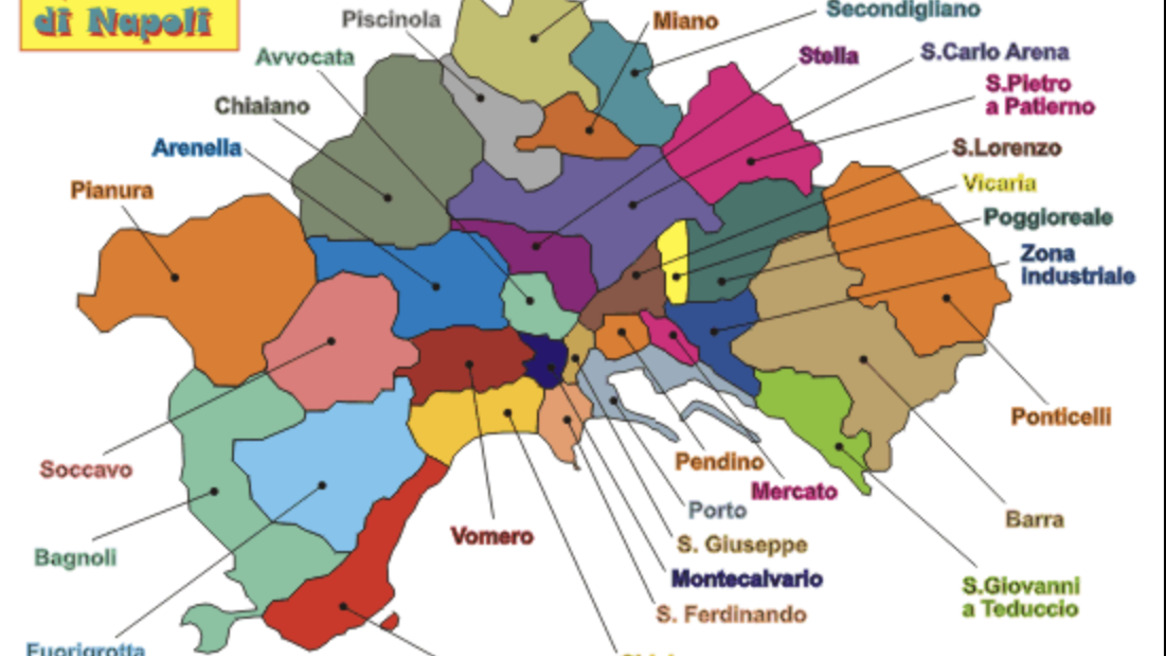 The Districts of Naples by Daniele Pizzo
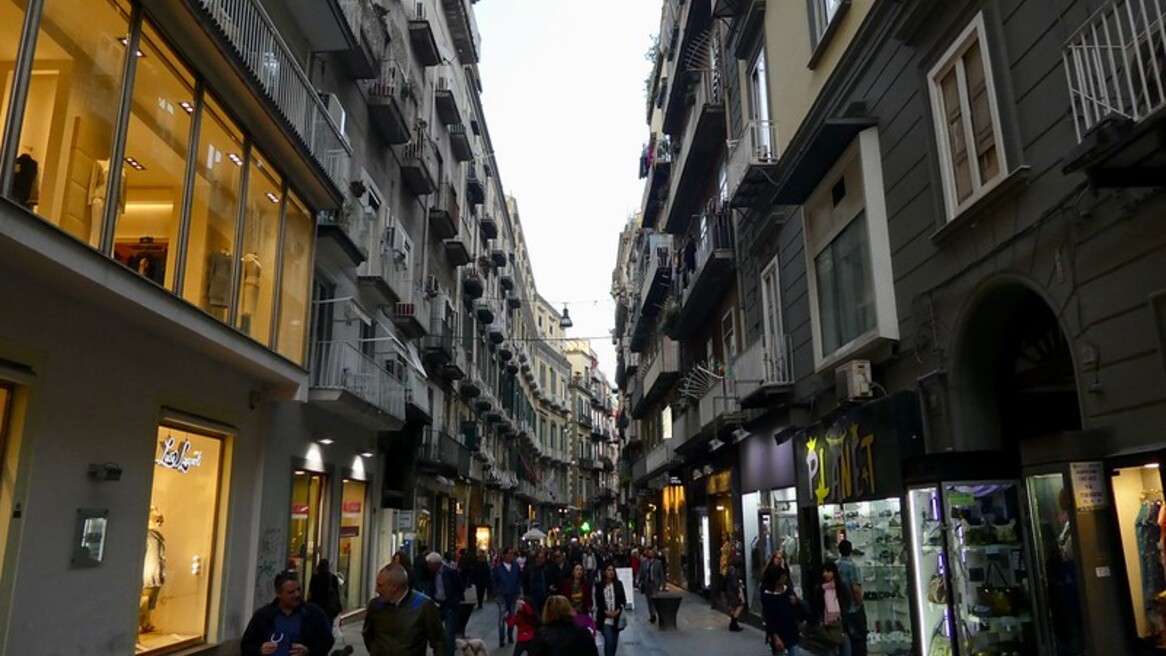
The Centro Storico, or historic centre, of Naples is still the heart of this city, and as busy as you would expect the heart of a city to be. This is where you’ll find many of Naples’ historic sites — the ancient Roman and Greek bits that have been Heritage Listed by UNESCO; the Palazzo Reale; the castle; the Basilica San Francesco, the churches of Gesù Nuovo, San Lorenzo and Santa Chiara — and all the artworks within. By day, the architecturally impressive, yet narrow, streets of the Centro Storico are awash with people going about all manner of business. Come the evening it looks much the same, but under artificial lights. The museums and galleries may close, but many of the boutiques stay open, and of course, many of the bars come to life. There’s a huge range of accommodation on offer in the Centro Storico, from backpacker-priced boltholes to boutique hotels, apartments and perfectly converted magnificent palazzos.
Ideal For: City breaks, history buffs, sightseeing
Discover our recommended hotels near Centro Storico Naples
Explore more >
View all hotels in Centro Storico, Naples
Explore more >
 Image by StockSnap from Pixabay
Naples’ Spanish Quarter, or Quartieri Spagnoli, still looks and feels like old Napoli, the heavily residential city of welcoming cafes, bars and trattorias, zigging and zagging Vespas, narrow alleyways criss-crossed with laundry, surprise churches and squares, and the fading remnants of belle époque glamour in the architecture and colour scheme. It was built to house Spanish soldiers during the 16th century, and is a neat grid of 18 streets by 12 streets. Its location, between the Centro Storico, the bay and Vomero, makes this a central place to stay, so it’s good for anyone planning to sightsee. It’s also heaven for photographers, appreciators of street art, and if you’re here for Neapolitan food, the Quartieri Spagnoli is for you too. The Spanish Quarter has plenty of attractions of its own. The Pignasecca Market is one of them, the sort of market with a bit of everything, and a great place to try some of the local delicacies. Then there’s the famous Pedamentina, the photogenic series of stair flights that lead up 400 steps to the top of Vomero Hill, and the Montecalvario church — a baroque masterpiece considered one of ‘the monumental churches of Naples’. There’s a great variety of accommodation in the Spanish Quarter, along with incredible foodie opportunities, and vibrant and varied nightlife.
Ideal For: Foodies, city breaks, history buffs, living like a local
Discover our recommended hotels near The Spanish Quarter
Explore more >
View all hotels in The Spanish Quarter
Explore more >
Chiaia is a chic, waterfront neighbourhood known for its fashionable boutiques, cool kids design stores, art galleries and indie book shops. AND for its fashionable restaurants, cafes and bars — Chiaia is THE place to come for aperitivo. Foodies will also want to know that twice a month, Chiaia hosts a farmers' market where local small batch producers mingle with more substantial regional outfits, creating the perfect opportunity to taste the flavours of the region — especially the cheese and cured meats. If you’re poking around looking for local landmarks beyond the waterfront, Chiaia offers up the Villa Comunale, a large and lovely public park, which is home to the Naples Aquarium, plus the elegant villa of Pignatellla. The accommodation options in Chiaia are in keeping with the boutiques, restaurants and aperitivo bars — boutique-y and sophisticated in the main.
Ideal For: Shopping, romantics, style-lovers, foodies
 Image by Giulia Marotta from Pixabay
Neighbouring Chiaia, and just to the south of the Spanish Quarter, Santa Lucia is a neighbourhood on the bay overlooking Vesuvius, Capri and the little islet of Borgo Marinaro. This is a great place for fresh seafood and promenade strolls — though it’s still so close to the centre of Naples! On the weekends, Santa Lucia is naturally popular with Neapolitans who enjoy bay-side strolling and seafood. The Castel dell’Ovo is one of Santa Lucia’s major sights, and the oldest castle in Naples. Occupying most of the tip of a picturesque and sandy causeway connected to the restaurants of Borgo Marinaro, it is a landmark that really adds to the view, and a fantastic place to visit. A lot of the accommodation in Santa Lucia is along the promenade — there is a row of very nice hotels (some quite luxurious) and aparthotels, with plenty of contemporary options, as well as some 19th century grande dames.
Ideal For: Sea views, romantics, foodies, luxury lovers
Discover our recommended hotels near Santa Lucia
Explore more >
View all hotels in Santa Lucia
Explore more >
 By Flickr user Francisco Anzola
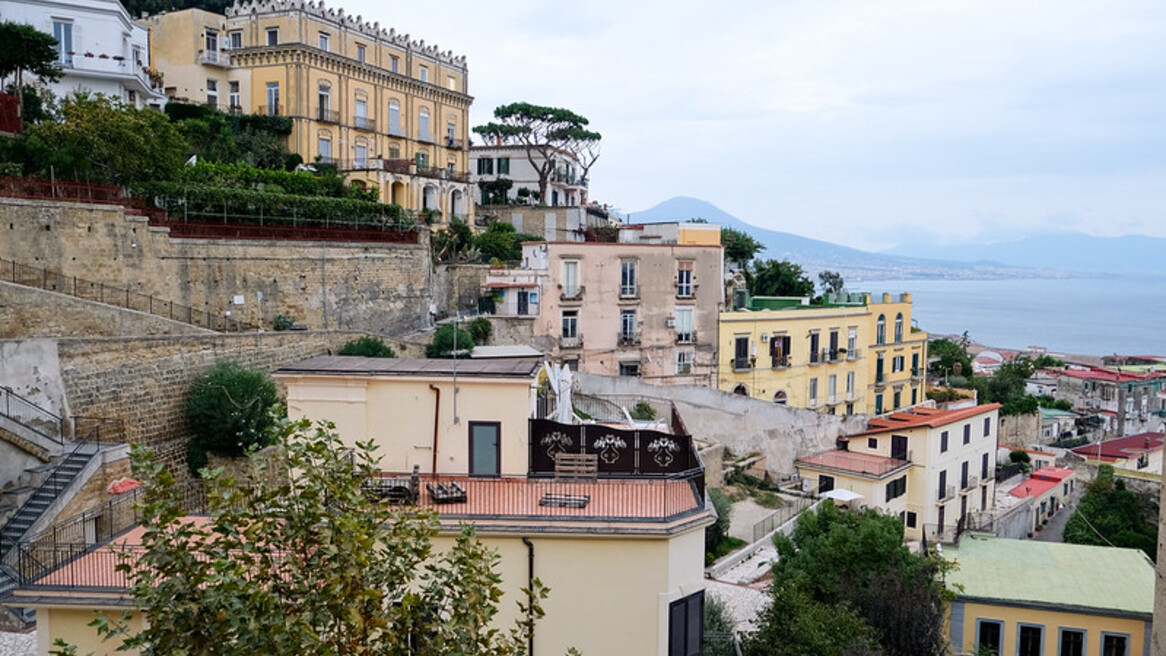
Just up the Pedamentina from the Spanish Quarter, or the funicular from Chiaia, Vomero is the leafy neighbourhood at the top of the hill. Those who could afford to built their villas here, where there are cool breezes and incredible bay views, and the neighbourhood has some lovely Art Nouveau or Liberty-style properties, and beautiful gardens and parks too — hang out in the grounds of the Certosa e Museo, di San Martino (castle), which sits right on the crest of the hill. As well as views and breezes, Vomero is great for gelato, relaxed cafe visits, chic bars and restaurants, and boutique shopping. The Antignano street market is a good place to find a bargain. Vomero’s accommodation veers towards the boutique, with converted villas and palazzi easy to find.
Ideal For: Romantics, families, city breaks, shopping
La Sanità is to the north of the Centro Storico, a neighbourhood that was outside of the city walls up until the 18th century, though it seems so close today. It’s still a bit off the tourist trails, but this is where you enter the fantastic frescoed catacombs of San Gennaro and San Gaudioso, and where you’ll find the macabre but meaningful Fontanelle Cemetery, burial site of the victims of several plagues and epidemics. If the underground of Naples isn’t your thing, La Sanità still has appeals: it’s now popular with artists and craftspeople, who’re adding their wares to the compelling list of attractions, and you’ll find them both in small boutiques and markets. La Sanità doesn’t offer a huge range of accommodation, but there are some great options. The same can be said for food and drink offerings — expect proper pizzerias, bars and trattorias that are memorable for all the right reasons.
Ideal For: History buffs, living like a local, travellers on a budget