
 Image by PublicDomainPictures from Pixabay
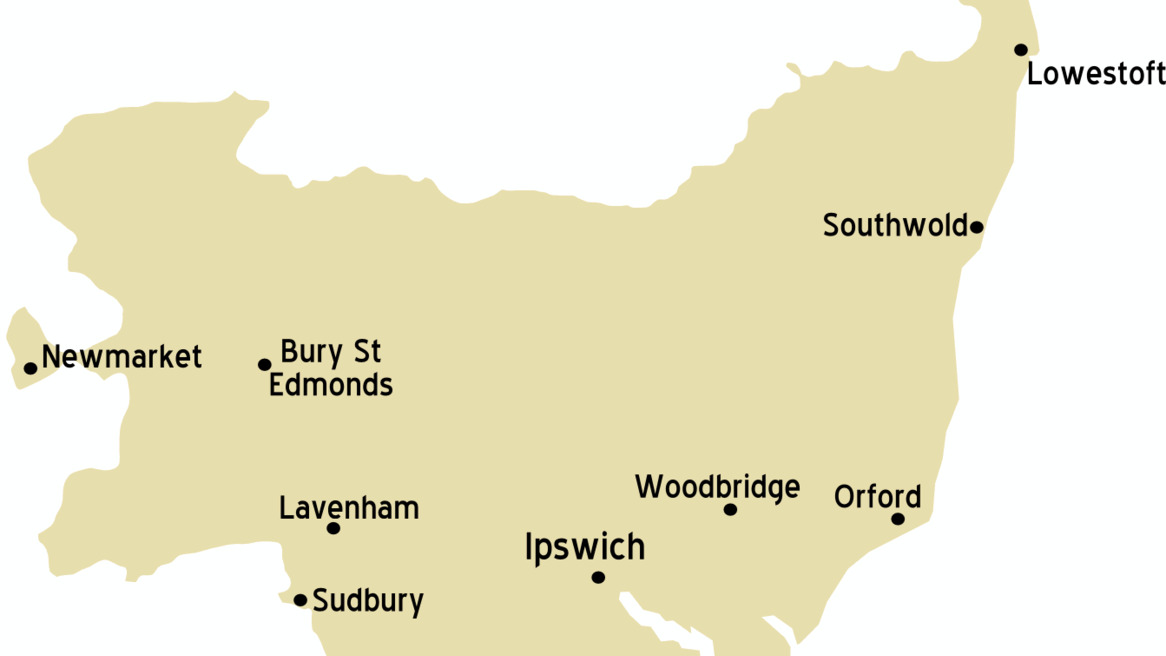
Suffolk has a lot going for it as a British holiday destination, including fifty miles of beautiful coastline, which incorporates lovely sandy beaches, dramatic cliffs and maritime history; a generous collection of medieval towns and picturesque villages, some of them recognisable from Constable paintings; bustling, lively centres like historic Bury St Edmunds, and Newmarket, the ‘home of horse racing; incredible green landscapes, some tame, some wild; and an impressive array of highlights — things like Sutton Hoo, the Anglo-Saxon ship burial, and the ruins of the abbey at Bury St Edmunds.
Suffolk has its own ports and, depending on which part you want to visit, good links to Stansted and Norwich airports. You certainly don’t need a car to get around Suffolk, but if you want to visit out of the way places and do some real exploring, it will definitely help.
Ipswich has been an important town since the Anglo-Saxon period, and has been an important port too, so it’s extremely rich in history and legend. The Ipswich Museum is crammed with historic treasures and the city’s art galleries have more Constables and Gainsboroughs than anywhere outside London. Its mish-mash of architecture is testament to its past — you’ll see timber framed Tudor houses sat beside Norman Foster projects. These days Ipswich is arty and cool, known for its theatre and hip gastronomic scene.
The central and waterfront quarters are the busiest. These are where you’ll find shopping and dining precincts, as well as the gentrified old port and the Cornhill, which is the historic town square. Ipswich has two train stations, and is well connected to London, Cambridge, Norwich and Peterborough, as well as the rest of Suffolk, and within the city there’s a good bus service.
Ideal for: City breaks, foodies, art lovers
Discover our recommended hotels near Ipswich
Explore more >
View all hotels in Ipswich
Explore more >
It sounds like a joke, but it's true that Bury St Edmunds is where St Edmund is buried, and pilgrims have been coming to visit his shrine, which now has an abbey built on top of it, for centuries. Edmund was the last Saxon king, and so it was a truly impressive Benedictine abbey built on his burial site, but today it’s a beautiful ruin, surrounded by an equally lovely park, which has two very large medieval gatehouses and a Norman Tower. Bury St Edmund’s has a second royal interment too; Mary Tudor, Henry VIII’s sister is buried here, in St Mary’s Church. However Bury’s largest church is its Gothic Revival cathedral. But that just scratches the surface of the history of this place...Today Bury is still a market town, with a twice weekly produce market (Wednesdays and Saturdays), when much of the town is pedestrianised. And it’s the centre of East Anglia, so a great base for exploring the wider region. It’s small, though, and most easily explored on foot or by bike. Most of Bury’s hotels are in the centre of town, close to the majority of pubs, cafes and restaurants.
Ideal for: Mini-break, couples, history buffs
Discover our recommended hotels near Bury St Edmunds
Explore more >
View all hotels in Bury St Edmunds
Explore more >
 By Flickr user Florian Christo
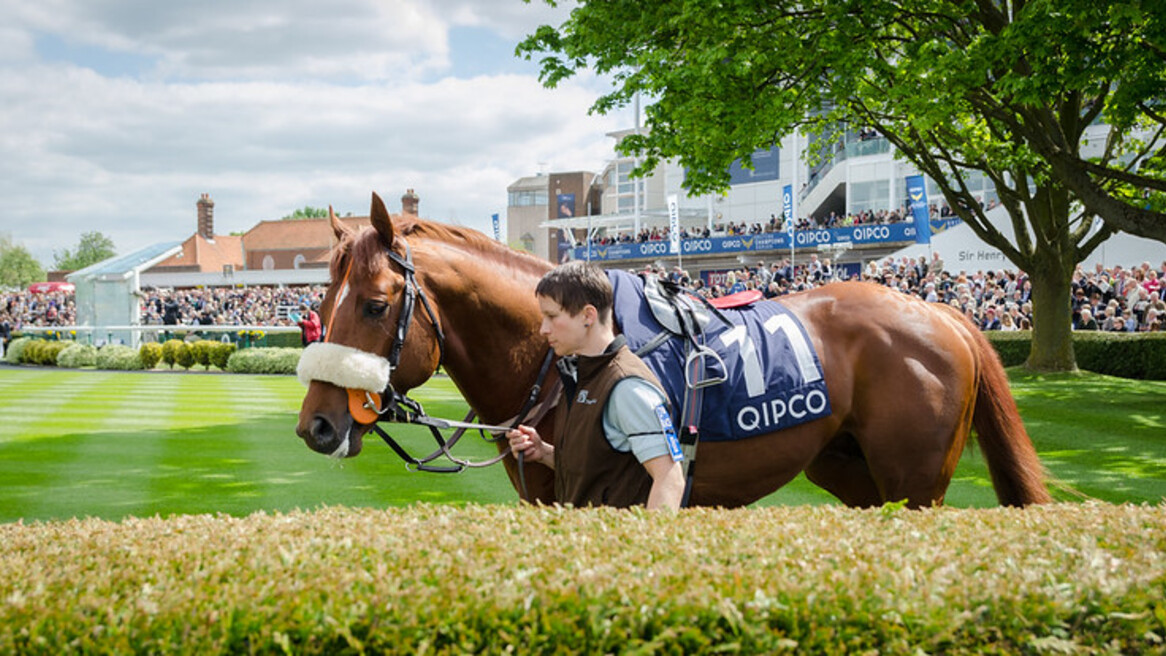
Newmarket is a market town and a key location in the English Civil War, but it’s better known for something else: horse racing. It’s the home of the Jockey Club, which oversees all British horse racing, but it’s also considered to be the birthplace of thoroughbred racing, which means it has museums and plaques, as well as over fifty stables, two very large tracks and three major public horse exercise grounds. Numerous British monarchs have been ardent horse racing enthusiasts, so Newmarket has a good collection of palaces, hunting lodges and impressive architecture. During the racing season the town really bustles: there’s lots to do, lovely places to eat and to drink, and some super flash options for wealthy trainers and celebrating track winners. At other times of year it’s still a busy place with good rail access to other local centres and a local bus service.
Ideal for: Horse racing enthusiasts, foodies, mini-breaks
Discover our recommended hotels near Newmarket
Explore more >
View all hotels in Newmarket
Explore more >
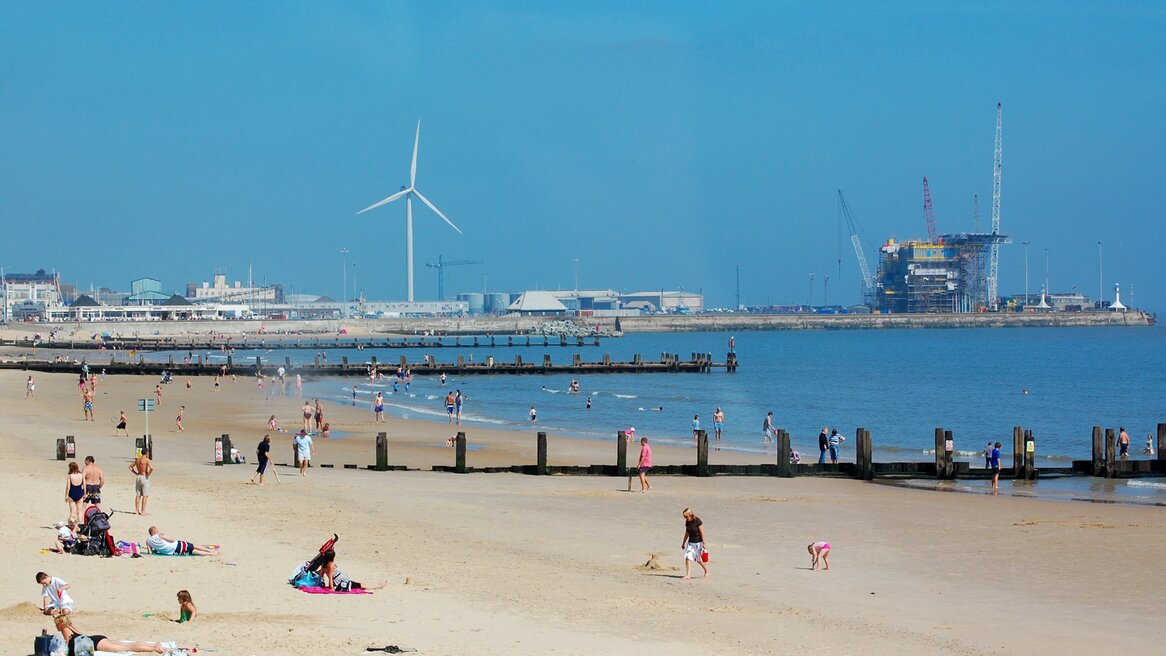
Lowestoft has some of the best sand beaches on England’s east coast, and it’s a regular fixture on the Blue Flag list. It’s also where you’ll find Britain’s most easterly point: Ness Point, and it’s very close to the Broads. Beyond the beach Lowestoft has a couple of excellent parks, a very good maritime museum, a family theme park and an impressive little zoo. The town is mid-renovation, with some rather run down bits, alongside some new parts. The same could be said for the food and drink options, with not too much variety and a big range in quality. There are a couple of decent pubs and cafes, but if you’re looking for a lively evening or an excellent meal, you might want to visit Oulton Broad, rather than the centre of Lowestoft. Lowestoft Station is right in the middle of town and is connected to two lines, the Norwich line and the Ipswich line. Once you’ve arrived in town, you can walk to most places, and you can catch a train to Oulton Broad.
Ideal for: Families, beach holidays, exploring the Broads
Discover our recommended hotels near Lowestoft
Explore more >
View all hotels in Lowestoft
Explore more >
Felixstowe is a faded seaside town and large port, with a pretty estuary, a pier and a long promenade. It still has all the essentials of a seaside resort, the pier, the arcades, amusement rides, mini golf and a good collection of fish and chip shops. Most importantly for many visitors is the long stretch of beach; part sand, part shingle, and lined with beach huts. Three are lots of walking trails around the outskirts of the town and along the coast, and there’s an old fort, originally built in the 18th century, which is popular with birdwatchers too. Plus there's a museum and a string of Martello Towers. Felixstowe isn’t known for its shopping, but it does have a couple of excellent second-hand book shops. The town is connected by train to Ipswich, and there’s a bus service to get yourself around town, including an open-top tour bus during the summer months. Felixstowe isn’t chic, it’s a bit faded from its Victorian heyday, but it is pretty and peaceful, with nice beaches.
Ideal for: Families, traditional seaside holidays
Discover our recommended hotels near Felixstowe
Explore more >
View all hotels in Felixstowe
Explore more >
 Image by Siggy Nowak from Pixabay
If you’ve ever wondered what medieval towns might have looked like, a visit to Lavenham will go a long way towards answering your question, because the majority of its buildings were built between 1450 and 1500, when the town was a wealthy wool producing centre. And most of them have been kept in an excellent state of repair. Some buildings are open to the public, some have been converted into hotels or guesthouses, but just strolling the streets, lined with half-timbered houses and thatched cottages all leaning against each other with age, is an experience. Lavenham is small, and for many people a day trip is enough, but there’s a choice of atmospheric pubs and restaurants if you do stay over.
Ideal for: History buffs, mini-breaks, romantics
Discover our recommended hotels near Lavenham
Explore more >
View all hotels in Lavenham
Explore more >
 By Ben Babcock - https://www.flickr.com/photos/tachyondecay/14297792671, CC BY 2.0
Long Melford is a largish village with a very beautiful church, two Elizabethan manors and a couple of excellent restaurants. Another one of Suffolk’s old wool towns, this ex-market town still has some of its wealthy trappings, including beautiful medieval stained glass in the Lady Chapel of the church. The Elizabethan manors, Melford Hall and Kentwell House were both visited by Queen Elizabeth, and are both open to the public today. There are a hundred other listed buildings in the village, including several inns on the main street, which are also great places to eat. Long Melford isn’t large enough to have a station, but it is connected to other local towns by a bus service.
Ideal for: Mini-breaks, history buffs, romantics
Discover our recommended hotels near Long Melford
Explore more >
View all hotels in Long Melford
Explore more >
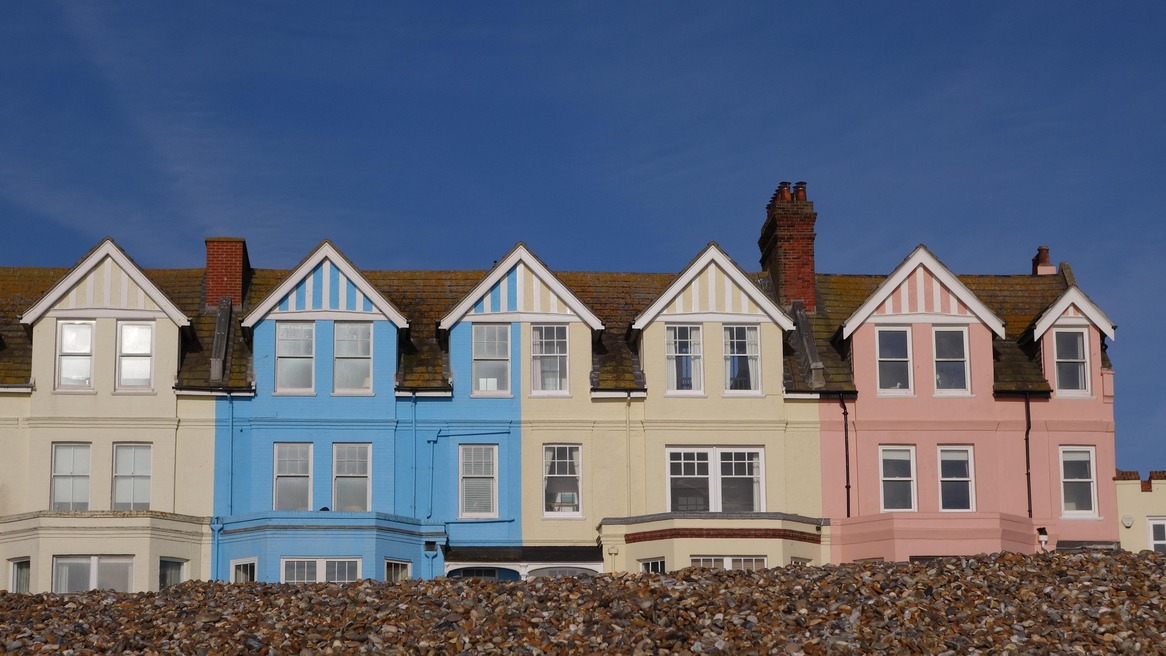 Image by nickboulter00 from Pixabay
Small but perfectly charming, Aldeburgh is a collection of pastel-coloured buildings beside a sweep of Blue Flag shingle beach. Known for its independent shops and art galleries, and great, fresh seafood, this is a picturesque town with a few unexpected highlights. First is the Scallop, a four metre tall stainless steel sculpture which looks like two interlocking scallop shells, dedicated to composer Benjamin Britten, who lived here. Second is its Martello Tower: several of Suffolk’s coastal towns have them, built to defend against a possible Napoleonic invasion, but Aldeburgh has the largest and northernmost. Two of the fish and chip shops in Aldeburgh regularly appear in lists of the best in the country. Aldeburgh is connected to other local towns, and Ipswich, by bus, and it’s very easy to get around on foot.
Ideal for: Foodies, romantics, mini-breaks
Discover our recommended hotels near Aldeburgh
Explore more >
View all hotels in Aldeburgh
Explore more >
Southwold is a classic seaside town at the mouth of the River Blyth, near the Heaths Area of Outstanding Natural Beauty. It offers the quintessential British seaside holiday: a long, surprisingly sandy beach, with its beach huts, pier, and lighthouse, and a charming promenade with quirky gift shops and vintage arcades. Of course, there’s a mini golf course and tea rooms, but there’s also a paddle boating lake. Southwold has some great pubs too, most of which are owned by a local brewery and offer decent food. Southwold’s olde world seaside charm comes at a price — the reason Southwold’s beauty hasn’t faded, and its pier is still popular, is that it’s been invested in. The nearest station is eight miles away, but you can catch a bus from local towns. Once you’re here, you can get around on foot.
Ideal for: Families, romantics, beach holidays