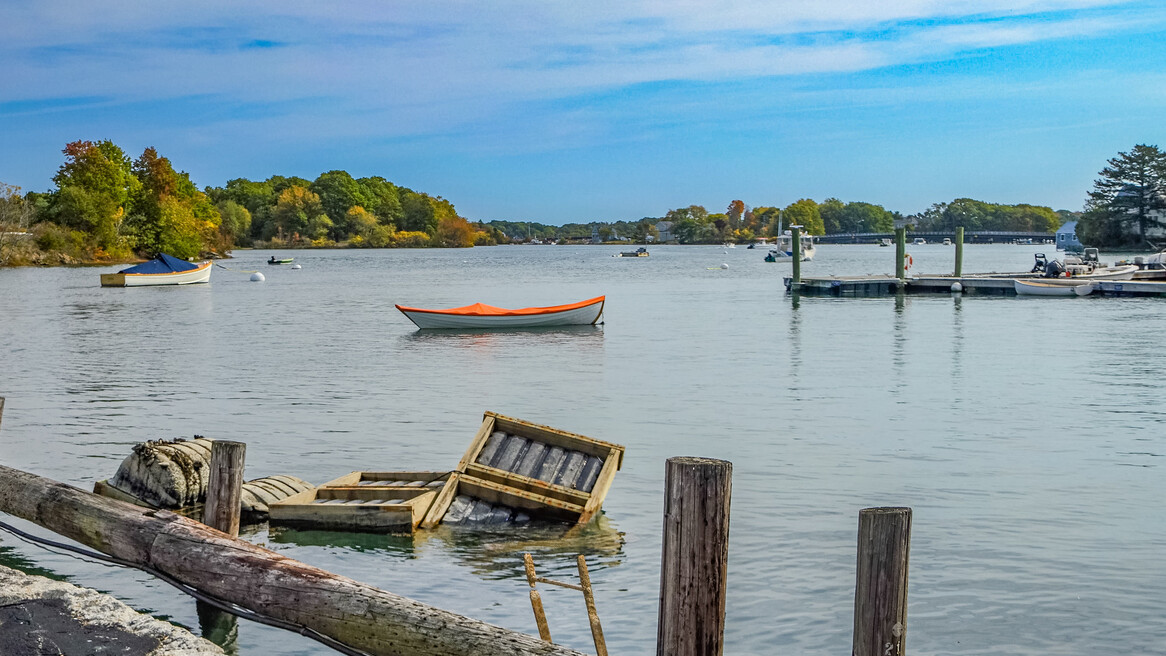

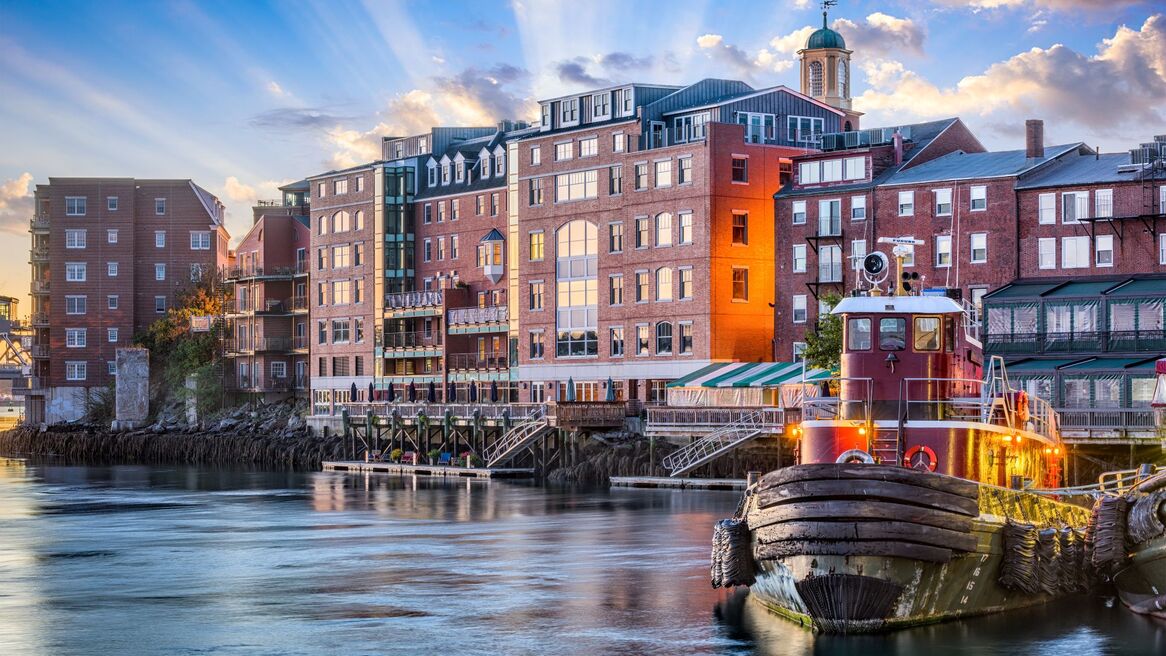
Portsmouth, New Hampshire, is a historic city and seaport, turned popular summer holiday destination; not quite a resort, more the perfect destination for a water-loving history buff! Downtown Portsmouth and the waterfront are walkable and dotted with historic buildings and landmarks. This was the first federal navy shipyard, so there are plenty of naval and maritime landmarks, plus a lighthouse and several historic house museums. Portsmouth is also known for its culinary scene: it apparently has 36,000 restaurant ‘seats’, for a population of only 23,000…
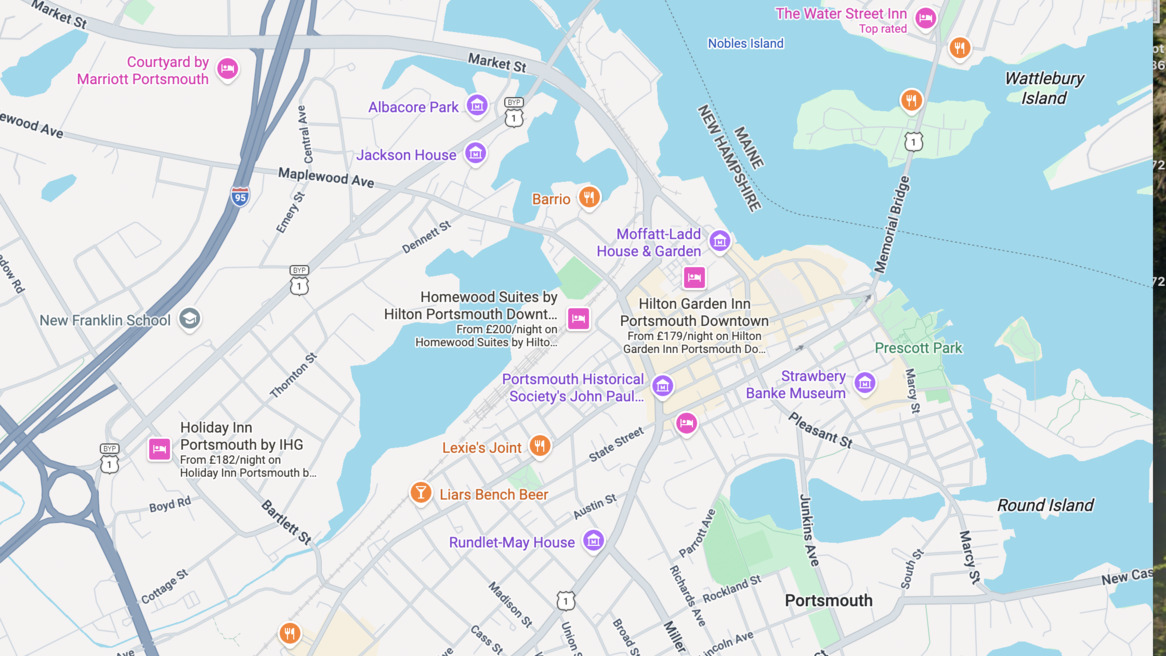
Our visitor’s guide to the neighbourhoods of Portsmouth in New Hampshire will help you choose where to stay, whether you’re looking for the classic district for visitors: Downtown or the Waterfront, where you can find historic buildings, water views, local landmarks and colourful nightlife; or for somewhere more hip, like the West End, with its cool cafes and boutiques, local breweries and vintage vibes. The South End is another popular choice, due to its tree-lined streets and 18th century colonial architecture; this is a great neighbourhood for charming B&Bs and historic hotels. The North End is another central district worth considering; it’s a neighbourhood in flux, ever evolving, but never losing its historic charm. If you’d like to be on the coast, consider the Sagamore neighbourhood, which is a picturesque, residential spot, close to the Sagamore Creek estuary, so perfect for kayaking and canoeing, as well as birdwatching and walking.
Ideal for: first-time visitors, sightseeing, city breaks, water views, history lovers, families
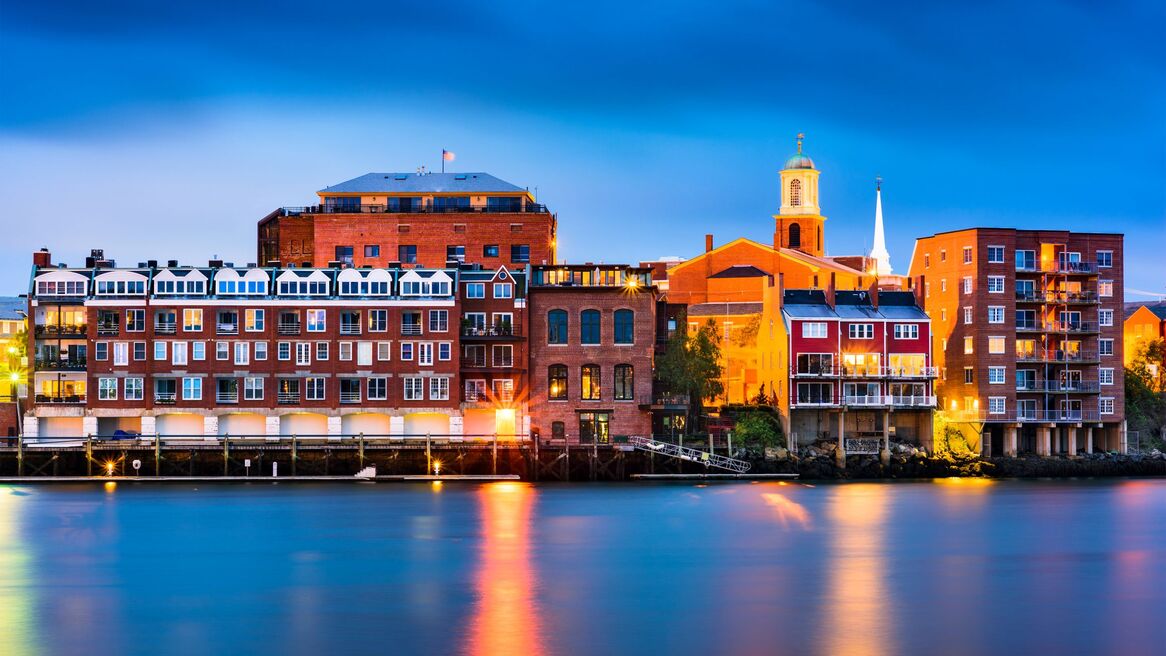
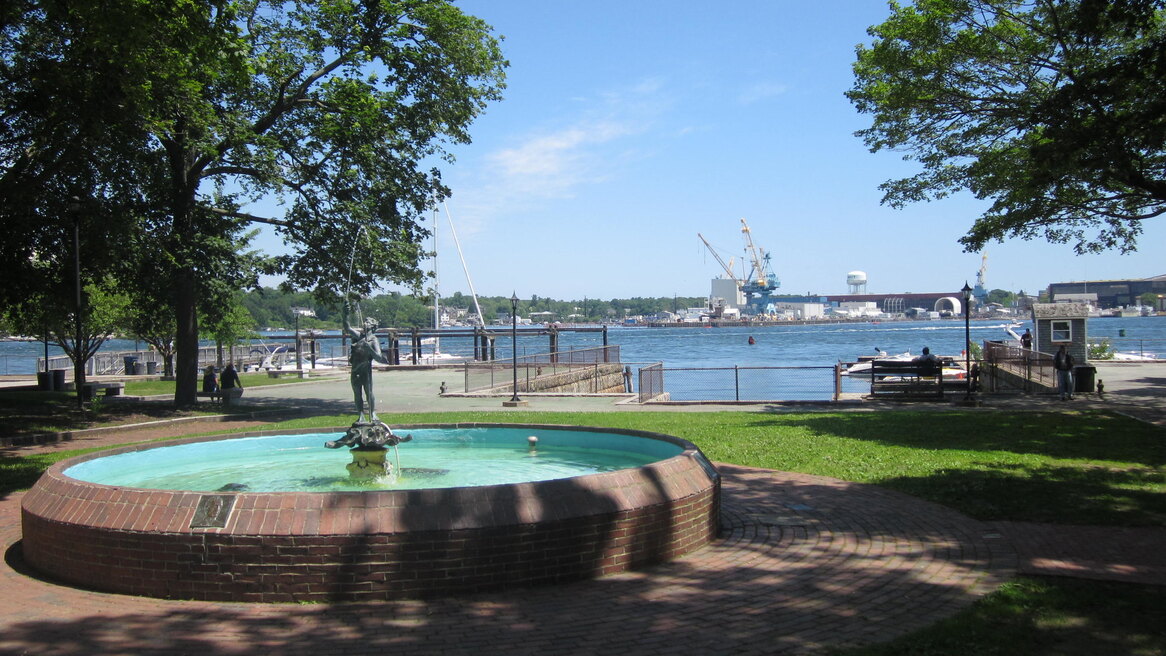
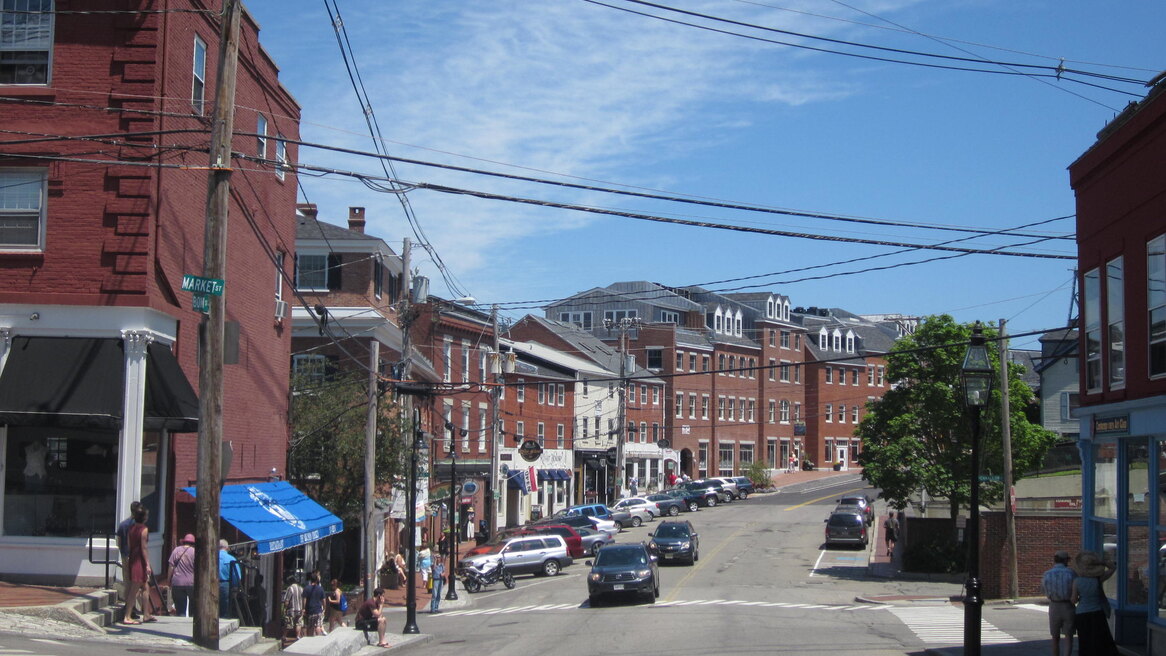
Downtown Portsmouth is the obvious place for visitors to stay: this is the walkable central, historic part of town, close to the main sights, charming, and with great facilities. Market Square is its epicentre, lined with independent galleries and boutiques, cafes and bars, and North Church. This is where much of Portsmouth’s action happens; if there’s a food market, this is where it will be, if there’s a festival, you can expect to find it in the same place. The Waterfront is Portsmouth’s other historic neighbourhood, with Prescott Park the Market Square alternative (it's used for summer parties and concerts). The park offers river views and green space, but the part of the Waterfront most people are fascinated by is the streets around the old wharves, warehouses and boatbuilders. Portsmouth’s maritime history is one of its main draws for visitors. Other highlights include the Strawberry Banke Museum, which tells the story of Portsmouth’s beginnings and key role in naval history. The whole neighbourhood encompasses around 1,200 historic buildings, so there are plenty to discover while strolling around.
Did you know? Portsmouth was originally called "Strawberry Banke" when it was founded by English farmers, because of the wild strawberries that grew all around the land they picked to settle.
Discover our recommended hotels near Portsmouth's Downtown & Waterfront
Explore more >
View all hotels in Portsmouth's Downtown & Waterfront
Explore more >
Ideal for: central location, historic architecture, sightseers, romantics, families, history lovers, city breaks
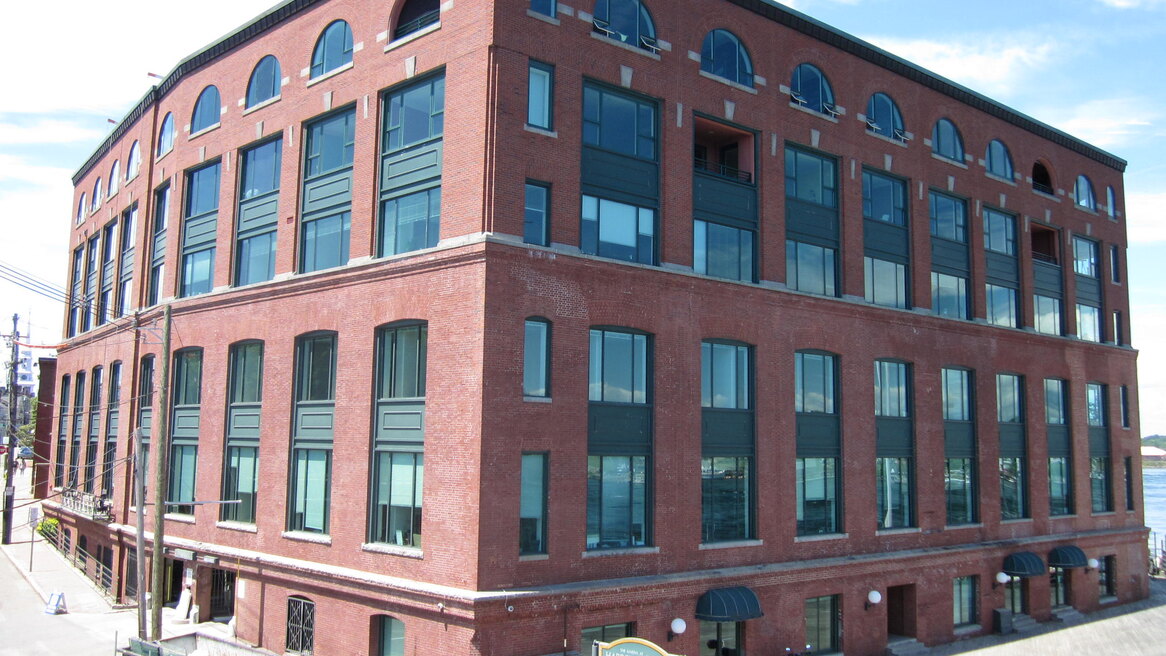
The South End neighbours Downtown Portsmouth, and is a lively part of town including the neighbourhoods south of Market Square, between State Street and Pleasant Street to Prescott Park and the waterfront. There are still working wharves where the South End borders the Piscataqua River, and some fantastic places to eat on Ceres Street. This is another area with a rich and varied architectural offering: there are buildings in the South End that were completed before the American Revolution, but also some which are still being built, and plenty of older buildings being converted to new uses. This is a popular residential neighbourhood too, with restaurants, cafes and bars good enough to entice and keep a loyal local following. Charming and walkable.
Did you know? The little front yards many of the historic homes boast are called "pocket gardens".
Discover our recommended hotels near the South End
Explore more >
View all hotels in the South End
Explore more >
Ideal for: history lovers, sightseers, luxury lovers, romantics
Portsmouth’s North End is part of the settlement’s historic heart, neighbouring Downtown and the waterfront. This part of town was associated with the naval shipyards, but also local factories and industry. In the early 20th century, a lot of Italian families moved in, and there are still numerous Italian restaurants, cafes and delis in the area. In the 1970s many of the historic cottages were demolished to create new homes, a shopping mall, offices and some rather luxurious hotels, so the North End today has an interestingly varied range of architecture, as well as a broad range of accommodation options, and some great places to eat and drink. Stay in the North End, and you’ll also be within an easy walk of many of Portsmouth’s major landmarks and attractions. Look out for the Vaughan Street Historic District, North Mill Pond, Albacore Park and St. Patrick’s School (no longer a school, but worth a look).
Did you know? 14 historic, wooden houses were protected from the wrecking ball during the 1970s reimagining of the North End; these were all moved to The Hill.
Discover our recommended hotels near the North End
Explore more >
View all hotels in the North End
Explore more >
Ideal for: cool kids, longer stays, families
The West End of Portsmouth is the bit west of the Downtown corner of Maplewood and Middle Street, known for being less compact than the more central, historic neighbourhoods, and more urban and residential. There are art galleries, craft breweries and cool cafes and restaurants, but also useful facilities, like gyms and even a supermarket. Expect to see a range of architecture, from converted warehouses and mills to old family homes, contemporary apartment blocks and new family homes.
Did you know? The area is home to lots of converted factories and industrial spaces, including the Frank Jones Brewery, which was once one of the largest breweries in the US, and The Button Factory, which has been converted into artists' studio space.
Discover our recommended hotels near the West End
Explore more >
View all hotels in the West End
Explore more >
Ideal for: relaxed breaks, families, water views, walking, birdwatching
Sagamore is a relaxed, residential neighbourhood about two miles south of Downtown, on a stretch of coastline close to the Sagamore Creek estuary. Peaceful and picturesque, Sagamore is set in countryside that varies between salt marshes and tidal inlets. It’s a great place to kayak or canoe, and to birdwatch. Beyond the natural setting, Sagamore is a family-friendly neighbourhood, with lots of places to eat and drink, a peaceful atmosphere, and fairly easy access to the main sights of Portsmouth.
Did you know? Before it got an official name, Sagamore Creek was called "Witch Creek", after Jane Walford (also called The Witch of Portsmouth), who had her family homestead nearby in the 1600s.