
Our guide to Prague’s best neighbourhoods helps you choose the perfect base for your trip. We cover practical tips like public transport, walking routes, and local amenities, while also recommending areas to match the vibe you’re after — whether it’s historic charm, lively nightlife, cultural hotspots, or a quiet, scenic escape. Whatever your plans, we’ve got a neighbourhood for you.
Prague is one of Europe’s true gems: a stunningly preserved city with a millennium of history, remarkably unscathed by the 20th century. From the castle perched atop its hill to graceful bridges spanning the wide Vltava River, the city dazzles with Gothic, Baroque, Neoclassical, Art Nouveau, and even Cubist architecture — all harmoniously combined. Visitors come for the beer, the food, and the vibrant, yet intimate, atmosphere that feels inseparable from the city itself.
Prague can be crowded, and navigating it can be tricky, thanks to overlapping district maps and cobbled streets. Fortunately, most major sights are walkable, and a convenient public transport system — metro, trams, buses, the Petřín Hill funicular, and a handful of river ferries — makes exploring easy.
Ideal for: Sightseeing, first-time visitors, couples, history buffs
 Image by kirkandmimi from Pixa
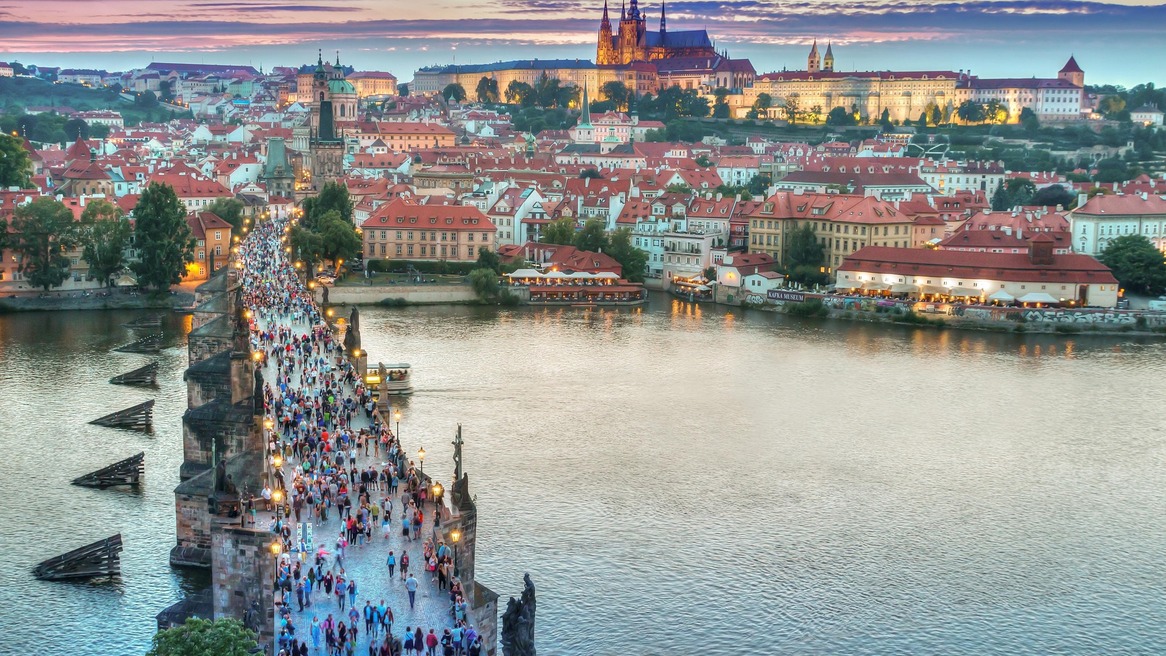
Staré Město, Prague’s Old Town, is a compact, cobbled neighbourhood overflowing with history and charm, nestled within a wide loop of the Vltava River. The Old Town Square, the city’s UNESCO-listed heart, is lined with stunning Gothic, Baroque, and Renaissance buildings, including the Astronomical Clock and Týn Cathedral. Staré Město also hosts the iconic Charles Bridge with its statues, the Convent of St Agnes, the Jan Hus Monument, the Mucha Museum, and the Museum of Communism. Away from the main sights, narrow streets are packed with restaurants, cafes, bars, and nightclubs — some offering castle views — alongside the neighbourhood’s architectural treasures. To the north lies Josefov, the historic Jewish Quarter, home to the Prague Jewish Museum and the Old Jewish Cemetery, adding another layer of history to this vibrant area.
Did you know? Staré Město’s Astronomical Clock, installed in 1410, is the world’s oldest working medieval clock.
Discover our recommended hotels in Staré Mesto, Prague
Explore more >
View all hotels in Staré Mesto, Prague
Explore more >
Ideal for: Sightseeing, couples, history buffs, shopping
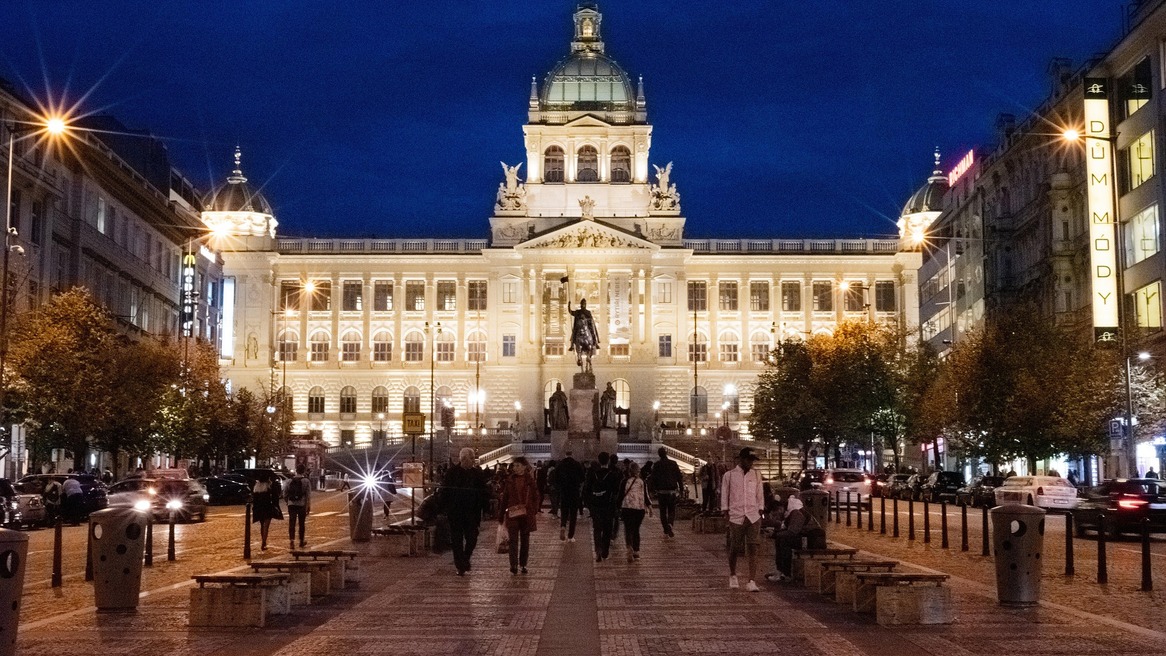 Image by husnerova from Pixabay
Nové Město, Prague’s New Town, lies south of Staré Město and wraps around it. It’s been around since the 14th century, with its last major redevelopment in the 19th century, so the "New Town" label can be slightly misleading. Its centrepiece is Wenceslas Square, a broad boulevard crowned by the National Museum and featuring the iconic statue of St. Wenceslas on horseback. Along the boulevard, you’ll find bars, restaurants, casinos, and some of Prague’s best bookshops. The neighbourhood also hosts the National Theatre and Charles University Botanical Gardens. With all three metro lines running beneath Wenceslas Square and multiple tram stops above ground, Nové Město is exceptionally well-connected.
Did you know? Wenceslas Square in Nové Město has been the site of many of Prague’s most historic events, including protests, celebrations, and the Velvet Revolution of 1989 that helped end communist rule in Czechoslovakia.
Discover our recommended hotels in Nové Mesto
Explore more >
View all hotels in Nové Mesto
Explore more >
Ideal for: Romantics, history buffs, couples, sightseeing
 By Radler59 (talk) - Self-photographed, CC BY-SA 4.0
Malá Strana, or the “Little Side,” sits on the left bank of the Vltava River beneath Prague Castle, just across from Staré Město. Known for its 13th-century cobbled alleyways, Renaissance palaces, gardens, and grand churches, it’s an elegant and picturesque neighbourhood. Charles Bridge, one of Prague’s most famous landmarks, connects you to the area and buzzes with stallholders and statues. Explore Petřín Hill and Park, climb the observation tower, or take the funicular from the bottom of the hill. Malá Strana is also home to John Lennon’s Wall, the Savoy, Shakespeare & Sons bookshop, and plenty of cafes, bars, and restaurants tucked along its charming streets.
Did you know? Malá Strana’s Petřín Hill was inspired by Paris’s Eiffel Tower — the Petřín Observation Tower, built in 1891, is a mini version offering panoramic views of Prague.
Discover our recommended hotels in Malá Strana
Explore more >
View all hotels in Malá Strana
Explore more >
Ideal for: Romantics, history buffs, luxury lovers, sightseeing, once-in-a-lifetime visitors
Hradčany, Prague’s Castle District, perches above Malá Strana on Petřín Hill, offering sweeping views of the Vltava and the city below. This historic neighbourhood is a showcase of palaces and noble houses vying for proximity to Prague Castle — the world’s largest castle, dating back to the 9th century. Inside the castle complex, you’ll find museums, galleries, the National Gallery, the Convent of St. George, and St. George’s Basilica, with a basic ticket granting entry for two full days. Outside the walls, cobbled streets and grand buildings lead you to St Vitus Cathedral and the surrounding palaces. Hradčany can get very busy in summer, and while there are cafes and restaurants, a hotel restaurant can be a welcome convenience.
Did you know? Prague Castle in Hradčany is the largest ancient castle in the world, covering more than 70,000 square metres.
Discover our recommended hotels in Hradčany, Prague
Explore more >
View all hotels in Hradčany, Prague
Explore more >
Ideal for: Couples, hipsters, foodies, families, sightseeing
 By Svobodat - Own work, CC BY-SA 3.0
Vinohrady, a leafy neighbourhood in Praha 2 just past Vyšehrad, gets its name from the vineyards that once covered the area. Today, it’s known for pastel-coloured Art Nouveau and Art Deco buildings housing cafes, bars, restaurants, boutiques, and galleries, giving it an arty, international vibe. Often hailed as home to Prague’s best cafes and restaurants, Vinohrady also boasts bustling markets — Náměstí Míru for seasonal treats and Jiřák for weekly staples and artisanal finds. Landmarks like St. Ludmila’s Church add charm, and its cafe-lined streets make it a pleasant stroll from Nové Město and Praha 1.
Did you know? Vinohrady was once Prague’s premiere residential area for the city’s wealthy elite, and many of its grand buildings still reflect that early-20th-century character.