

 Image by Ralf Gervink from Pixabay
First time in Amsterdam? We recommend staying in the Canal Ring or Jordaan
Planning a city break to Amsterdam? Try looking for hotels in the Canal Ring or MuseumKwartier
In Amsterdam for more than a few days? You might enjoy a stay in Jordaan, Plantage and the Jewish Quarter or De Pijp
Bringing your family to Amsterdam? Stay in Plantage and the Jewish Quarter, Vondelpark or the Eastern Docklands
In Amsterdam for art? You should look for hotels in the MuseumKwartier, the Canal Ring or in Amsterdam Noord
Want to stay in one of Amsterdam’s hippest neighbourhoods? Try the Eastern Docklands, Amsterdam Noord or Westerpark
Coming to Amsterdam for the nightlife? We recommend Amsterdam Centrum, De Wallen and Oud Zijde, Amsterdam Noord or De Pijp
For central landmarks and shops? Explore Dam Square
Looking for cute boutiques and galleries? Head over to Negen Straatjes
Fancy staying in a quieter, more green part of the city? Have a look at Vondelbuurt or Vondelpark
If you’re a maritime history buff? You’ll love staying in Amsterdam’s Waterfront
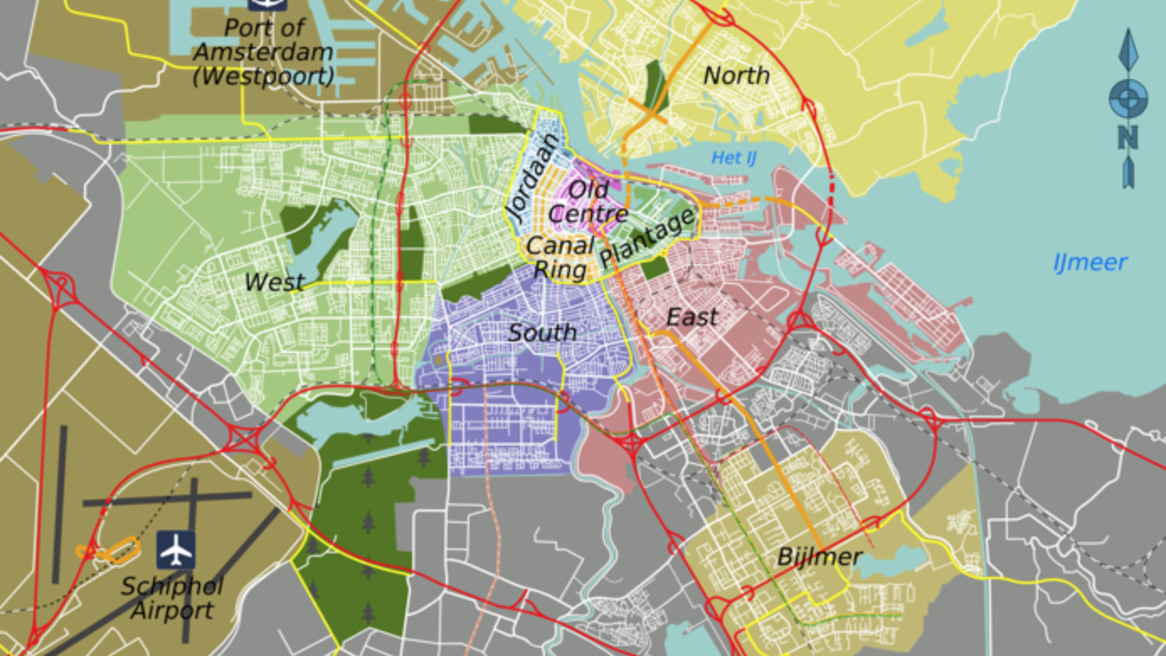
Our guide to Amsterdam’s best neighbourhoods is just what you need to help you plan your visit to Amsterdam. We have great recommendations, whether you’re here to explore this artistic city’s history, its architecture, its markets, its cuisine, its museums, or if you’re just here to kick back and enjoy yourself. We think the best city breaks are those where you match the atmosphere of the neighbourhood you stay in with the kind of trip you’re planning.
 Globe-trotter, based on work b
There are a lot of different reasons to visit atmospheric Amsterdam, the famously artistic and liberal city built on and around concentric circles of man-made canals. Its narrow lanes, arching bridges and tall, gabled houses are close packed within the canal rings, and this is where many people find their reasons to visit, in the museums and galleries, the cosy cafes, creative restaurants, the friendly bars, markets and boutiques. Outside the ring are the up-and-coming neighbourhoods, some chicly claimed and de-industrialised, others green and leafy, and here you’ll find the tech start-ups, the craft breweries and gin distilleries, the creative hubs and some of the hottest clubs and venues in Europe.
If you’re planning to stay within the rings then you’ll find Amsterdam snug enough to get around on foot. A lot of people do it on two wheels, and some people do it on the water. There’s a tram network around central Amsterdam and an excellent rail network serving the larger area, and buses and a five-line metro service in some areas too. The main transport hub is Amsterdam Centraal Station.
Ideal for: City-breaks, couples, families, night-owls, foodies, history-buffs, art-lovers, architecture-lovers
 Image by Siggy Nowak from Pixabay
Amsterdam Centrum is the city’s bustling heart, nestled in the centre of the iconic canal rings. From Amsterdam Centraal Station to Dam Square and the Royal Palace, the floating flower market, Oude Kerk, Westerkerk, Nieuwe Kerk, the Amsterdam Museum, Rembrandt House, Anne Frank’s House, and NEMO, the area is packed with history, culture, and attractions. It’s also where you’ll hop on canal tours, dive into nightlife in the Red Light District, or shop along Kalverstraat and Nieuwendijk. Amid the busy streets, you’ll find charming canal-side homes, cosy cafes, and elegant bars, though some corners can be slightly seedy. The best way to explore? On foot, by bike, tram, or even by boat — you can truly experience every side of Centrum your way.
Did you know? Amsterdam Centrum has more than 160 canals and 1,500 bridges.
Discover our recommended hotels in Amsterdam Centrum
Explore more >
View all hotels in Amsterdam Centrum
Explore more >
Ideal for: Travellers on a budget, fun-lovers, night-owls
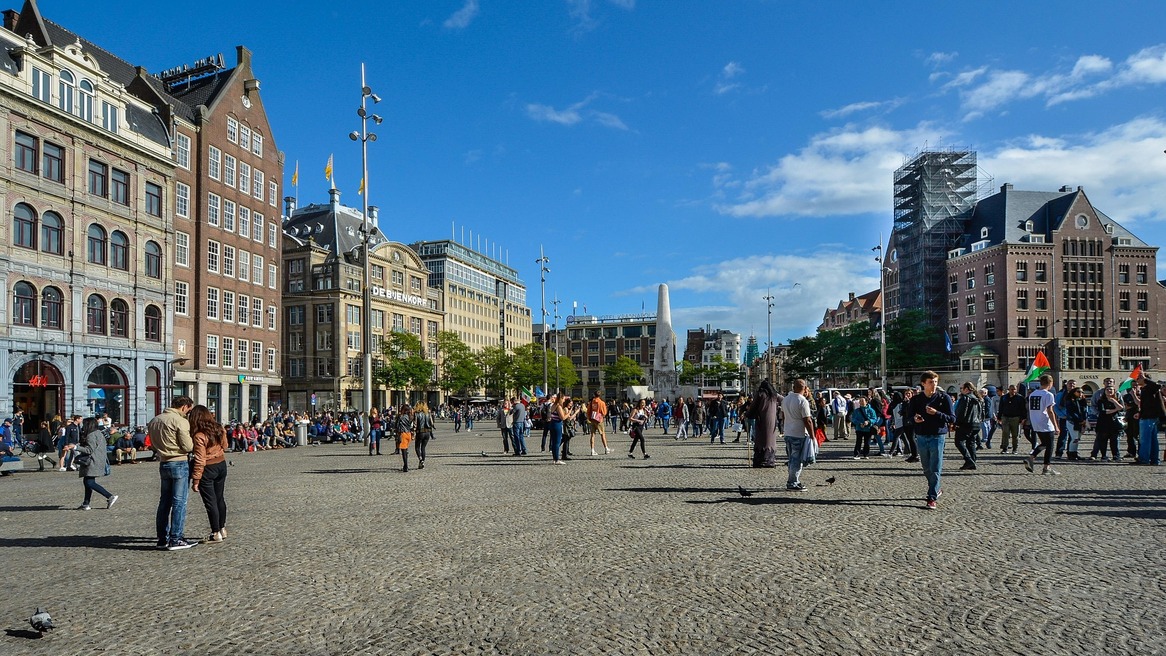 Image by user32212 from Pixabay
Dam Square is the vibrant heart of Amsterdam, right in the middle of the city’s busiest tourist hub. On its west side stands the stunning Baroque Koninklijk Paleis, originally a lavish town hall that became a royal palace when Napoleon crowned his brother Louis, King of the Netherlands in 1808; inside, marble halls and an impressive art and sculpture collection await. The square is also steps from the Amsterdam Museum, Madame Tussauds, and the Nationaal Monument, marking the site of the city’s first castle. It’s a central spot for a base, with plenty of affordable (if touristy) hotels and restaurants.
Did you know? Dam Square has been the centre of Amsterdam life for over 400 years, hosting everything from royal ceremonies to street performers and protests.
Discover our recommended hotels near Dam Square, Amsterdam
Explore more >
View all hotels in Dam Square, Amsterdam
Explore more >
Ideal for: Romance, special occasions, first-time visitors, history-buffs, sightseeing
Known locally as the Grachtengordel, Amsterdam’s Canal Belt is a stunning series of concentric canals that trace the city’s golden age of 16th-century wealth and architecture. Starting with the Singel in the centre, then the Herengracht, Keizersgracht, and Prinsengracht, these waterways — whose names translate neatly to the patrician’s, the emperor’s, and the prince’s canals — were originally lined with grand homes and warehouses. Today, they’re home to some of the city’s top sights, including the Anne Frank House, the Bloemenmarkt, and just a couple of canals over, the Rijksmuseum and Van Gogh Museum. On the western edge, between Prinsengracht and Singel, the chic Negen Straatjes neighbourhood offers stylish shops, clubs, and music venues. It’s perfect for a leisurely stroll, though the tram is your friend if you’re in a hurry.
Did you know? The canals of Amsterdam’s Grachtengordel were all built in the 17th century during the city’s Golden Age, creating a perfect half-moon layout that’s now a UNESCO World Heritage site.
Discover our recommended hotels near Amsterdam's Canal Ring
Explore more >
View all hotels in Amsterdam's Canal Ring
Explore more >
Ideal for: Romantics, foodies, shopping, history-buffs
 Image by Siggy Nowak from Pixabay
Negen Straatjes — or “Nine Streets” — lives up to its name: a stylish little neighbourhood of nine streets packed with boutiques, galleries, and charming independent bars and cafes. It’s a shopper’s paradise, whether you’re hunting for design pieces, vintage treasures, or the latest fashion finds. Perfectly located, it also makes a great base for exploring the rest of the Canal Ring — you’re just a few blocks from the Prinsengracht and Jordaan, and within an easy, scenic stroll of the area’s top sights and the Museumkwartier.
Did you know? Negen Straatjes sits at the crossroads of Amsterdam’s historic canal rings, connecting the Jordaan neighbourhood with the heart of the Canal Belt.
Discover our recommended hotels in Negen Straatjes
Explore more >
View all hotels in Negen Straatjes
Explore more >
Ideal for: Romantics, foodies, shopping, couples
Jordaan is a charming, traditional neighbourhood just outside the Canal Ring, a five-minute walk from Amsterdam Centraal. Its narrow streets, canals, small homes, and historic almshouses give it an old-world feel, while its bohemian past lives on in design boutiques, chic galleries, cafes, and wine bars. Jordaan remains more independent than Centrum, boasting cosy brown cafes, a bustling Saturday farmers’ market, and the Antiekcentrum — a sprawling maze of antique shops that’s hard to beat. All this charm comes without sacrificing centrality, making it an ideal base for exploring the city.
Did you know? Jordaan was originally built in the 17th century for working-class residents and craftsmen.
Discover our recommended hotels in Jordaan, Amsterdam
Explore more >
View all hotels in Jordaan, Amsterdam
Explore more >
Ideal for: Art-lovers, luxury lovers, families
If museums are on your Amsterdam itinerary, the MuseumKwartier is a no-brainer. Centred around Museumplein, it’s home to the Rijksmuseum, Van Gogh Museum, and Stedelijk Museum, plus the edgy Moco Museum for contemporary street art. The area also hosts Amsterdam’s concert hall and the bustling Albert Cuypstraat, packed with cafes, boutiques, and one of Europe’s largest street markets. With Vondelpark, the Canal Ring, and trams to Centraal Station just minutes away, it’s perfectly placed for culture, shopping, and relaxation.
Did you know? The MuseumKwartier was built in the late 19th and early 20th centuries as a cultural hub; its elegant streets and grand squares were designed to showcase Amsterdam’s wealth and artistic ambition.
Discover our recommended hotels near the Museum Quarter
Explore more >
View all hotels near the Museum Quarter
Explore more >
Ideal for: Travellers on a budget, foodies
 By Alf van Beem - Own work, CC0
Just behind the Museumkwartier, across Albert Cuypstraat, lies De Pijp — a lively, multicultural residential neighbourhood with a vibe all its own. Foodies will love the international cafes, restaurants, and street-food stalls, many inspired by the Netherlands’ colonial past. Albert Cuypstraat buzzes with activity, especially on Saturdays when the market swells, while nearby Sarphatipark offers a sunny escape. De Pijp’s 1920s architecture, influenced by the Amsterdam School, sets it apart from the city centre, and you’re close enough to explore on foot — or hop on a tram or bus to get around.
Did you know? De Pijp earned its nickname “the city’s most bohemian neighbourhood” thanks to its mix of artists, students, and international eateries.
Discover our recommended hotels in De Pijp, Amsterdam
Explore more >
View all hotels in De Pijp, Amsterdam
Explore more >
Ideal for: Families, visitors looking for a peaceful base
 Image by user32212 from Pixabay
Long and narrow, Vondelpark is Amsterdam’s only central park — and at 120 acres, it’s easy to see why it’s so popular. Just a short stroll from the Rijksmuseum, it’s surrounded by elegant townhouses and the upscale suburbs of Vondelbuurt, Overtoomse Sluis, and Willemspark, home to leafy streets, chic cafes, boutiques, and restaurants. The park itself has plenty to enjoy: the modernist Blauwe Theehuis tearoom, an open-air theatre, playgrounds, and sports fields. Its central location makes it a must-visit, even if you’re not staying nearby.
Did you know? Vondelpark is so popular that it attracts over 10 million visitors a year—making it one of the busiest urban parks in Europe!
Discover our recommended hotels near Vondelpark
Explore more >
View all hotels in Vondelpark
Explore more >
Ideal for: Families, visitors looking for a peaceful base, couples
Nestled between Vondelpark, Oud West, and the Canal Ring, Vondelbuurt is a leafy, mostly residential neighbourhood that feels peaceful yet never sleepy. Just across the Singelgracht from Leidseplein — with its music venues and Stadsschouwburg theatre — you’ll find plenty of cafes, restaurants, and bars, as well as easy access to the MuseumKwartier and upscale Willemspark. Venture west, and you’ll discover Amsterdam’s only windmill open to the public and the expansive, tranquil Rembrandt Park, perfect for escaping the city buzz.
Did you know? Vondelbuurt gets its name from the famous Dutch poet Joost van den Vondel, and many of its leafy streets and elegant homes reflect the area’s cultured, historic charm.
Discover our recommended hotels near Vondelbuurt, Amsterdam
Explore more >
View all hotels in Vondelbuurt, Amsterdam
Explore more >
Ideal for: Families, self-catering, visitors looking for a peaceful, central base
 By Marcelmulder68 - Own work, CC BY-SA 3.0 nl
Plantage, a leafy, residential-feeling neighbourhood east of central Amsterdam, blends 19th-century townhouses with historic pockets like the old Jewish Quarter, Jodenbuurt — once Rembrandt’s stomping ground and home to the Museum Het Rembrandthuis and the Jewish Museum. Highlights include the Stadhuis-Opera complex, Amsterdam’s Hermitage outpost, and Artis Park, which houses a zoo, aquarium, planetarium, and the world’s oldest botanical gardens. Photogenic canals and bridges make it a delight to wander, and it’s just a short walk from the city centre, with trams and the Waterlooplein metro making it easy to explore further afield.
Did you know? Plantage and the Jewish Quarter are home to Amsterdam’s oldest zoo, Artis, founded in 1838.
Discover our recommended hotels in Plantage and the Jewish Quarter
Explore more >
View all hotels in Plantage and the Jewish Quarter
Explore more >
Ideal for: Families, travellers on a budget, fans of modernist architecture
 By Michael Paraskevas, CC BY-SA 3.0
Step east from Amsterdam Centraal and you’ll find the Eastern Docklands, a striking mix of modernist architecture, creatively converted warehouses, and historic ships. Pass NEMO, the city’s hands-on science museum, and you’ll also spot the Scheepvaartmuseum (Maritime Museum) with the replica ship Amsterdam, the world-class Muziekgebouw concert hall, and the Bimhuis, a top jazz venue. With plenty of excellent cafes and restaurants, this neighbourhood offers a fresh, creative take on Amsterdam’s classic canals and bridges. Easy to explore on foot, it’s also well connected by tram and just minutes from Centraal Station.
Did you know? The Eastern Docklands were once Amsterdam’s busiest industrial port, and were built on reclaimed land in the 19th and 20th centuries.
Discover our recommended hotels in the Eastern Docks
Explore more >
View all hotels in the Eastern Docks
Explore more >
Ideal for: Travellers on a budget, night owls
 Image by Gerard De Mooij from Pixabay
Oud Zijde — literally “Old Side” — is Amsterdam’s oldest neighbourhood, dating back to the 13th century, and includes De Wallen, the world-famous Red Light District. Beyond its nightlife, the area is full of culture, from the medieval Montelbaanstoren, a favourite subject of Rembrandt, to the graceful Zuiderkerk and Oude Kerk. Residential streets are dotted with cafes, delis, and shops where locals mingle with visitors. With a broad range of dining options, excellent restaurants, and a truly unique atmosphere, Oud Zijde is perfect for those who enjoy local colour and historic charm — just keep an open mind!
Did you know? Oud Zijde was the centre of Amsterdam long before the canal ring was built, and De Wallen — the famous Red Light District — was originally a bustling port area where sailors and merchants once lived and worked.
Discover our recommended hotels around De Wallen and Our Zijde
Explore more >
View all hotels in De Wallen and Our Zijde
Explore more >
Ideal for: Families, visitors who want more space, hipsters, foodies
 By David van der Mark - originally posted to Flickr as Westerpark, CC BY-SA 2.0
Westerpark isn’t just a huge green space — it’s also a lively neighbourhood south and east of the park, transformed from its post-industrial roots into a hip cultural hub. The former Westergasfabriek gasworks now hosts an art-house cinema, exhibition spaces, cafes, bars, restaurants, markets, nightclubs, and the Het Schip Museum which celebrates Amsterdam’s modernist era. Families and creatives enjoy its playgrounds, while its central location makes the canal ring, Jordaan, and Centraal Station just a short walk — or tram ride — away.
Did you know? Westerpark hosts the annual Westerpop festival, one of Amsterdam’s longest-running and most popular music festivals.
Discover our recommended hotels in Westerpark
Explore more >
View all hotels in Westerpark
Explore more >
Ideal for: Families, maritime enthusiasts, history-buffs, visitors looking for something different
 Image by Anemone123 from Pixabay
Amsterdam’s Waterfront stretches from the historic Western Islands along Prins Hendrikkade to the wide inner harbour of the Oosterdok. The Western Islands, once home to shipowners and warehouses, are perfect for a scenic stroll, with charming streets and varied bridges. Across from Centraal Station, you’ll find NEMO, the science museum, and the Scheepvaartmuseum (Maritime Museum), while tour boats, cafes, and bars line the waterfront. Staying near Centraal means you’re at the city’s doorstep, with everything just a short walk or tram ride away.
Did you know? The Oosterdok area of Amsterdam’s Waterfront was created in the 19th century by reclaiming land from the IJ river.
Discover our recommended hotels around Amsterdam's Waterfront
Explore more >
View all hotels around Amsterdam's Waterfront
Explore more >
Ideal for: Night-owls, hipsters, visitors looking for something different
 By Elekes Andor - Own work, CC BY-SA 4.0
Across the IJ from Amsterdam’s canals and major museums, Amsterdam Noord has reinvented itself from an industrial shipyard hub into one of the city’s hippest neighbourhoods. Its skyline is dominated by the 20-storey A’DAM Toren, a “city in the sky” featuring nightlife, restaurants, a trendy hotel, a panoramic rooftop deck, a revolving restaurant, and a hair-raising swing with stunning sunset views. Noord is also packed with galleries, artists’ studios, Europe’s largest flea market, music venues, and attractions like the EYE Film Museum and a dazzling street art museum. With free ferries to Centraal Station or a quick metro ride, it’s an edgy, convenient base from which to explore all of Amsterdam.
Did you know? Amsterdam Noord was historically cut off from the city by the IJ river, and it wasn’t easily accessible until the free ferries to Amsterdam Centraal made it a popular spot for locals and visitors.


